
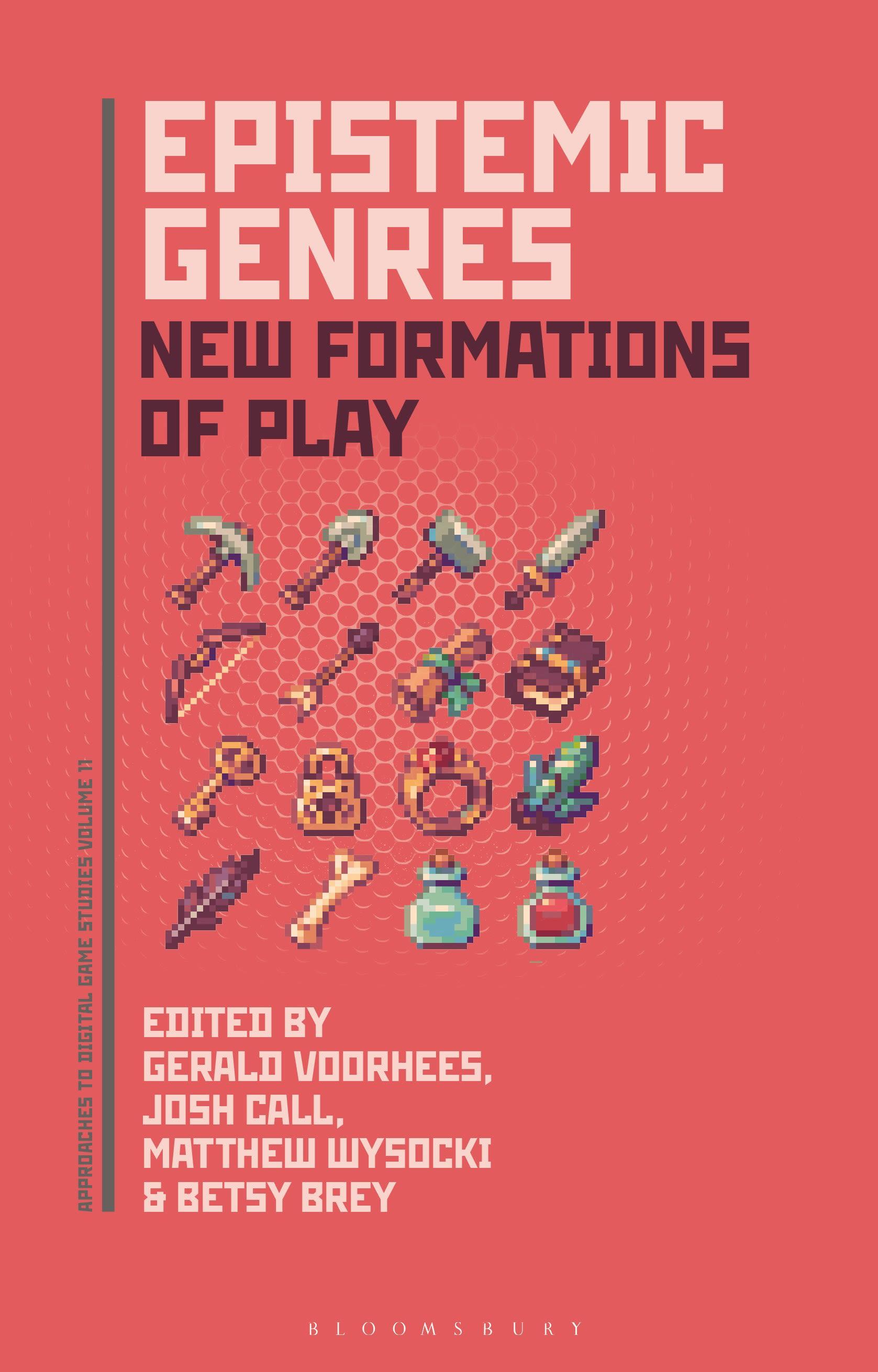
This anthology brings together scholars from around the world to theorize and explore “epistemic genres” of digital games, which are defined by the social uses and meanings attributed to different constellations of games by the communities that play, make, and study them.
Game studies has experienced a cultural turn in the last decade, centering the social dimensions of games and play. What resources for theorizing game genres emerge from this cultural turn? How might the critical theories of race and culture, intersectional feminism, queer and trans theory, eco-criticism, and post-colonial and decolonial interventions of the past decade suggest new ways of thinking about game genres? The chapters in this edited volume make a case for epistemic genres that are distinguished primarily by their social context and use. The notion of epistemic genre centers the player's experience and the meanings that emerge from distinct communities as they engage with games. Epistemic game genres are those constellations of games that overflow and cut-across the genre boundaries of the commercial game industry and mainstream gaming culture.
The first section examines epistemic genres as they are constituted by different scholarly lenses. Here, the contributors consider how certain scholarly theories allow us to see the connections between seemingly disparate games. The second section examines epistemic genres as products of specific material and discursive contexts. The third section examines epistemic genres defined by the specific interpretive frames of communities of players that share a cultural lexicon, symbol system, or grammar. Overall, the chapters in this book make the case for understanding game genres as formations shaped more by play than the qualities of the games themselves.
Game studies has experienced a cultural turn in the last decade, centering the social dimensions of games and play. What resources for theorizing game genres emerge from this cultural turn? How might the critical theories of race and culture, intersectional feminism, queer and trans theory, eco-criticism, and post-colonial and decolonial interventions of the past decade suggest new ways of thinking about game genres? The chapters in this edited volume make a case for epistemic genres that are distinguished primarily by their social context and use. The notion of epistemic genre centers the player's experience and the meanings that emerge from distinct communities as they engage with games. Epistemic game genres are those constellations of games that overflow and cut-across the genre boundaries of the commercial game industry and mainstream gaming culture.
The first section examines epistemic genres as they are constituted by different scholarly lenses. Here, the contributors consider how certain scholarly theories allow us to see the connections between seemingly disparate games. The second section examines epistemic genres as products of specific material and discursive contexts. The third section examines epistemic genres defined by the specific interpretive frames of communities of players that share a cultural lexicon, symbol system, or grammar. Overall, the chapters in this book make the case for understanding game genres as formations shaped more by play than the qualities of the games themselves.
Paga facilmente con carta, Klarna, Apple Pay o Google Pay. Non sei soddisfatto? Hai sempre 14 giorni per il rimborso. Leggi di più nei nostri termini. Per qualsiasi domanda, scrivici a hello@memmo.org.
Memmo rende lo studio più facile, ovunque tu sia nel mondo. Qui trovi i tuoi libri di testo e strumenti di studio intelligenti, tutto in un unico posto: riassunti, quiz, podcast e flashcard. E poi c'è Ted, il tuo compagno di studio che risponde a ogni tua domanda. Oltre 50.000 studenti studiano già qui: è stato creato per aiutarti a imparare più velocemente e a stressarti meno.