
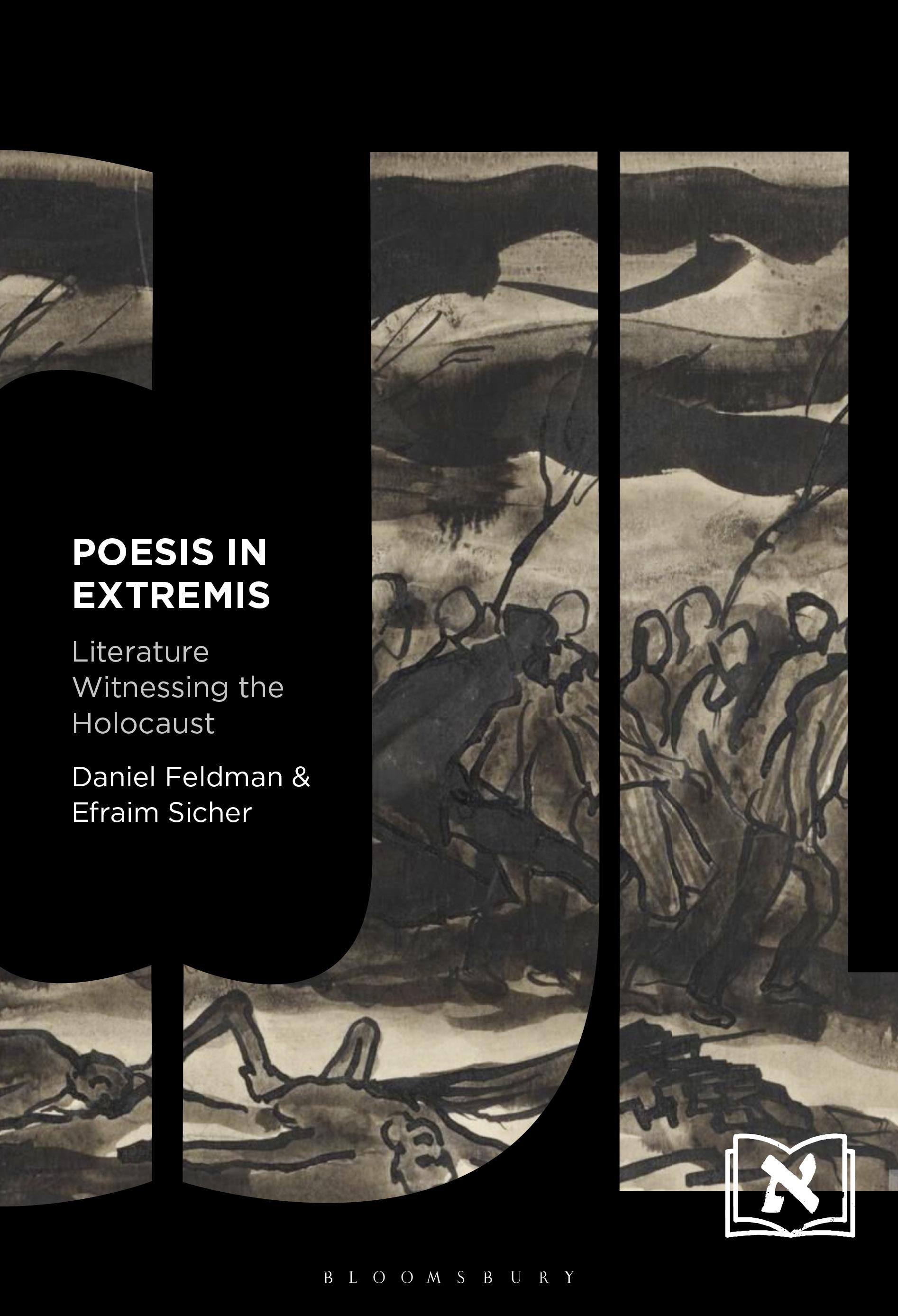
A Choice Outstanding Academic Title of 2025
How can genocide be witnessed through imaginative literature? How can the Holocaust affect readers who were not there?
Reading the work of major figures such as Elie Wiesel, Paul Celan, Avrom Sutzkever, Ida Fink, Wladyslaw Szlengel, Itzhak Katzenelson, and Czeslaw Milosz, Poesis in Extremis poses fundamental questions about how prose and poetry are written under extreme conditions, either in real time or immediately after the Holocaust.
Framed by discussion of literary testimony, with Wiesel's literary memoir Night as an entry point, this innovative study explores the blurred boundary of fact and fiction in Holocaust literature. It asks whether there is a poetics of the Holocaust and what might be the criteria for literary witnessing. Wartime writing in particular tests the limits of “poesis in extremis” when poets faced their own annihilation and wrote in the hope that their words, like a message in a bottle, would somehow reach readers. Through Poesis in Extremis, Daniel Feldman and Efraim Sicher probe the boundaries of Holocaust literature, as well as the limits of representation.
How can genocide be witnessed through imaginative literature? How can the Holocaust affect readers who were not there?
Reading the work of major figures such as Elie Wiesel, Paul Celan, Avrom Sutzkever, Ida Fink, Wladyslaw Szlengel, Itzhak Katzenelson, and Czeslaw Milosz, Poesis in Extremis poses fundamental questions about how prose and poetry are written under extreme conditions, either in real time or immediately after the Holocaust.
Framed by discussion of literary testimony, with Wiesel's literary memoir Night as an entry point, this innovative study explores the blurred boundary of fact and fiction in Holocaust literature. It asks whether there is a poetics of the Holocaust and what might be the criteria for literary witnessing. Wartime writing in particular tests the limits of “poesis in extremis” when poets faced their own annihilation and wrote in the hope that their words, like a message in a bottle, would somehow reach readers. Through Poesis in Extremis, Daniel Feldman and Efraim Sicher probe the boundaries of Holocaust literature, as well as the limits of representation.
Pagine: 272
Categoria: Litteraturvetenskap & Teori
e-ISBN: 9798765100196
Peso di spedizione: 1.2 kg
Spedito in: 1-2 giorni
Paga facilmente con carta, Klarna, Apple Pay o Google Pay. Non sei soddisfatto? Hai sempre 14 giorni per il rimborso. Leggi di più nei nostri termini. Per qualsiasi domanda, scrivici a hello@memmo.org.
Memmo rende lo studio più facile, ovunque tu sia nel mondo. Qui trovi i tuoi libri di testo e strumenti di studio intelligenti, tutto in un unico posto: riassunti, quiz, podcast e flashcard. E poi c'è Ted, il tuo compagno di studio che risponde a ogni tua domanda. Oltre 50.000 studenti studiano già qui: è stato creato per aiutarti a imparare più velocemente e a stressarti meno.