
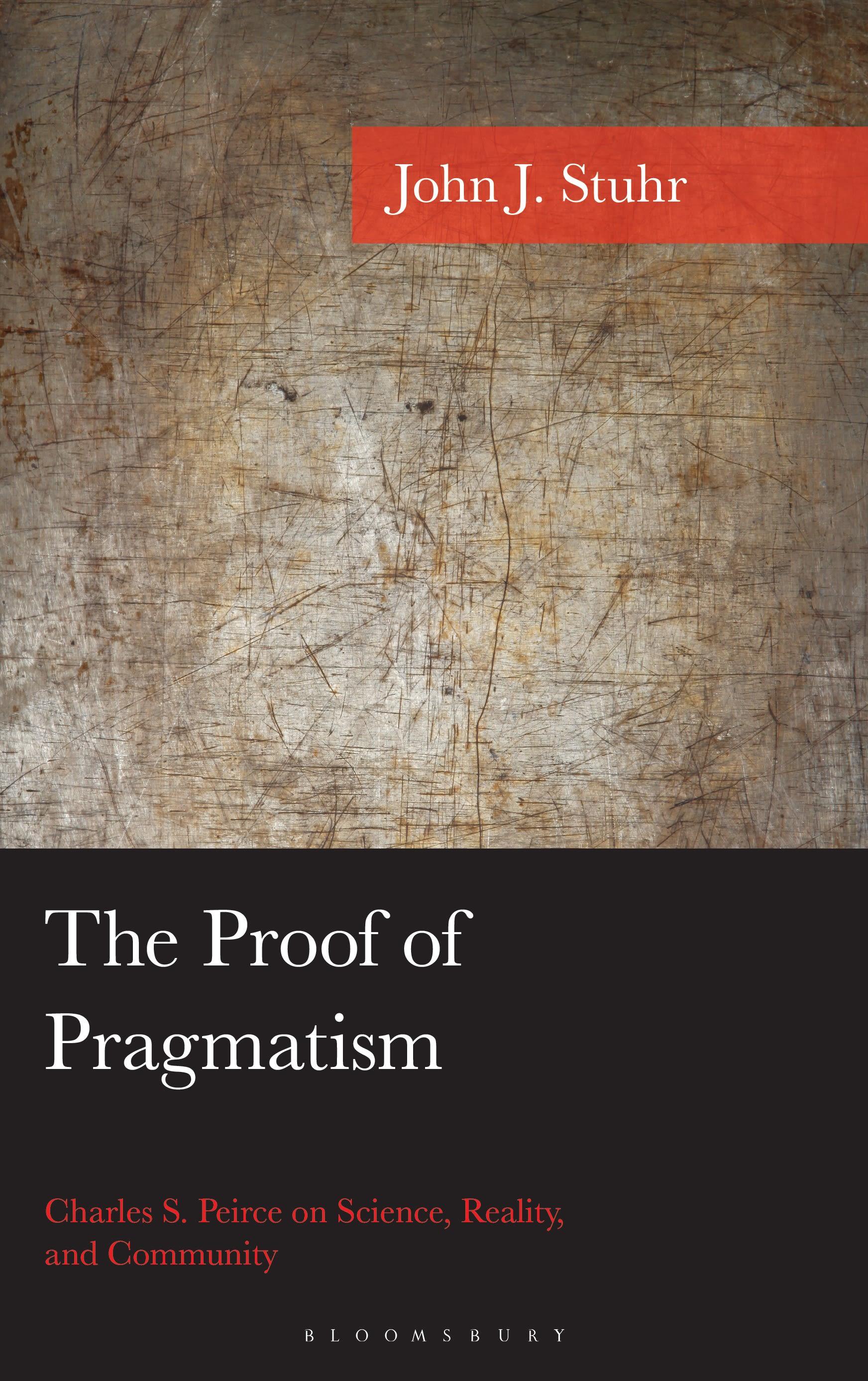
Pragmatism is true and not only useful.
Drawing critically on the writings of Charles Peirce, this book presents a proof of pragmatism and explores its implications for using scientific method, understanding the nature of reality, and recognizing and deepening the centrality of community.
Peirce's development of a successful proof of pragmatism had three stages, each improving on the earlier: a proof based in the psychology of belief; a proof based in a phenomenology of perception; and a proof based in semiotics. In reconstructing and refashioning Peirce's philosophy and its theoretical and practical consequences, John J. Stuhr demonstrates how Peirce makes it possible for pragmatists to reject fully the mission, methods, and conclusions of modern European philosophy and, in so doing, to articulate a revolutionary new philosophy rooted in experimental, fallible, and public thought. For this pragmatism, community is not simply a prerequisite of communication; it is an end and, as an ideal, it is an instrument for transformation, a way to change the world.
In establishing a proof of the truth of pragmatism, Stuhr clarifies the logical, ontological, and normative commitments of pragmatism, making clear their impact for inquiry and problem solving, reasoning and an understanding of reality, and ethical commitments and social ideals. The book provides a thorough and clear account of the development of pragmatism and a lively and original extension and application of pragmatic theory to practice.
Drawing critically on the writings of Charles Peirce, this book presents a proof of pragmatism and explores its implications for using scientific method, understanding the nature of reality, and recognizing and deepening the centrality of community.
Peirce's development of a successful proof of pragmatism had three stages, each improving on the earlier: a proof based in the psychology of belief; a proof based in a phenomenology of perception; and a proof based in semiotics. In reconstructing and refashioning Peirce's philosophy and its theoretical and practical consequences, John J. Stuhr demonstrates how Peirce makes it possible for pragmatists to reject fully the mission, methods, and conclusions of modern European philosophy and, in so doing, to articulate a revolutionary new philosophy rooted in experimental, fallible, and public thought. For this pragmatism, community is not simply a prerequisite of communication; it is an end and, as an ideal, it is an instrument for transformation, a way to change the world.
In establishing a proof of the truth of pragmatism, Stuhr clarifies the logical, ontological, and normative commitments of pragmatism, making clear their impact for inquiry and problem solving, reasoning and an understanding of reality, and ethical commitments and social ideals. The book provides a thorough and clear account of the development of pragmatism and a lively and original extension and application of pragmatic theory to practice.
Paga facilmente con carta, Klarna, Apple Pay o Google Pay. Non sei soddisfatto? Hai sempre 14 giorni per il rimborso. Leggi di più nei nostri termini. Per qualsiasi domanda, scrivici a hello@memmo.org.
Memmo rende lo studio più facile, ovunque tu sia nel mondo. Qui trovi i tuoi libri di testo e strumenti di studio intelligenti, tutto in un unico posto: riassunti, quiz, podcast e flashcard. E poi c'è Ted, il tuo compagno di studio che risponde a ogni tua domanda. Oltre 50.000 studenti studiano già qui: è stato creato per aiutarti a imparare più velocemente e a stressarti meno.