
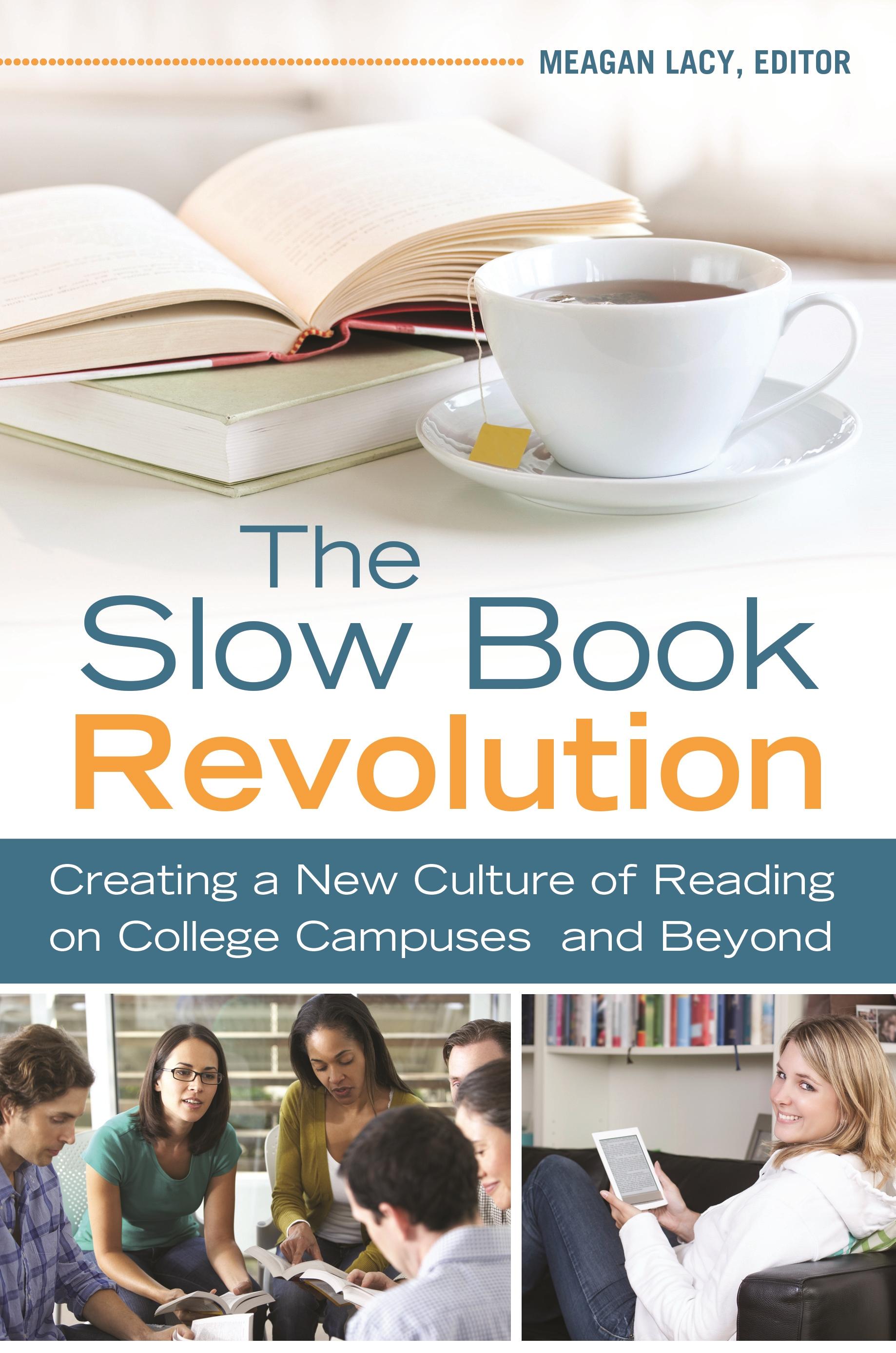
This inspiring guide shows how to implement the principles of the Slow Book movement in college campus libraries as well as public and high school libraries, with the ultimate goals of encouraging pensive reading habits and creating a lifelong enjoyment of books.
In a world of constant Facebook posts and Tweets, digital distractions and online reading habits are wearing at students' ability to focus, reflect, synthesize, and think deeply. This professional text, based on a concept introduced by Maura Kelly in the online edition of The Atlantic, delves into the trend toward contemplative reading—otherwise known as the Slow Book movement—explaining what it is, why it's important, and how you can implement it in various ways and in multiple settings.
Author and librarian Meagan Lacy, along with contributions from others in the field, offers insights, advice, and practical tools to help you foster an appreciation of reading in students both during and after college. The first part of the book establishes the importance of the Slow Book movement, while the second and third sections combine case studies and guidance for employing the principles of this method across multiple genres, including fiction, nonfiction, classics, and contemporary works. Chapters build a rationale for the approach, describe its underlying philosophy, and articulate concrete ways to apply the methodology in different venues.
In a world of constant Facebook posts and Tweets, digital distractions and online reading habits are wearing at students' ability to focus, reflect, synthesize, and think deeply. This professional text, based on a concept introduced by Maura Kelly in the online edition of The Atlantic, delves into the trend toward contemplative reading—otherwise known as the Slow Book movement—explaining what it is, why it's important, and how you can implement it in various ways and in multiple settings.
Author and librarian Meagan Lacy, along with contributions from others in the field, offers insights, advice, and practical tools to help you foster an appreciation of reading in students both during and after college. The first part of the book establishes the importance of the Slow Book movement, while the second and third sections combine case studies and guidance for employing the principles of this method across multiple genres, including fiction, nonfiction, classics, and contemporary works. Chapters build a rationale for the approach, describe its underlying philosophy, and articulate concrete ways to apply the methodology in different venues.
Paga facilmente con carta, Klarna, Apple Pay o Google Pay. Non sei soddisfatto? Hai sempre 14 giorni per il rimborso. Leggi di più nei nostri termini. Per qualsiasi domanda, scrivici a hello@memmo.org.
Memmo rende lo studio più facile, ovunque tu sia nel mondo. Qui trovi i tuoi libri di testo e strumenti di studio intelligenti, tutto in un unico posto: riassunti, quiz, podcast e flashcard. E poi c'è Ted, il tuo compagno di studio che risponde a ogni tua domanda. Oltre 50.000 studenti studiano già qui: è stato creato per aiutarti a imparare più velocemente e a stressarti meno.