
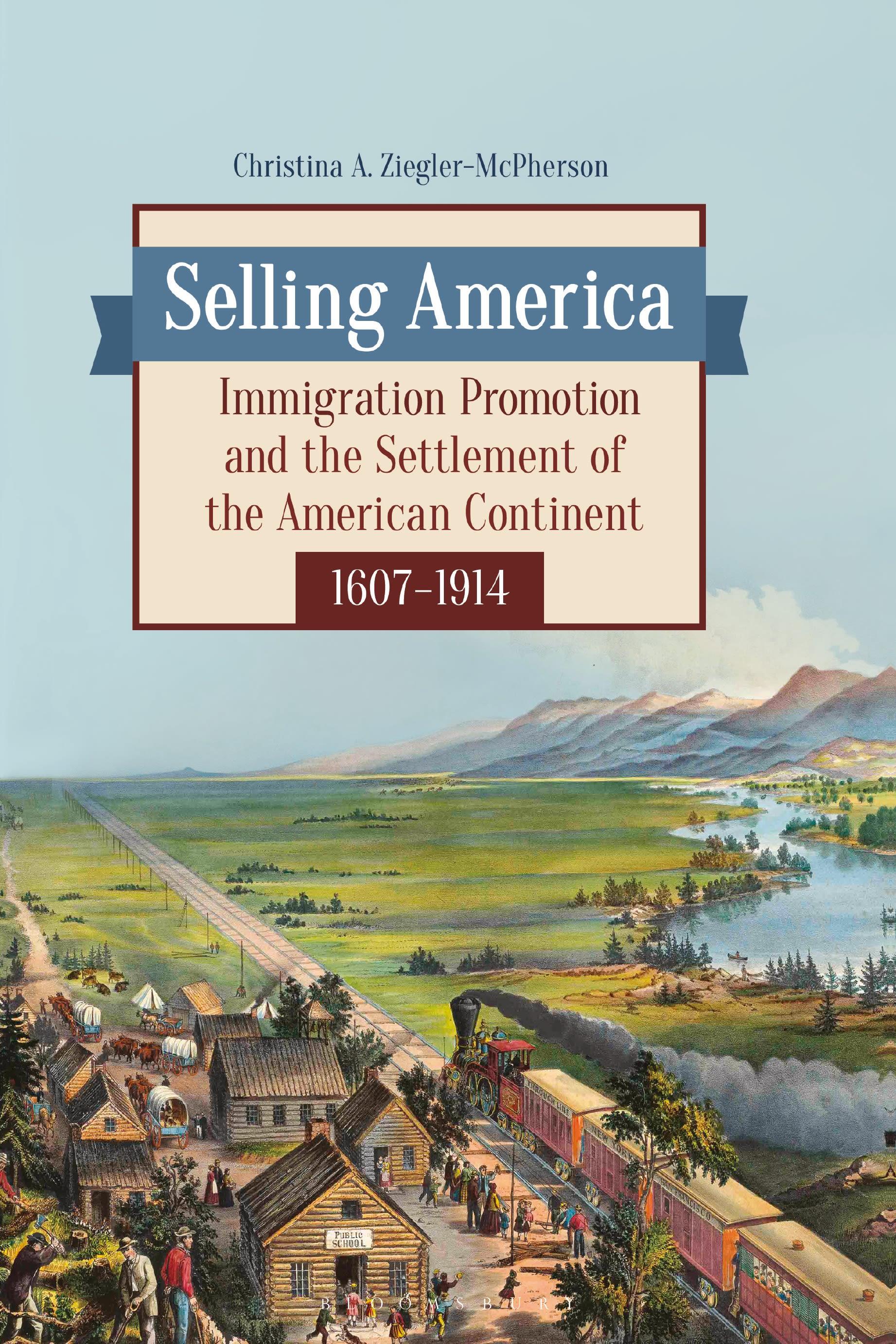
An in-depth look at the motivations behind immigration to America from 1607 to 1914, including what attracted people to America, who was trying to attract them, and why.
Between 1820 and 1920, more than 33 million Europeans immigrated to the United States seeking the "American Dream"-an image of America as a land of opportunity and upward mobility sold to them by state governments, railroads, religious and philanthropic groups, and other boosters. But Christina A. Ziegler-McPherson shows that the desire to make and keep America a "white man's country" meant that only Northern Europeans would be recruited as settlers and future citizens while Africans, Asians, and other non-whites would either be grudgingly tolerated as slaves or guest workers or be excluded entirely.
This book reframes immigration policy as an extension of American labor policy and connects the removal of American Indians from their lands to the settlement of European immigrants across the North American continent. Ziegler-McPherson contends that western and midwestern states with large American Indian, Asian, or Mexican populations developed aggressive policies to promote immigration from Europe to help displace those peoples, while Southern states sought to reduce their dependency upon Black labor by doing the same. Chapters highlight the promotional policies and migration demographics for each region of the United States.
Between 1820 and 1920, more than 33 million Europeans immigrated to the United States seeking the "American Dream"-an image of America as a land of opportunity and upward mobility sold to them by state governments, railroads, religious and philanthropic groups, and other boosters. But Christina A. Ziegler-McPherson shows that the desire to make and keep America a "white man's country" meant that only Northern Europeans would be recruited as settlers and future citizens while Africans, Asians, and other non-whites would either be grudgingly tolerated as slaves or guest workers or be excluded entirely.
This book reframes immigration policy as an extension of American labor policy and connects the removal of American Indians from their lands to the settlement of European immigrants across the North American continent. Ziegler-McPherson contends that western and midwestern states with large American Indian, Asian, or Mexican populations developed aggressive policies to promote immigration from Europe to help displace those peoples, while Southern states sought to reduce their dependency upon Black labor by doing the same. Chapters highlight the promotional policies and migration demographics for each region of the United States.
Paga facilmente con carta, Klarna, Apple Pay o Google Pay. Non sei soddisfatto? Hai sempre 14 giorni per il rimborso. Leggi di più nei nostri termini. Per qualsiasi domanda, scrivici a hello@memmo.org.
Memmo rende lo studio più facile, ovunque tu sia nel mondo. Qui trovi i tuoi libri di testo e strumenti di studio intelligenti, tutto in un unico posto: riassunti, quiz, podcast e flashcard. E poi c'è Ted, il tuo compagno di studio che risponde a ogni tua domanda. Oltre 50.000 studenti studiano già qui: è stato creato per aiutarti a imparare più velocemente e a stressarti meno.