
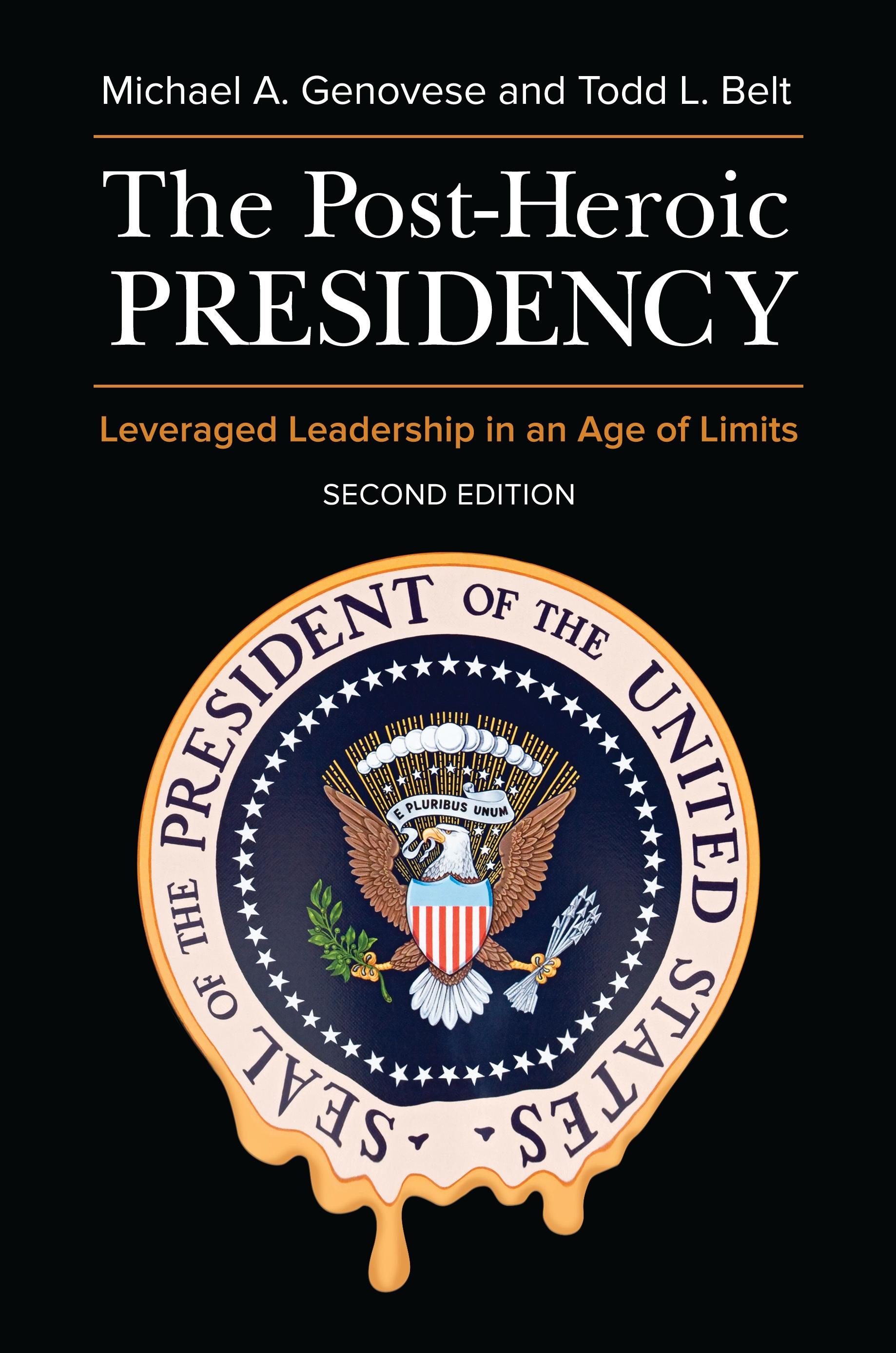
This book examines how presidents from Nixon to Obama have faced the challenges of global leadership in a dramatically changing world—one with more limited resources and an increasing number of threatening challengers.
The immediate post-World War II era was undeniably a period of American power and influence. Even during the Cold War, the United States was the leader of the West, exerting wide-ranging power internationally. But beginning with the Vietnam War, America began experiencing a series of setbacks and challenges to its power. The Post-Heroic Presidency: Leveraged Leadership in an Age of Limits examines how U.S. presidents have attempted to reverse or contend with this new era of limited power in which presidential leadership is hamstrung due to an increasingly globalized and interdependent world—one where power is more diffuse and the system of checks and balances bind a president in an age of hyper-partisanship.
The book examines presidents of the 20th and 21st centuries, explaining how the first U.S. president to confront this new age was Richard Nixon, who—along with Henry Kissinger—developed a sophisticated approach to deal with the recalibration of American power. It documents how other recent presidents have either tried to make peace with limited power (Jimmy Carter), reverse the decline (Ronald Reagan), ignore the implications of limits (George W. Bush), or find ways to lead that were less ambitious, more prudent, and less unilateral (George H.W. Bush, Bill Clinton, and Barack Obama). In the cases of Clinton and Obama, this shift to using "soft power," persuasion, and multilateralism earned them criticism that they are "weak," thereby undermining their efforts to lead—both at home and abroad.
The immediate post-World War II era was undeniably a period of American power and influence. Even during the Cold War, the United States was the leader of the West, exerting wide-ranging power internationally. But beginning with the Vietnam War, America began experiencing a series of setbacks and challenges to its power. The Post-Heroic Presidency: Leveraged Leadership in an Age of Limits examines how U.S. presidents have attempted to reverse or contend with this new era of limited power in which presidential leadership is hamstrung due to an increasingly globalized and interdependent world—one where power is more diffuse and the system of checks and balances bind a president in an age of hyper-partisanship.
The book examines presidents of the 20th and 21st centuries, explaining how the first U.S. president to confront this new age was Richard Nixon, who—along with Henry Kissinger—developed a sophisticated approach to deal with the recalibration of American power. It documents how other recent presidents have either tried to make peace with limited power (Jimmy Carter), reverse the decline (Ronald Reagan), ignore the implications of limits (George W. Bush), or find ways to lead that were less ambitious, more prudent, and less unilateral (George H.W. Bush, Bill Clinton, and Barack Obama). In the cases of Clinton and Obama, this shift to using "soft power," persuasion, and multilateralism earned them criticism that they are "weak," thereby undermining their efforts to lead—both at home and abroad.
Paga facilmente con carta, Klarna, Apple Pay o Google Pay. Non sei soddisfatto? Hai sempre 14 giorni per il rimborso. Leggi di più nei nostri termini. Per qualsiasi domanda, scrivici a hello@memmo.org.
Memmo rende lo studio più facile, ovunque tu sia nel mondo. Qui trovi i tuoi libri di testo e strumenti di studio intelligenti, tutto in un unico posto: riassunti, quiz, podcast e flashcard. E poi c'è Ted, il tuo compagno di studio che risponde a ogni tua domanda. Oltre 50.000 studenti studiano già qui: è stato creato per aiutarti a imparare più velocemente e a stressarti meno.