
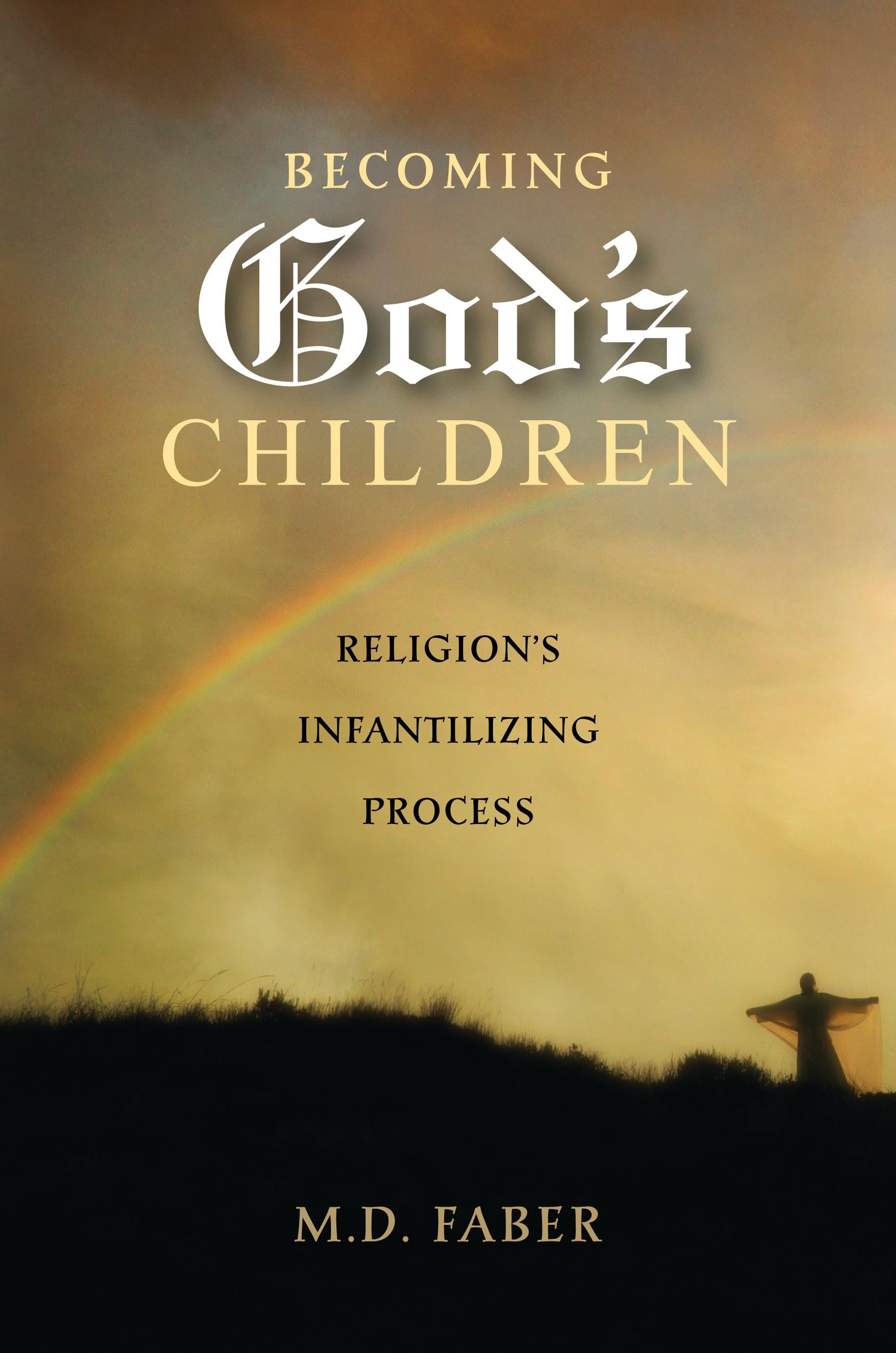
M. D. Faber presents a meticulous, unremitting inquiry into the psychological direction from which Christianity derives its power to attract and hold its followers.
Becoming God's Children: Religion's Infantilizing Process was written, its author says, to alert readers to the role of infantilization in the Judeo-Christian tradition generally and in Christian rite and doctrine particularly. Because religion plays such an important role in so may lives, it is essential to understand the underlying appeal and significance of religious doctrines.
To that end, Becoming God's Children offers the reader an in-depth account of human neuropsychological development, while unearthing the Judeo-Christian tradition's explicitly infantilizing doctrines and rites. This compelling perspective on the nature and meaning of religious behavior explores issues such as: to what extent religious faith is grounded in the mnemonic recesses of the worshipper's brain, whether believers are predisposed by both genetic makeup and environmental prompting to adhere to their religious convictions, and why some individuals are powerfully drawn to religious faith while others reject it. A final chapter explores the implications of religion's infantilizing process vis-a-vis the role of reason and scientific thought in the contemporary world.
Becoming God's Children: Religion's Infantilizing Process was written, its author says, to alert readers to the role of infantilization in the Judeo-Christian tradition generally and in Christian rite and doctrine particularly. Because religion plays such an important role in so may lives, it is essential to understand the underlying appeal and significance of religious doctrines.
To that end, Becoming God's Children offers the reader an in-depth account of human neuropsychological development, while unearthing the Judeo-Christian tradition's explicitly infantilizing doctrines and rites. This compelling perspective on the nature and meaning of religious behavior explores issues such as: to what extent religious faith is grounded in the mnemonic recesses of the worshipper's brain, whether believers are predisposed by both genetic makeup and environmental prompting to adhere to their religious convictions, and why some individuals are powerfully drawn to religious faith while others reject it. A final chapter explores the implications of religion's infantilizing process vis-a-vis the role of reason and scientific thought in the contemporary world.
Paga facilmente con carta, Klarna, Apple Pay o Google Pay. Non sei soddisfatto? Hai sempre 14 giorni per il rimborso. Leggi di più nei nostri termini. Per qualsiasi domanda, scrivici a hello@memmo.org.
Memmo rende lo studio più facile, ovunque tu sia nel mondo. Qui trovi i tuoi libri di testo e strumenti di studio intelligenti, tutto in un unico posto: riassunti, quiz, podcast e flashcard. E poi c'è Ted, il tuo compagno di studio che risponde a ogni tua domanda. Oltre 50.000 studenti studiano già qui: è stato creato per aiutarti a imparare più velocemente e a stressarti meno.