
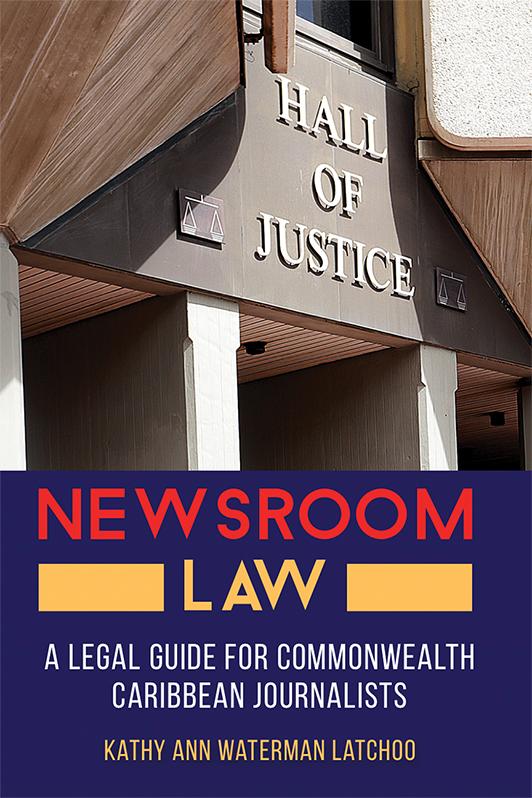
This book is meant to guide, comfort and support journalists. While they may chafe against the many legal restrictions, they should know that there is a lot they can do and say within the law. With a better understanding of their legal rights, journalists can go about their business with greater confidence, knowing when to yield and when to stand firm.
Kathy Ann Waterman Latchoo begins by placing journalism in a constitutional context and ends with an overview on damages for defamation and a glossary of legal terms. She describes our legal systems and the hierarchy of courts, which every journalist should strive to understand, whether or not assigned to the court beat. In Newsroom Law, she seeks to demystify libel law, including the Reynolds public interest defence, which has put fresh emphasis on what constitutes “responsible journalism”. Other chapters alert journalists to the legal pitfalls in covering parliamentary affairs, elections and court cases. Cyber-libel, copyright and freedom of information are also included and the chapter on investigative journalism seeks to answer common questions such as whether photographers may use telephoto lenses to capture people in private; whether journalists may record conversations covertly; and whether it is ever permissible to break the law to expose evil.
Paga facilmente con carta, Klarna, Apple Pay o Google Pay. Non sei soddisfatto? Hai sempre 14 giorni per il rimborso. Leggi di più nei nostri termini. Per qualsiasi domanda, scrivici a hello@memmo.org.
Memmo rende lo studio più facile, ovunque tu sia nel mondo. Qui trovi i tuoi libri di testo e strumenti di studio intelligenti, tutto in un unico posto: riassunti, quiz, podcast e flashcard. E poi c'è Ted, il tuo compagno di studio che risponde a ogni tua domanda. Oltre 50.000 studenti studiano già qui: è stato creato per aiutarti a imparare più velocemente e a stressarti meno.