
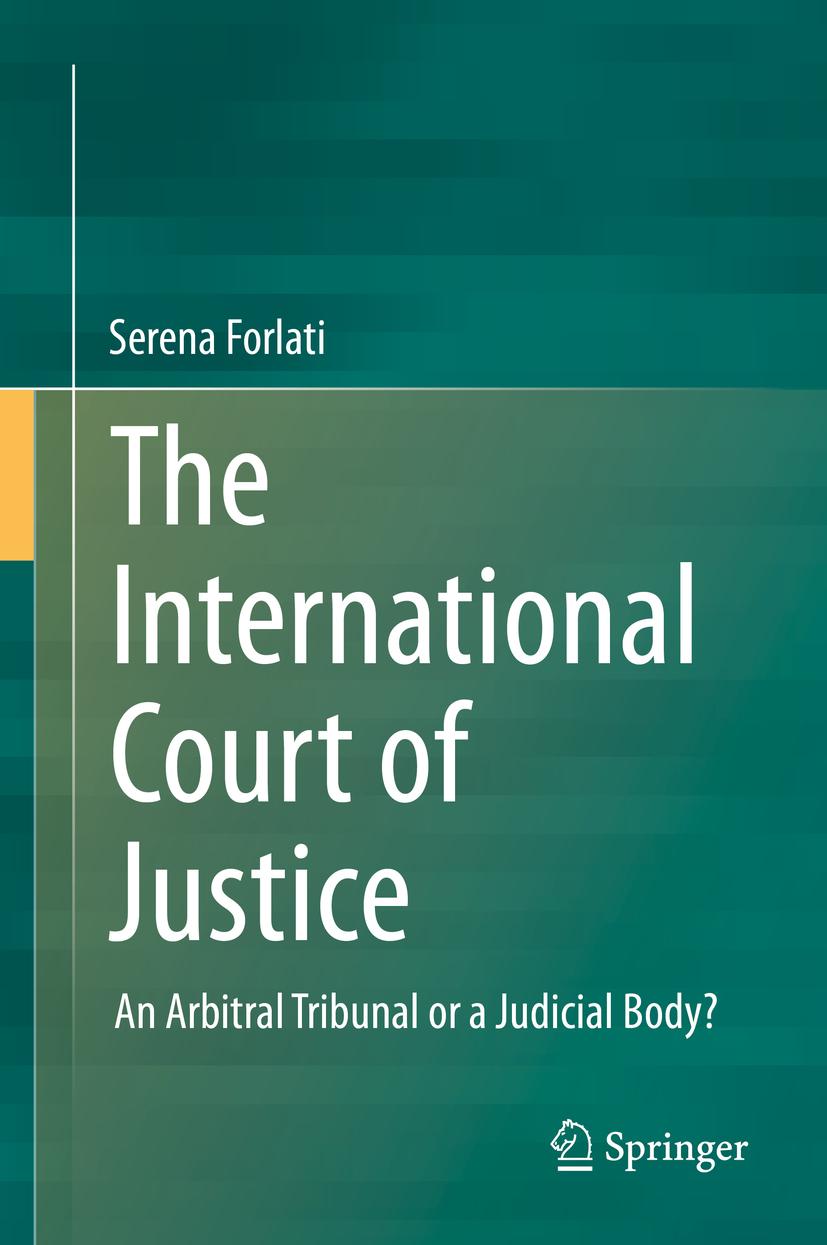
The International Court of Justice is the principal judicial organ of the United Nations, and epitomizes the very notion of international judicial institution. Yet, it decides inter-State disputes only with the parties’ consent. This makes it more similar to international arbitral tribunals than other international courts.
However, the permanent nature of the Court, the predetermination of procedural rules by the Statute and the Rules of Court, the public character of proceedings, the opportunity for third States to intervene in a case under Articles 62 and 63 of the Statute and the Court's role as the principal judicial organ of the United Nations mark a structural difference between the ICJ and non-institutionalized international arbitral tribunals.
This book analyses if and to what extent these features have influenced the approach of the ICJ (and of the PCIJ before it) to its own judicial function and have led it to depart from the principles established in international arbitration.
Paga facilmente con carta, Klarna, Apple Pay o Google Pay. Non sei soddisfatto? Hai sempre 14 giorni per il rimborso. Leggi di più nei nostri termini. Per qualsiasi domanda, scrivici a hello@memmo.org.
Memmo rende lo studio più facile, ovunque tu sia nel mondo. Qui trovi i tuoi libri di testo e strumenti di studio intelligenti, tutto in un unico posto: riassunti, quiz, podcast e flashcard. E poi c'è Ted, il tuo compagno di studio che risponde a ogni tua domanda. Oltre 50.000 studenti studiano già qui: è stato creato per aiutarti a imparare più velocemente e a stressarti meno.