
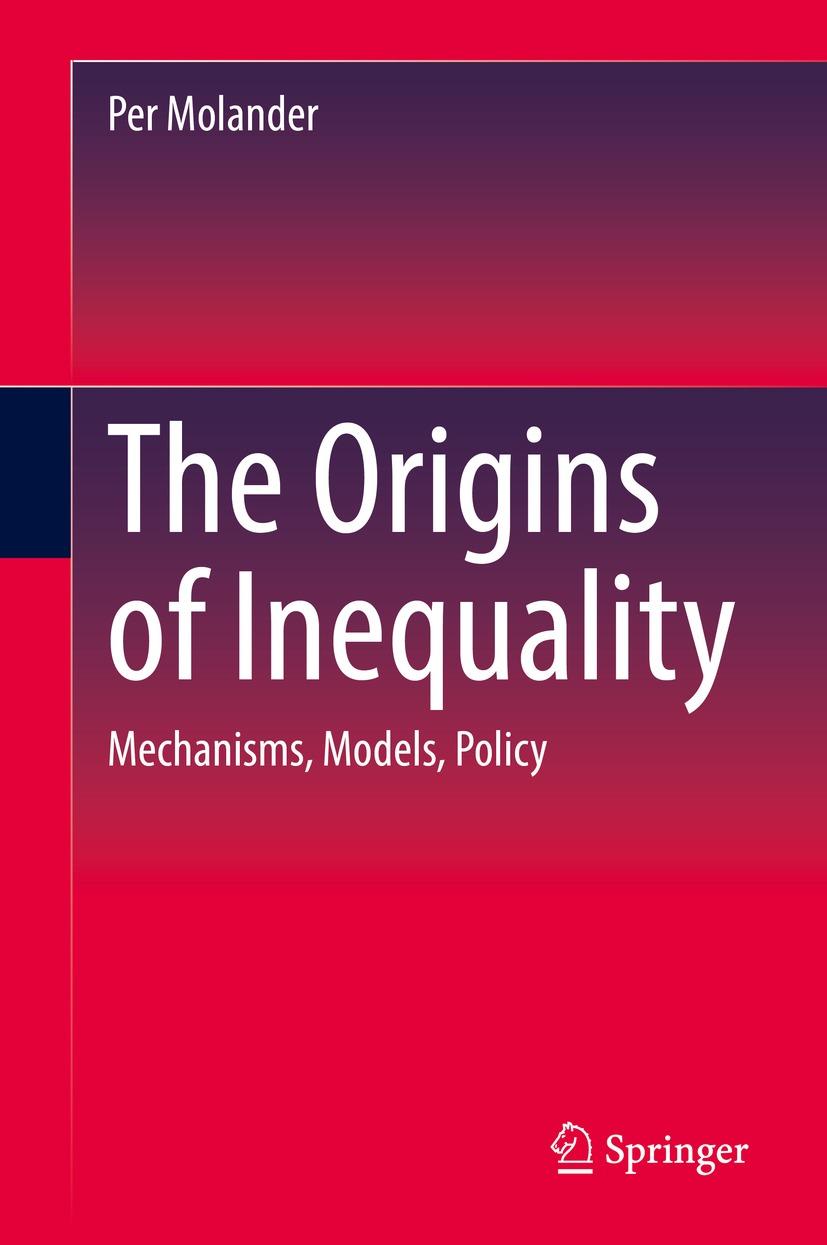
This book presents a unified approach to the problem of inequality, combining results from a variety of research fields – the human life cycle, group dynamics, networks, markets, and economic geography. Its main message is that inequality emerges as the natural result of mechanisms operating both in individual human development and in social interaction. It posits that inequality is not an anomalous deviation from a naturally egalitarian social structure; quite to the contrary, inequality is to be expected as part of the human condition. The author states that the growth of inequality, on the other hand, is not a natural law – the level and character of inequality can be affected by collective decisions. This perspective on human inequality has potentially far-reaching consequences both for the political philosophy of inequality and for public policy-making.
This book is of interest to a wide interdisciplinary social science readership, including public policy, decisionsciences, economic geography, and life course studies.
Paga facilmente con carta, Klarna, Apple Pay o Google Pay. Non sei soddisfatto? Hai sempre 14 giorni per il rimborso. Leggi di più nei nostri termini. Per qualsiasi domanda, scrivici a hello@memmo.org.
Memmo rende lo studio più facile, ovunque tu sia nel mondo. Qui trovi i tuoi libri di testo e strumenti di studio intelligenti, tutto in un unico posto: riassunti, quiz, podcast e flashcard. E poi c'è Ted, il tuo compagno di studio che risponde a ogni tua domanda. Oltre 50.000 studenti studiano già qui: è stato creato per aiutarti a imparare più velocemente e a stressarti meno.