
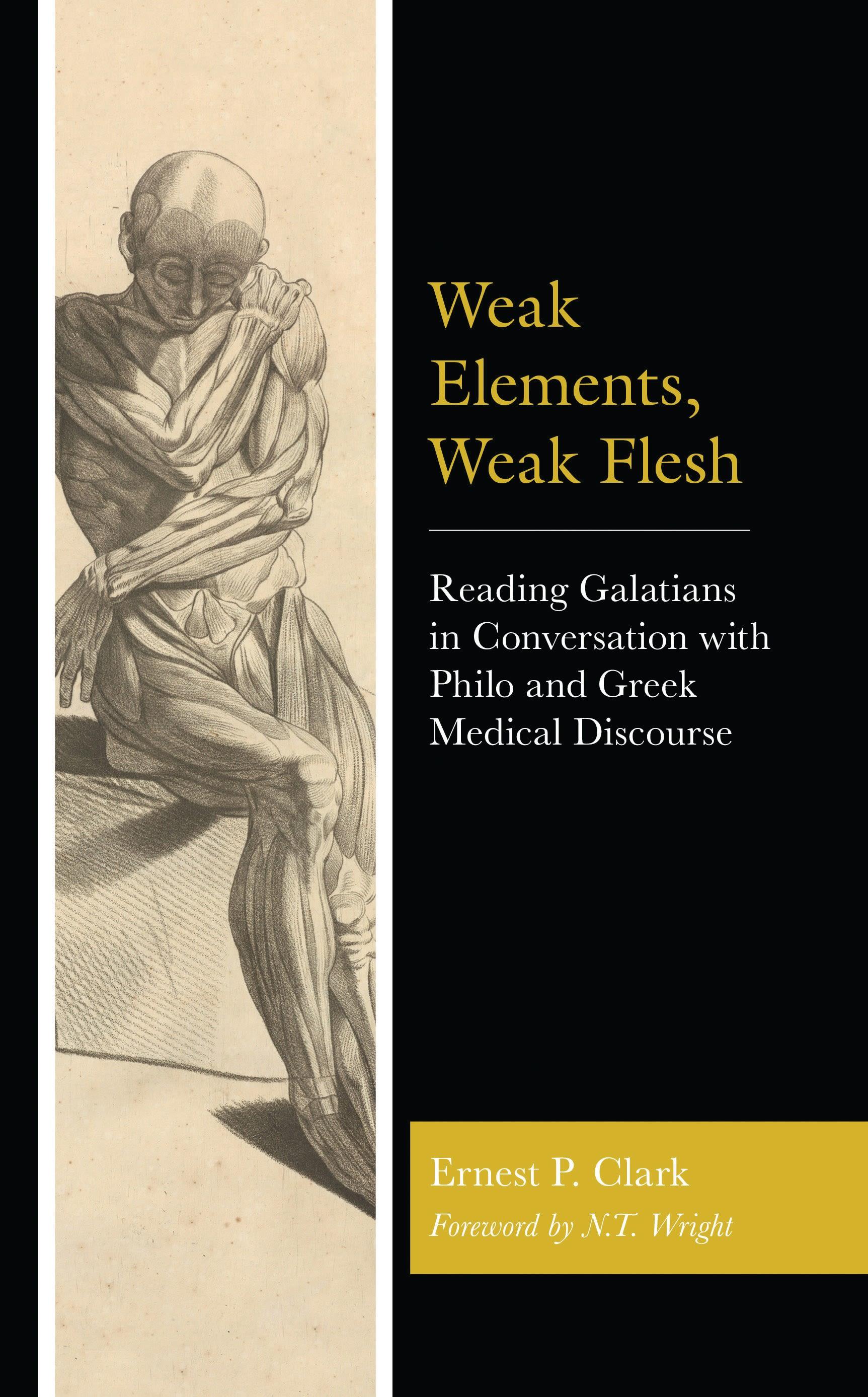
In Weak Elements, Weak Flesh, Ernest Clark reinvigorates an ancient interpretation overlooked since the fourth century. Clark argues that when Paul writes “we too were enslaved under the elements of the world,” he means that the elements that compose the cosmos also compose and compromise the flesh, allowing sin to enslave human persons through their bodies (Gal 4.3). This book demonstrates that early Jews introduced the phrase στοιχε?α το? κ?σμου to refer to the material elements: earth, water, air, and fire. Greek medicine understood these elements to mediate the bodily stimuli and desires which enslave the soul. In his philosophy according to the cosmic elements, Philo promotes the law of Moses as the effective way to be “redeemed from slavery” to the flesh and to attain righteousness. Paul’s epistle to the Galatians opposes this sort of “redemptive nomism.” Paul accepts that weak elements compose the weak flesh and that they mediate sinful stimuli and desires that lead to the actions of the flesh. However, he denies that the law can make people alive or righteous. Instead, Paul prescribes crucifixion with Christ and new life with the Spirit as the cure for sin’s infection of the flesh made of weak elements.
Pagine: 300
Categoria: Religion & Teologi
e-ISBN: 9781978713963
Peso di spedizione: 1.2 kg
Spedito in: 1-2 giorni
Paga facilmente con carta, Klarna, Apple Pay o Google Pay. Non sei soddisfatto? Hai sempre 14 giorni per il rimborso. Leggi di più nei nostri termini. Per qualsiasi domanda, scrivici a hello@memmo.org.
Memmo rende lo studio più facile, ovunque tu sia nel mondo. Qui trovi i tuoi libri di testo e strumenti di studio intelligenti, tutto in un unico posto: riassunti, quiz, podcast e flashcard. E poi c'è Ted, il tuo compagno di studio che risponde a ogni tua domanda. Oltre 50.000 studenti studiano già qui: è stato creato per aiutarti a imparare più velocemente e a stressarti meno.