
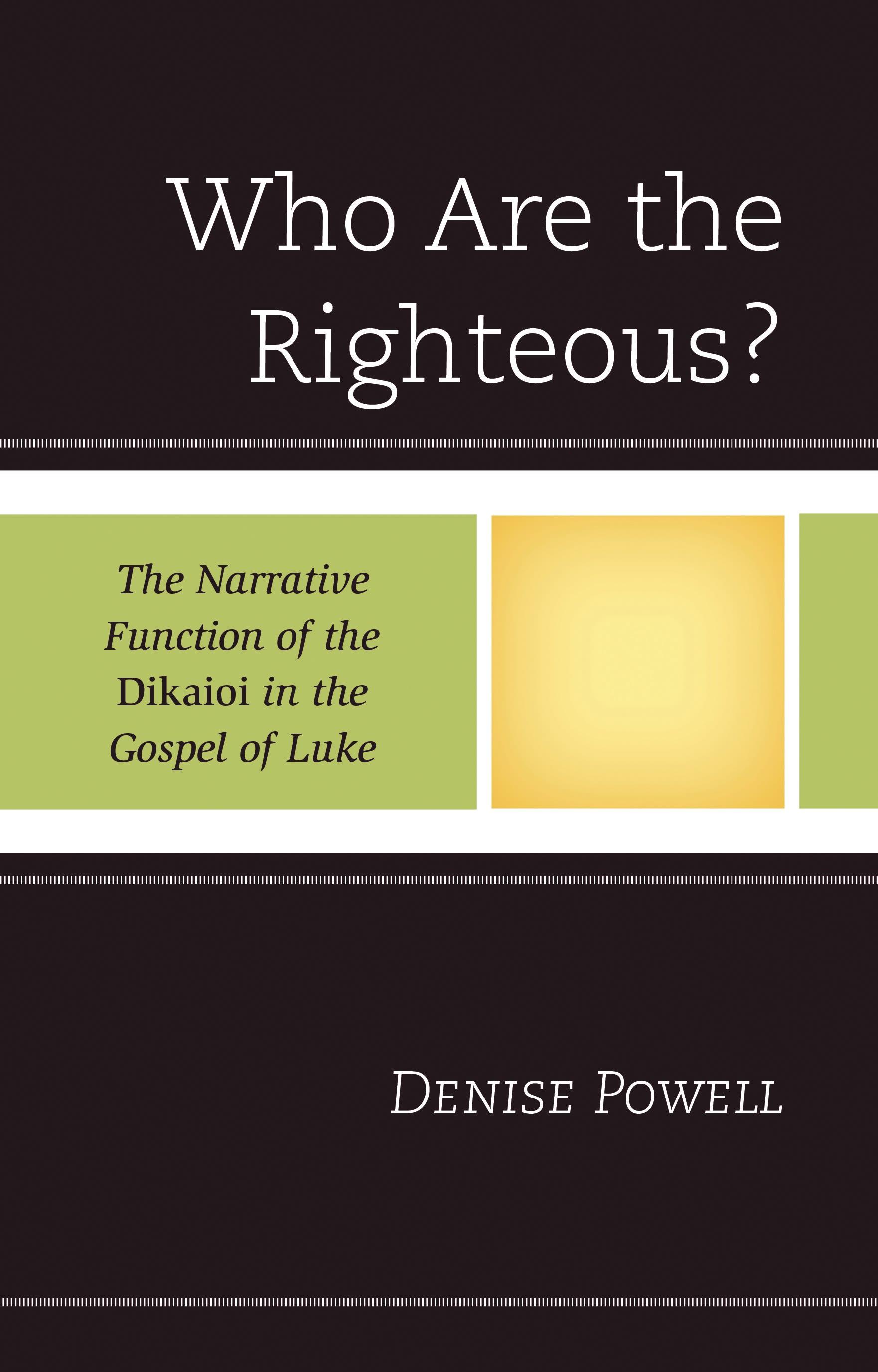
Who is righteous and how one becomes righteous is a question often debated in Pauline studies but rarely explored in the Gospels. In this book, Denise Powell investigates Luke’s answer to the question by tracing his “righteous” characters sequentially through the Gospel narrative. By portraying Zechariah and Elizabeth, Mary, Simeon, and Anna as righteous at the beginning of the narrative, Luke establishes the characteristics of the righteous. As a result of the primacy effect, these birth narrative characters become the standard against which the righteous nature of subsequent characters is measured. This leads to uncertainty over who belongs in the category of the righteous when later stories contrast an ostensibly righteous character with a “sinner.” The increasing uncertainty over who belongs in which category functions as the backdrop for the centurion’s declaration that Jesus is “righteous.” By way of the “sword discourse” of 22:35-38 and the subsequent arrest scene, Jesus intentionally places himself in the “sinner” category in fulfilment of Scripture. Since Jesus has placed himself in solidarity with sinners, and they with him, the centurion’s declaration that Jesus is righteous has implications for all the sinners in the Lukan story.
Paga facilmente con carta, Klarna, Apple Pay o Google Pay. Non sei soddisfatto? Hai sempre 14 giorni per il rimborso. Leggi di più nei nostri termini. Per qualsiasi domanda, scrivici a hello@memmo.org.
Memmo rende lo studio più facile, ovunque tu sia nel mondo. Qui trovi i tuoi libri di testo e strumenti di studio intelligenti, tutto in un unico posto: riassunti, quiz, podcast e flashcard. E poi c'è Ted, il tuo compagno di studio che risponde a ogni tua domanda. Oltre 50.000 studenti studiano già qui: è stato creato per aiutarti a imparare più velocemente e a stressarti meno.