
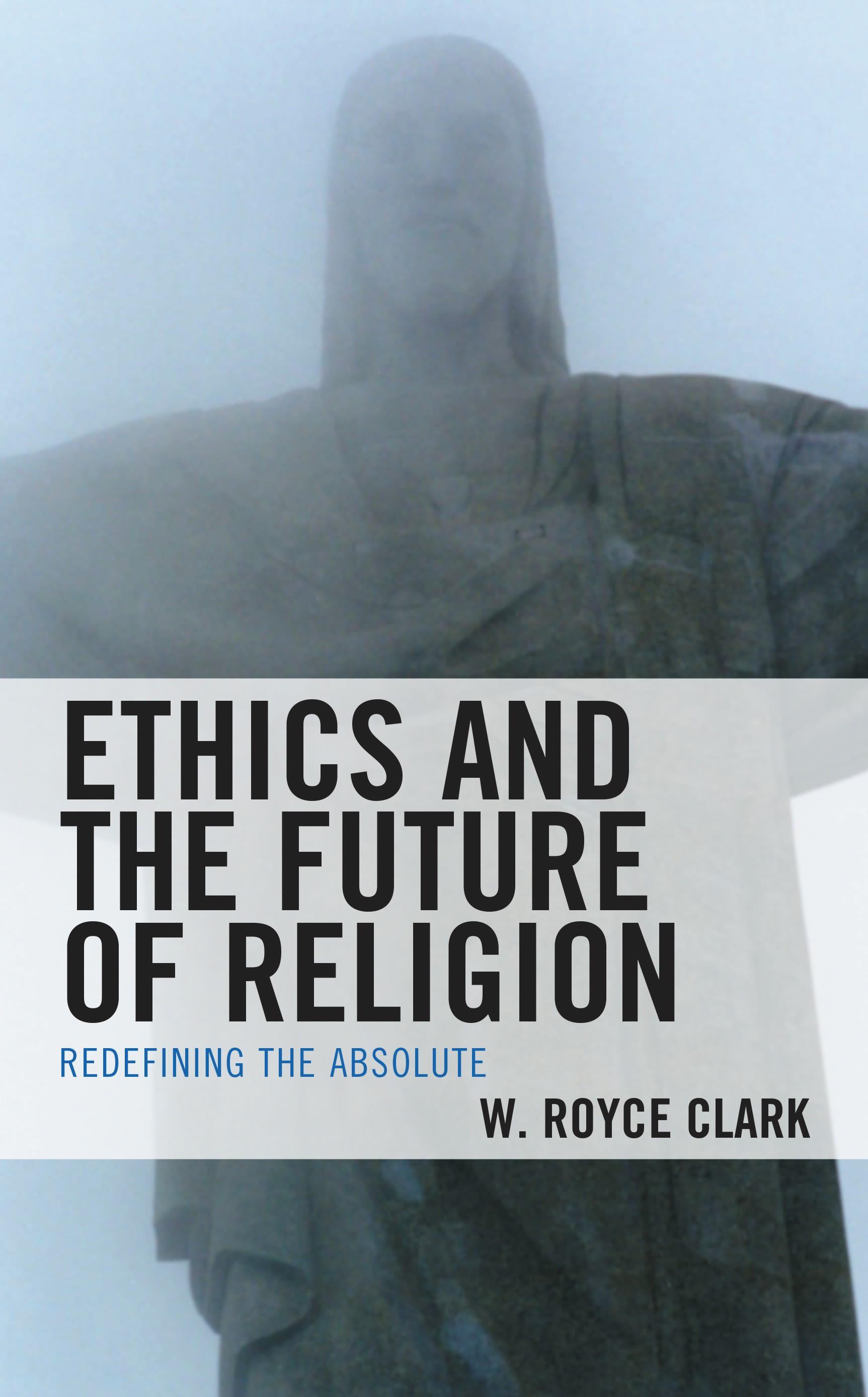
W. Royce Clark observes that humanity appears to be jeopardizing our own future in a chaos of mutual antagonism and hypocrisy. Religions have traditionally provided ethical guidance, but because their absolutized metaphysics are incompatible with each other, we cannot rely on any one of them in a religiously pluralistic culture. The ethics of various religions are also built on theocratic or authoritarian foundations which are incompatible with any democratic society. Finally, many of their premises are very ancient, so not relevant or appropriate in our modern scientific world.
The Western Enlightenment brought challenges against religion’s singularity, exclusivity, heteronomy, and anti-scientific assumptions, all of which disrupted their ethics and the Absolute metaphysical grounds upon which those ethics rested, raising the question of whether a “freestanding” ethic was possible. Inasmuch as the primary claim of most religions was regarded as beyond challenge, but was a conflation of history and myth, modern historical method created more doubt than certainty about such allegedly certain doctrines as “Jesus is the Son of God.” By the end of the 20th century, the impossibility of validating suchprimary Christological claims from a historical approach became evident, despite the articulate attempts at credibility in the brilliant works of John Dominic Crossan and Wolfhart Pannenberg, which remained unconvincing in important ways.
Between 1832 and 2014, innovative Christian theologians such as Schleiermacher, Hegel, Tillich, and Scharlemann took a detour from the futility of historical verification. This study examines their remarkable attempts at a form of “corroboration” of the basic Christological claim, even if their primary interests were more in Christology than ethics. The question Clark takes up here is whether or not these figures have thereby provided a base for a universal ethic, or the only answer is for principles “freestanding” from any religion?
The Western Enlightenment brought challenges against religion’s singularity, exclusivity, heteronomy, and anti-scientific assumptions, all of which disrupted their ethics and the Absolute metaphysical grounds upon which those ethics rested, raising the question of whether a “freestanding” ethic was possible. Inasmuch as the primary claim of most religions was regarded as beyond challenge, but was a conflation of history and myth, modern historical method created more doubt than certainty about such allegedly certain doctrines as “Jesus is the Son of God.” By the end of the 20th century, the impossibility of validating suchprimary Christological claims from a historical approach became evident, despite the articulate attempts at credibility in the brilliant works of John Dominic Crossan and Wolfhart Pannenberg, which remained unconvincing in important ways.
Between 1832 and 2014, innovative Christian theologians such as Schleiermacher, Hegel, Tillich, and Scharlemann took a detour from the futility of historical verification. This study examines their remarkable attempts at a form of “corroboration” of the basic Christological claim, even if their primary interests were more in Christology than ethics. The question Clark takes up here is whether or not these figures have thereby provided a base for a universal ethic, or the only answer is for principles “freestanding” from any religion?
Pagine: 472
Categoria: Religion & Teologi
e-ISBN: 9781978708655
Peso di spedizione: 1.2 kg
Spedito in: 1-2 giorni
Paga facilmente con carta, Klarna, Apple Pay o Google Pay. Non sei soddisfatto? Hai sempre 14 giorni per il rimborso. Leggi di più nei nostri termini. Per qualsiasi domanda, scrivici a hello@memmo.org.
Memmo rende lo studio più facile, ovunque tu sia nel mondo. Qui trovi i tuoi libri di testo e strumenti di studio intelligenti, tutto in un unico posto: riassunti, quiz, podcast e flashcard. E poi c'è Ted, il tuo compagno di studio che risponde a ogni tua domanda. Oltre 50.000 studenti studiano già qui: è stato creato per aiutarti a imparare più velocemente e a stressarti meno.