
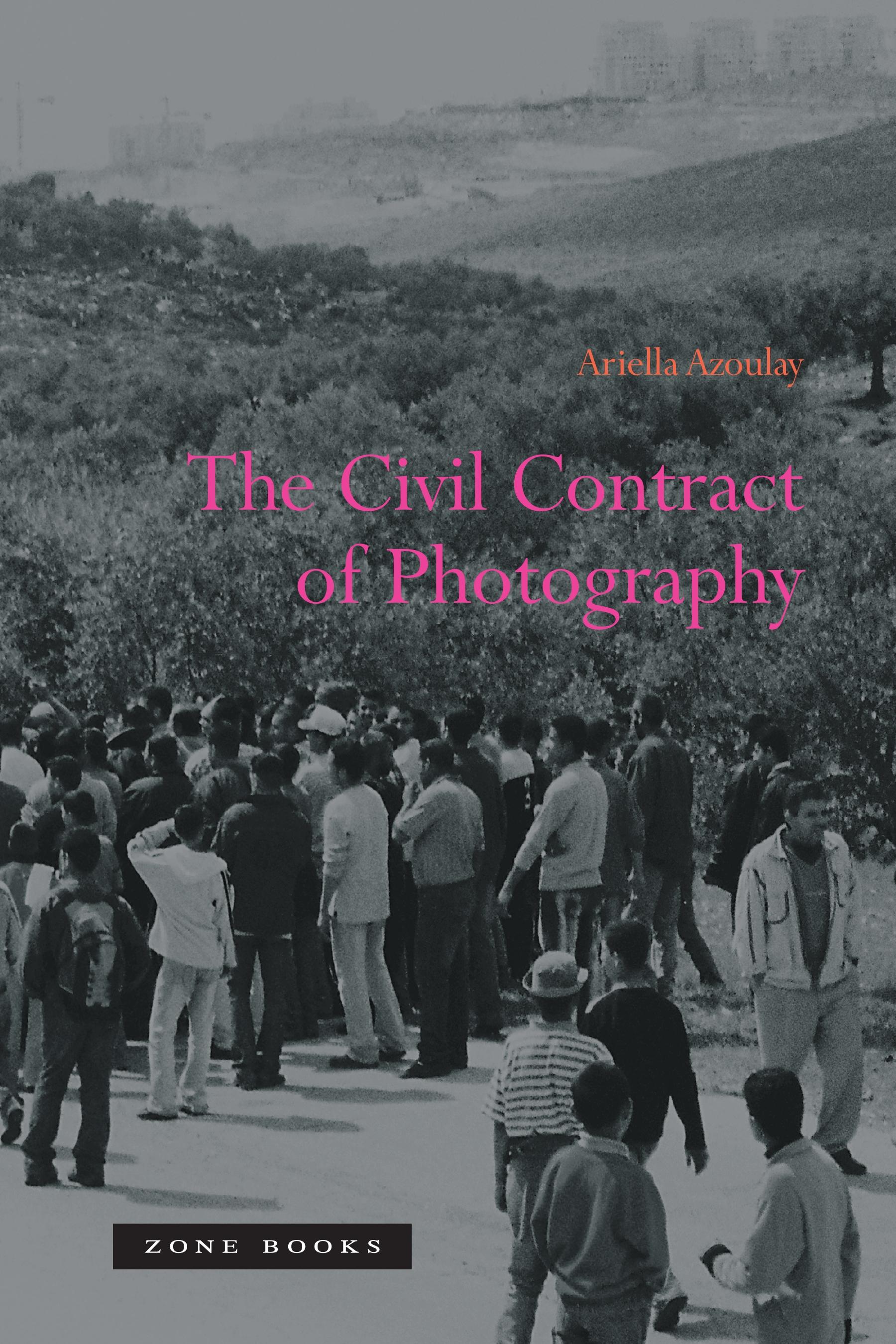
In this groundbreaking work, Ariella Azoulay thoroughly revises our understanding of the ethical status of photography. It must, she insists, be understood in its inseparability from the many catastrophes of recent history. She argues that photography is a particular set of relations between individuals and the powers that govern them and, at the same time, a form of relations among equals that constrains that power. Anyone, even a stateless person, who addresses others through photographs or occupies the position of a photograph’s addressee, is or can become a member of the citizenry of photography.
The crucial arguments of the book concern two groups that have been rendered invisible by their state of exception: the Palestinian noncitizens of Israel and women in Western societies. Azoulay’s leading question is: Under what legal, political, or cultural conditions does it become possible to see and show disaster that befalls those with flawed citizenship in a state of exception? The Civil Contract of Photography is an essential work for anyone seeking to understand the disasters of recent history and the consequences of how they and their victims are represented.
Paga facilmente con carta, Klarna, Apple Pay o Google Pay. Non sei soddisfatto? Hai sempre 14 giorni per il rimborso. Leggi di più nei nostri termini. Per qualsiasi domanda, scrivici a hello@memmo.org.
Memmo rende lo studio più facile, ovunque tu sia nel mondo. Qui trovi i tuoi libri di testo e strumenti di studio intelligenti, tutto in un unico posto: riassunti, quiz, podcast e flashcard. E poi c'è Ted, il tuo compagno di studio che risponde a ogni tua domanda. Oltre 50.000 studenti studiano già qui: è stato creato per aiutarti a imparare più velocemente e a stressarti meno.