
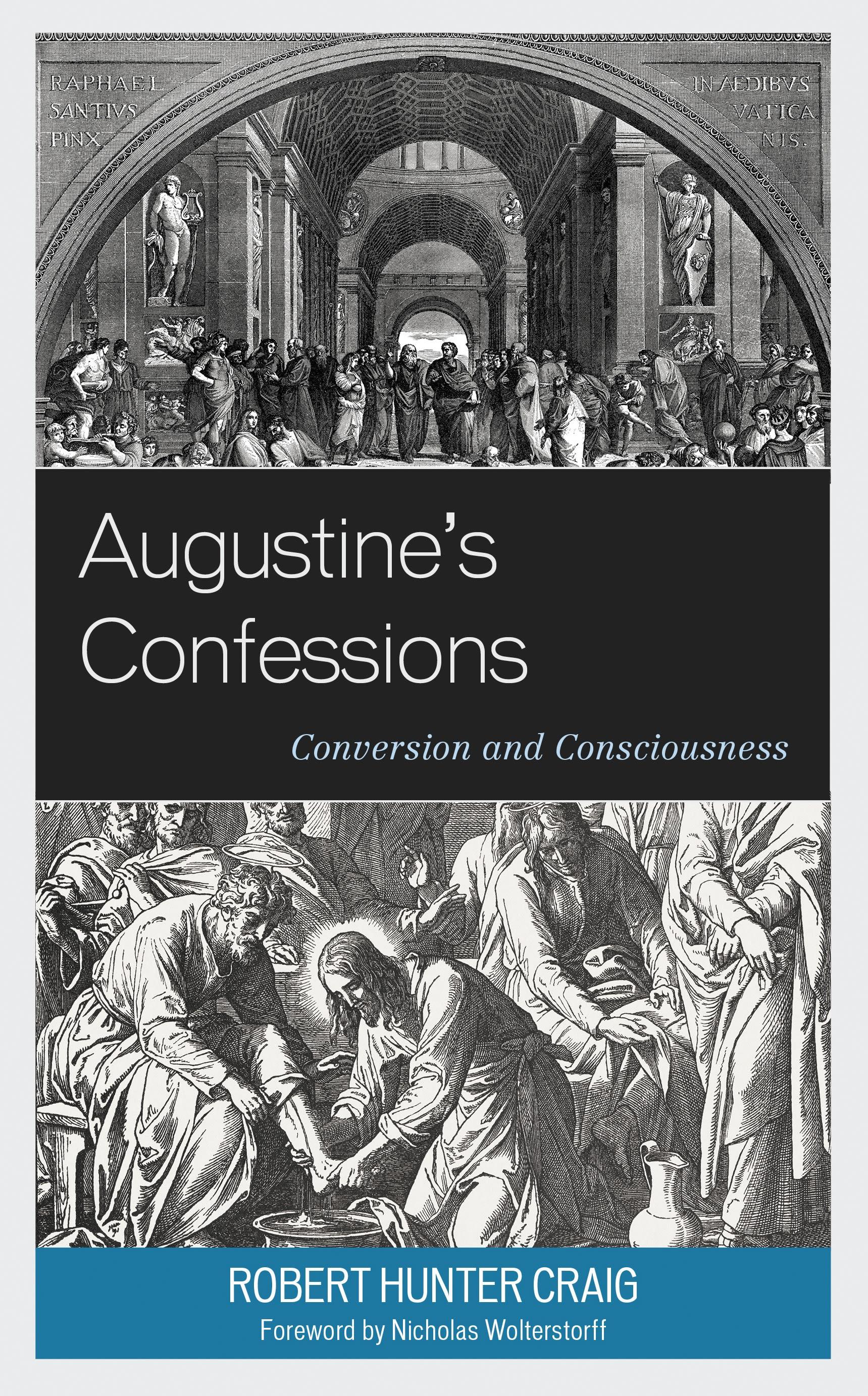
Augustine's Confessions: Conversion and Consciousness argues two original positions concerning the structure and meaning of the Confessions by Augustine. The structure is found to be a tool used by Augustine in his earlier pre-Confessions writings in which he uses the Allegory of the Cave in book VII of the Republic by Plato to both describe human consciousness and as a structural framework for his own life story. As with Plato's allegory, Augustine then uses Books X-XIII to do, what the author calls, "Scriptural Philosophical" analysis of the allegorical prayer previously given. The author shows that the Confessions is really an allegorical quasi-prayer that shows Augustine's state of mind or disposition through space/time—and at the same time uses different personas, schools of thought and metaphysical constructs to show the inadequacy of Plato's consciousness model of the cave to truly describe human ratiocination within consciousness in its totality—Synchronic-Synthetic-Triplex (SST) or body, mind, God-Will substance. Instead, Augustine demonstrates the superiority of the Christian conversion to that of the Platonic as described both by Platonic books and the books of the Platonists. The Christian conversion is based on the incarnate Wisdom of Christ Jesus within the Cave/World.
Paga facilmente con carta, Klarna, Apple Pay o Google Pay. Non sei soddisfatto? Hai sempre 14 giorni per il rimborso. Leggi di più nei nostri termini. Per qualsiasi domanda, scrivici a hello@memmo.org.
Memmo rende lo studio più facile, ovunque tu sia nel mondo. Qui trovi i tuoi libri di testo e strumenti di studio intelligenti, tutto in un unico posto: riassunti, quiz, podcast e flashcard. E poi c'è Ted, il tuo compagno di studio che risponde a ogni tua domanda. Oltre 50.000 studenti studiano già qui: è stato creato per aiutarti a imparare più velocemente e a stressarti meno.