
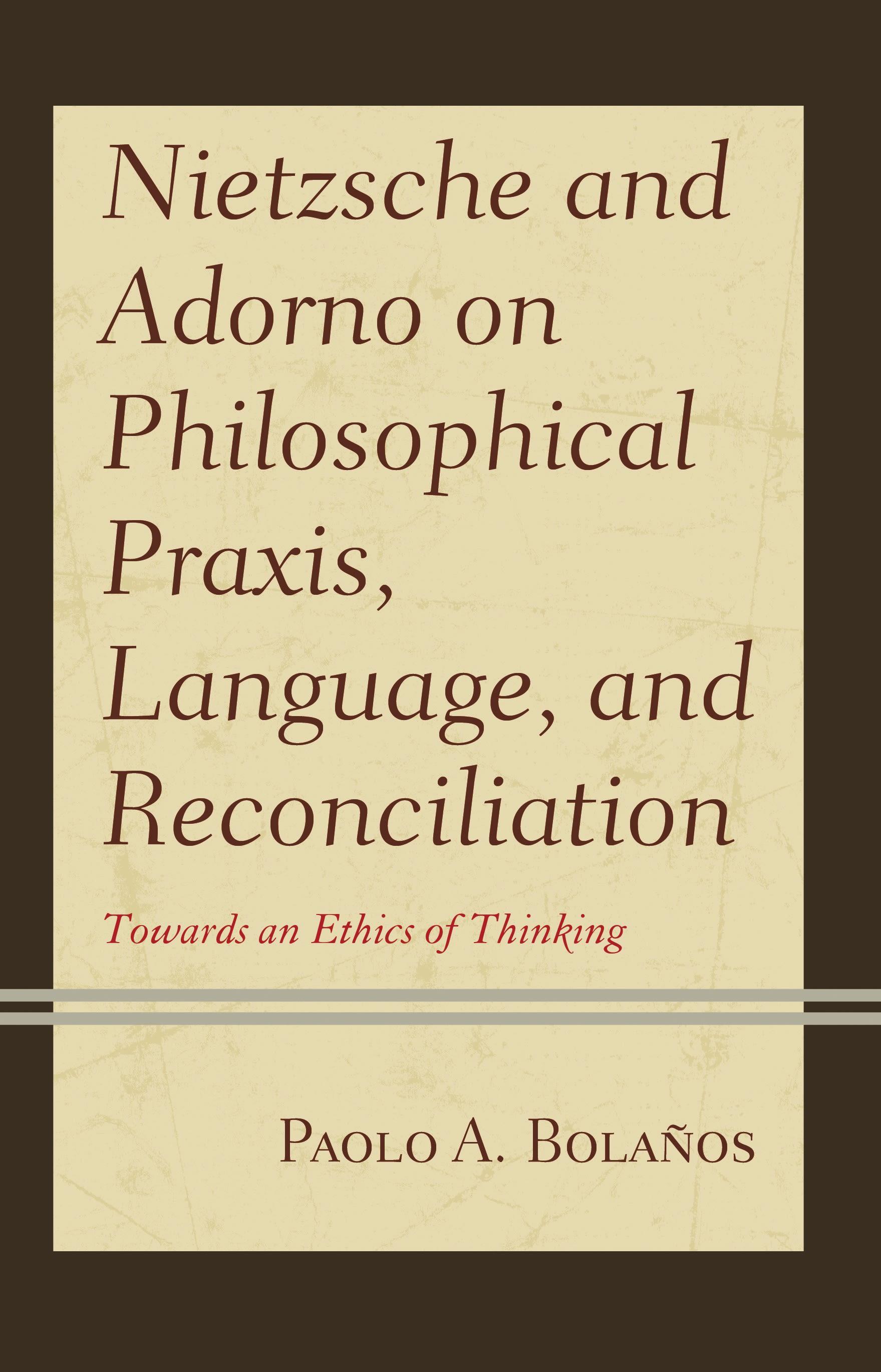
Nietzsche and Adorno on Philosophical Praxis, Language, and Reconciliation: Towards an Ethics of Thinking offers a philosophical notion of an “ethics of thinking,” a kind of thinking that is receptive to the non-identical character of the world of human and non-human objects. Paolo A. Bolaños experiments with the ideas of Friedrich Nietzsche and Theodor W. Adorno, who are presented as contemporary proponents of the Frühromantik tradition. Bolaños offers a reconstruction of the respective philosophies of language of Nietzsche and Adorno, as well as a rehearsal of their critique of metaphysics and identity thinking, in order to develop a notion of philosophical praxis that is grounded in the ethical dimension of thinking. Via Nietzsche and Adorno, Bolaños argues that thinking’s performative participation in uncertainty broadens the domain of reason, thereby also broadening our conceptual capacities and our receptivity to new possibilities of thinking. As an ethical praxis, thinking guards itself from the error of solidification, thereby opening philosophy to a reconciliatory, as opposed to domineering, reception of the world.
Paga facilmente con carta, Klarna, Apple Pay o Google Pay. Non sei soddisfatto? Hai sempre 14 giorni per il rimborso. Leggi di più nei nostri termini. Per qualsiasi domanda, scrivici a hello@memmo.org.
Memmo rende lo studio più facile, ovunque tu sia nel mondo. Qui trovi i tuoi libri di testo e strumenti di studio intelligenti, tutto in un unico posto: riassunti, quiz, podcast e flashcard. E poi c'è Ted, il tuo compagno di studio che risponde a ogni tua domanda. Oltre 50.000 studenti studiano già qui: è stato creato per aiutarti a imparare più velocemente e a stressarti meno.