
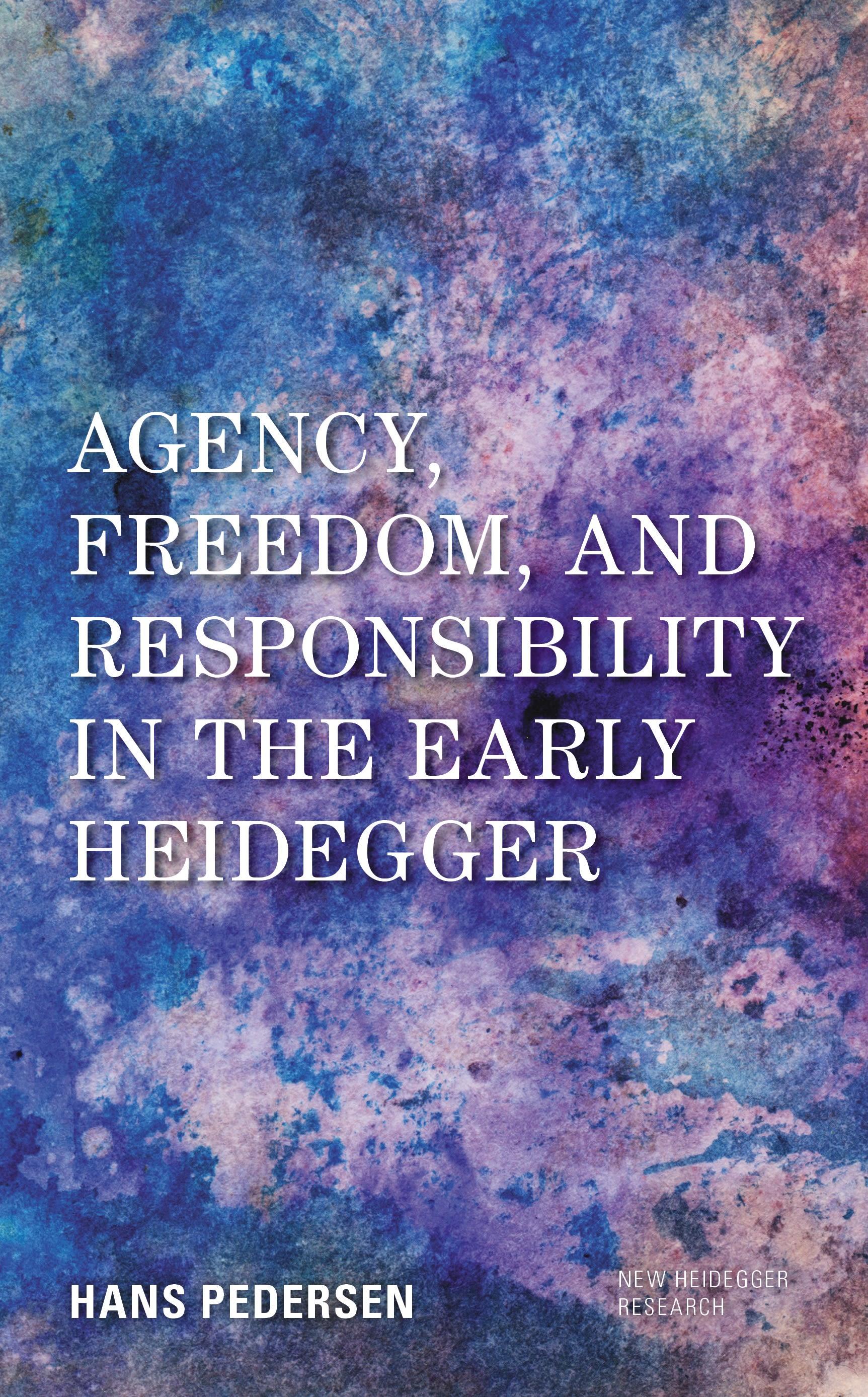
This book employs Heidegger’s work of the 1920s and early 1930s to develop distinctively Heideggerian accounts of agency, freedom, and responsibility, making the case that Heidegger’s thought provides a compelling alternative to the mainstream philosophical accounts of these concepts.
Hans Pedersen demonstrates that Heidegger’s thought can be fruitfully used to develop a plausible alternative understanding of agency that avoids the metaphysical commitments that give rise to the standard free-will debate. The first several chapters are devoted to working out an account of the ontological structure of human agency, specifically focusing on the Heideggerian understanding of the role of mental states, causal explanations, and deliberation in human agency, arguing that action need not be understood in terms of the causal efficacy of mental states. In the following chapters, building on the prior account of agency, Pedersen develops Heideggerian accounts of freedom and responsibility. Having shown that action need not be understood causally, the Heideggerian view thereby avoids the conflict between free will and determinism that gives rise to the problem of free will and the correlative problem of responsibility.
Hans Pedersen demonstrates that Heidegger’s thought can be fruitfully used to develop a plausible alternative understanding of agency that avoids the metaphysical commitments that give rise to the standard free-will debate. The first several chapters are devoted to working out an account of the ontological structure of human agency, specifically focusing on the Heideggerian understanding of the role of mental states, causal explanations, and deliberation in human agency, arguing that action need not be understood in terms of the causal efficacy of mental states. In the following chapters, building on the prior account of agency, Pedersen develops Heideggerian accounts of freedom and responsibility. Having shown that action need not be understood causally, the Heideggerian view thereby avoids the conflict between free will and determinism that gives rise to the problem of free will and the correlative problem of responsibility.
Paga facilmente con carta, Klarna, Apple Pay o Google Pay. Non sei soddisfatto? Hai sempre 14 giorni per il rimborso. Leggi di più nei nostri termini. Per qualsiasi domanda, scrivici a hello@memmo.org.
Memmo rende lo studio più facile, ovunque tu sia nel mondo. Qui trovi i tuoi libri di testo e strumenti di studio intelligenti, tutto in un unico posto: riassunti, quiz, podcast e flashcard. E poi c'è Ted, il tuo compagno di studio che risponde a ogni tua domanda. Oltre 50.000 studenti studiano già qui: è stato creato per aiutarti a imparare più velocemente e a stressarti meno.