
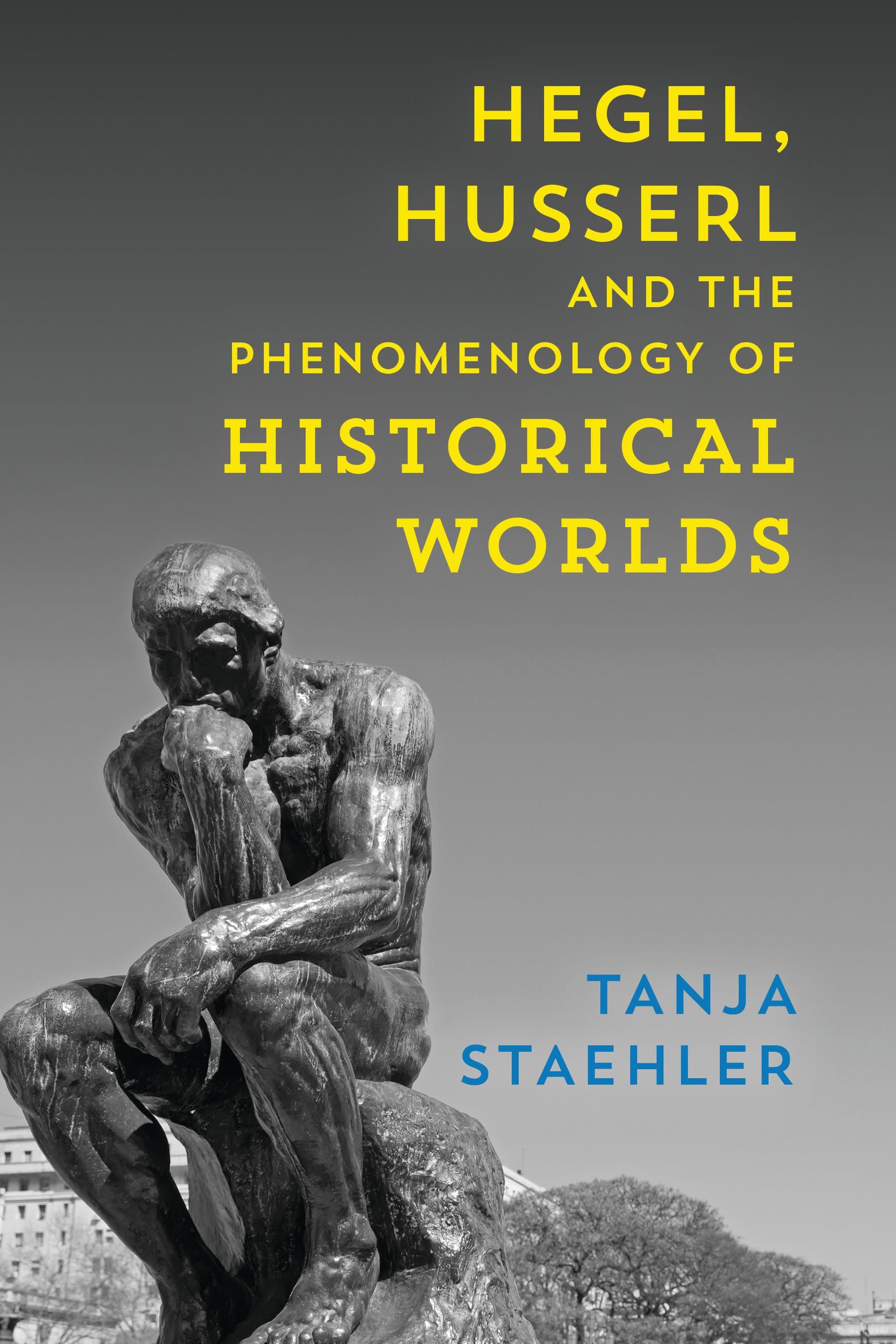
GWF Hegel famously described philosophy as 'its own time apprehended in thoughts', reflecting a desire that we increasingly experience, namely, the desire to understand our complex and fast-changing world. But how can we philosophically describe the world we live in? When Hegel attempted his systematic account of the historical world, he needed to conceive of history as rational progress to allow for such description. After the events of the twentieth century, we are rightfully doubtful about such progress.
However, in the twentieth century, another German philosopher, Edmund Husserl, attempted a similar project when he realised that a philosophical account of our human experience requires attending to the historical world we live in. According to Husserl, the Western world is a world in crisis. In this book, Tanja Staehler explores how Husserl thus radicalises Hegel’s philosophy by providing an account of historical movement as open. Husserl’s phenomenology allows thinking of historical worlds in the plural, without hierarchy, determined by ethics and aesthetics. Staehler argues that, through his radicalization of Hegel’s philosophy, Husserl provides us with a historical phenomenology and a coherent concept of a culture that points to the future for phenomenology as a philosophy that provides the methodological grounding for a variety of qualitative approaches in the humanities and social sciences.
However, in the twentieth century, another German philosopher, Edmund Husserl, attempted a similar project when he realised that a philosophical account of our human experience requires attending to the historical world we live in. According to Husserl, the Western world is a world in crisis. In this book, Tanja Staehler explores how Husserl thus radicalises Hegel’s philosophy by providing an account of historical movement as open. Husserl’s phenomenology allows thinking of historical worlds in the plural, without hierarchy, determined by ethics and aesthetics. Staehler argues that, through his radicalization of Hegel’s philosophy, Husserl provides us with a historical phenomenology and a coherent concept of a culture that points to the future for phenomenology as a philosophy that provides the methodological grounding for a variety of qualitative approaches in the humanities and social sciences.
Paga facilmente con carta, Klarna, Apple Pay o Google Pay. Non sei soddisfatto? Hai sempre 14 giorni per il rimborso. Leggi di più nei nostri termini. Per qualsiasi domanda, scrivici a hello@memmo.org.
Memmo rende lo studio più facile, ovunque tu sia nel mondo. Qui trovi i tuoi libri di testo e strumenti di studio intelligenti, tutto in un unico posto: riassunti, quiz, podcast e flashcard. E poi c'è Ted, il tuo compagno di studio che risponde a ogni tua domanda. Oltre 50.000 studenti studiano già qui: è stato creato per aiutarti a imparare più velocemente e a stressarti meno.