
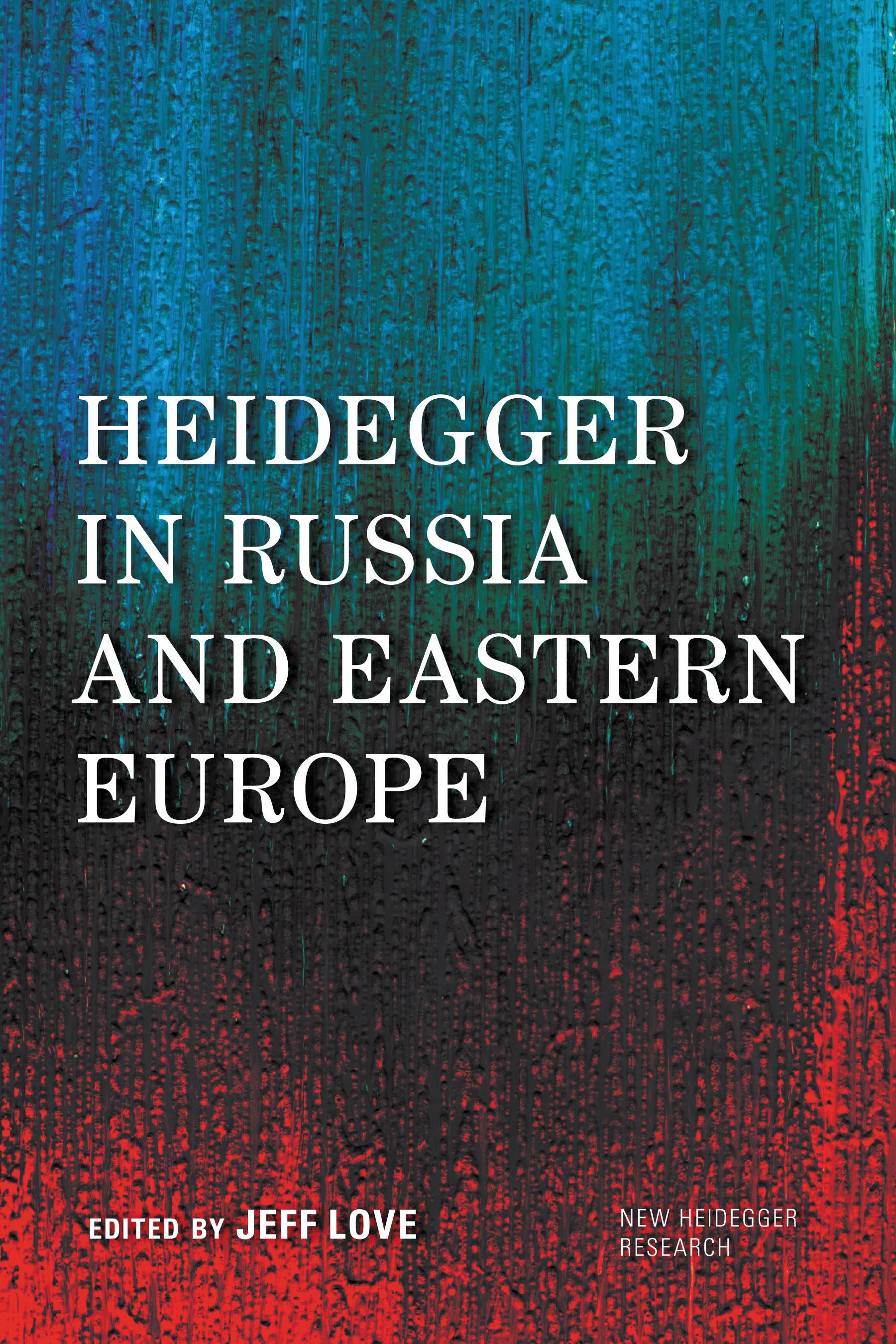
Heidegger’s influence in the twentieth century probably outstrips that of any other philosopher, at least in the so-called Continental tradition. The 'revolution' Heidegger brought about with his compelling readings of the broader philosophical tradition transformed German philosophy and spread quickly to most of Europe, the United States and Japan. This volume examines Heidegger’s influence in a region where his reception has had a remarkable and largely hidden history: Eastern Europe and Russia.
The book begins by addressing two important literary influences on Heidegger: Dostoevsky and Tolstoy. It goes on to examine Heidegger’s philosophical influence, and features three crucial figures in the reception of Heidegger’s thought in Eastern Europe and Russia: Vladimir Bibikhin, Krzysztof Michalski, and Jan Patocka. Finally the volume deals with an often vexed issue in current treatments of Heidegger: the importance of Heidegger’s philosophy for politics. The book includes essays by an international team of contributors, including leading representatives of Heideggerian thought in Russia today. Heidegger’s thought plays a key role in debates over Russian identity and the geopolitical role Russia has to play in the world. The volume surveys the complicated landscape of post-Soviet philosophy, and how the rise of widely differing appropriations of Heidegger exploit familiar fault lines in the Russian reception of Western thinkers that date back to the first stirrings of a distinctively Russian philosophical tradition.
The book begins by addressing two important literary influences on Heidegger: Dostoevsky and Tolstoy. It goes on to examine Heidegger’s philosophical influence, and features three crucial figures in the reception of Heidegger’s thought in Eastern Europe and Russia: Vladimir Bibikhin, Krzysztof Michalski, and Jan Patocka. Finally the volume deals with an often vexed issue in current treatments of Heidegger: the importance of Heidegger’s philosophy for politics. The book includes essays by an international team of contributors, including leading representatives of Heideggerian thought in Russia today. Heidegger’s thought plays a key role in debates over Russian identity and the geopolitical role Russia has to play in the world. The volume surveys the complicated landscape of post-Soviet philosophy, and how the rise of widely differing appropriations of Heidegger exploit familiar fault lines in the Russian reception of Western thinkers that date back to the first stirrings of a distinctively Russian philosophical tradition.
Paga facilmente con carta, Klarna, Apple Pay o Google Pay. Non sei soddisfatto? Hai sempre 14 giorni per il rimborso. Leggi di più nei nostri termini. Per qualsiasi domanda, scrivici a hello@memmo.org.
Memmo rende lo studio più facile, ovunque tu sia nel mondo. Qui trovi i tuoi libri di testo e strumenti di studio intelligenti, tutto in un unico posto: riassunti, quiz, podcast e flashcard. E poi c'è Ted, il tuo compagno di studio che risponde a ogni tua domanda. Oltre 50.000 studenti studiano già qui: è stato creato per aiutarti a imparare più velocemente e a stressarti meno.