
Malevolent Legalities draws upon archival research conducted at the Scalia Papers at the Harvard Law School Historical and Special Collections to examine the influence of Justice Antonin Scalia’s judicial philosophy of “textualist-originalism” on the US Supreme Court’s antidiscrimination jurisprudence. The book focuses on six US Supreme Court cases, organized into two parts. The main argument of the book, grounded in archival and legal materials, is that textualist-originalism makes it lawful for discrimination to be performed through the text, and explicitly seeks to prevent progress by enacting a regime of “static law.”
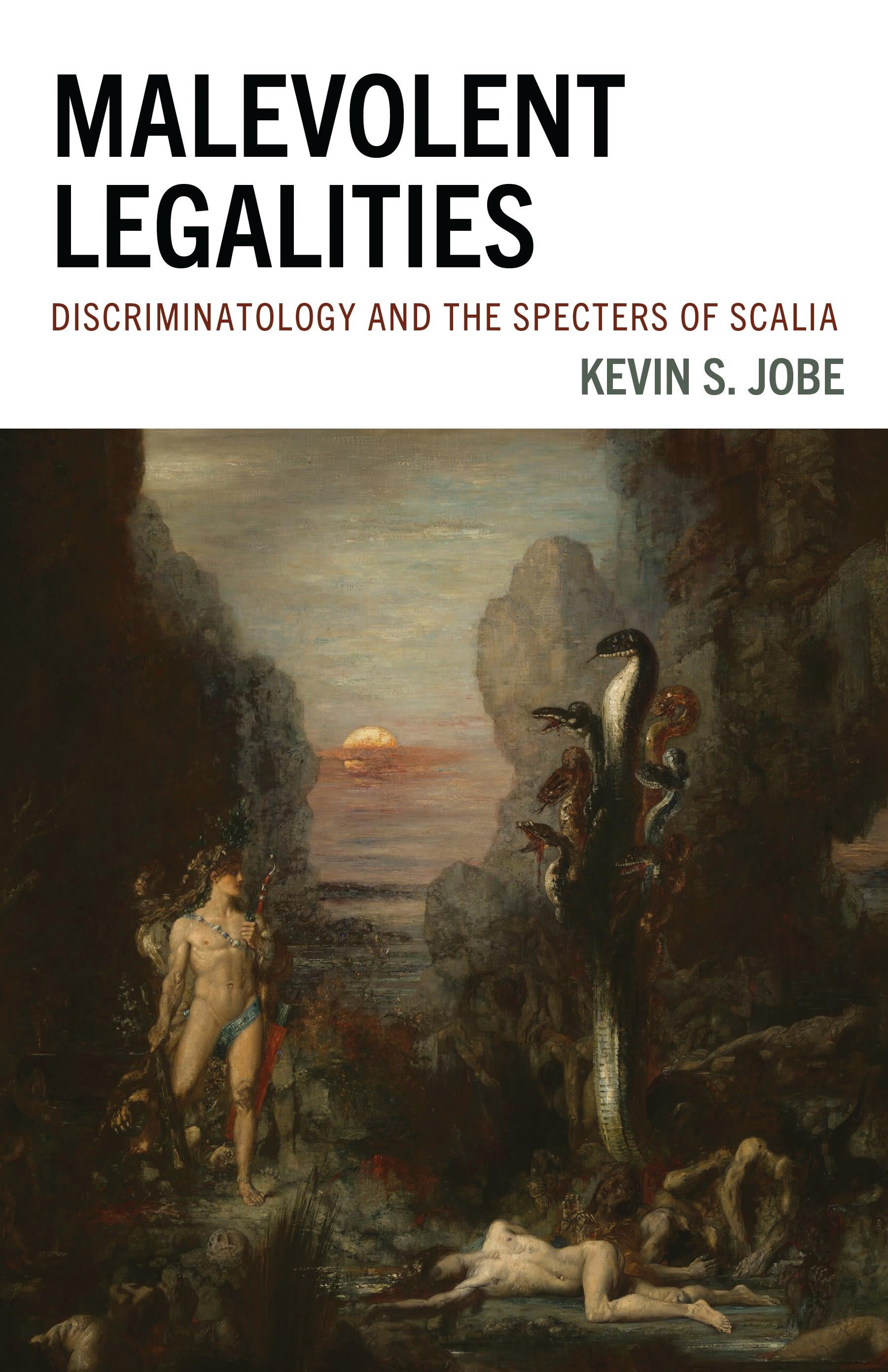
In Shelby County v. Holder (2013), Justice Ginsburg remarked that discrimination today behaves like the Hydra, the many-headed serpent in Ancient Greek mythology which regenerates each time its head is severed. The analysis of archival and legal materials is therefore prefaced by the development of a unique methodology for studying discrimination called discriminatology, understood as a framework for analyzing how discrimination persists through time, is performed through the text, and is a product of the manipulation of legal speech. In this way, Malevolent Legalities approaches the study of textualist-originalism as itself a vehicle for discrimination performed mala fide or “in bad faith.”
In Shelby County v. Holder (2013), Justice Ginsburg remarked that discrimination today behaves like the Hydra, the many-headed serpent in Ancient Greek mythology which regenerates each time its head is severed. The analysis of archival and legal materials is therefore prefaced by the development of a unique methodology for studying discrimination called discriminatology, understood as a framework for analyzing how discrimination persists through time, is performed through the text, and is a product of the manipulation of legal speech. In this way, Malevolent Legalities approaches the study of textualist-originalism as itself a vehicle for discrimination performed mala fide or “in bad faith.”
Paga facilmente con carta, Klarna, Apple Pay o Google Pay. Non sei soddisfatto? Hai sempre 14 giorni per il rimborso. Leggi di più nei nostri termini. Per qualsiasi domanda, scrivici a hello@memmo.org.
Memmo rende lo studio più facile, ovunque tu sia nel mondo. Qui trovi i tuoi libri di testo e strumenti di studio intelligenti, tutto in un unico posto: riassunti, quiz, podcast e flashcard. E poi c'è Ted, il tuo compagno di studio che risponde a ogni tua domanda. Oltre 50.000 studenti studiano già qui: è stato creato per aiutarti a imparare più velocemente e a stressarti meno.