
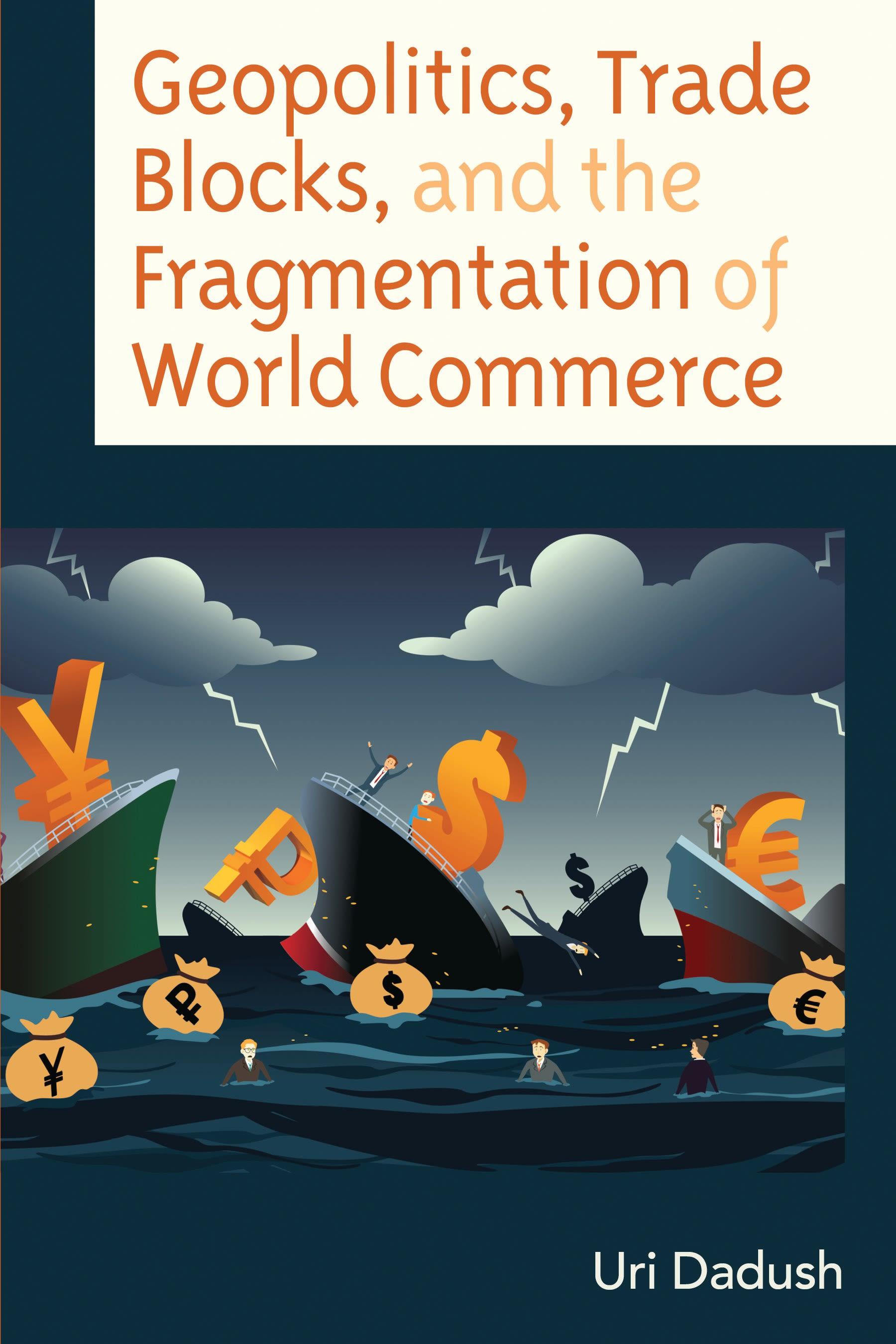
The global economic edifice built after World War II is a source of unprecedented prosperity. It cannot function without open and predictable international trade, and the peaceful international relations that are its foundation. The rules that enable trade are under attack. Social divisions and great power rivalry have eroded the political support for open trade. The consequence is fragmentation of world trade, its separation into blocks that advance domestic producers or favored nations nearby. These blocs are themselves often pulled apart by competing agendas. The prospects are for vastly reduced economic efficiency and - most ominously - heightened geopolitical tensions. The questions about why this is happening, how economic fragmentation will evolve, and how to respond to it, are uppermost in the minds of policymakers and businesses across the world. These are the questions that Uri Dadush seeks to answer. Since the uncertainty cannot be dispelled, it must be better managed.
Paga facilmente con carta, Klarna, Apple Pay o Google Pay. Non sei soddisfatto? Hai sempre 14 giorni per il rimborso. Leggi di più nei nostri termini. Per qualsiasi domanda, scrivici a hello@memmo.org.
Memmo rende lo studio più facile, ovunque tu sia nel mondo. Qui trovi i tuoi libri di testo e strumenti di studio intelligenti, tutto in un unico posto: riassunti, quiz, podcast e flashcard. E poi c'è Ted, il tuo compagno di studio che risponde a ogni tua domanda. Oltre 50.000 studenti studiano già qui: è stato creato per aiutarti a imparare più velocemente e a stressarti meno.