
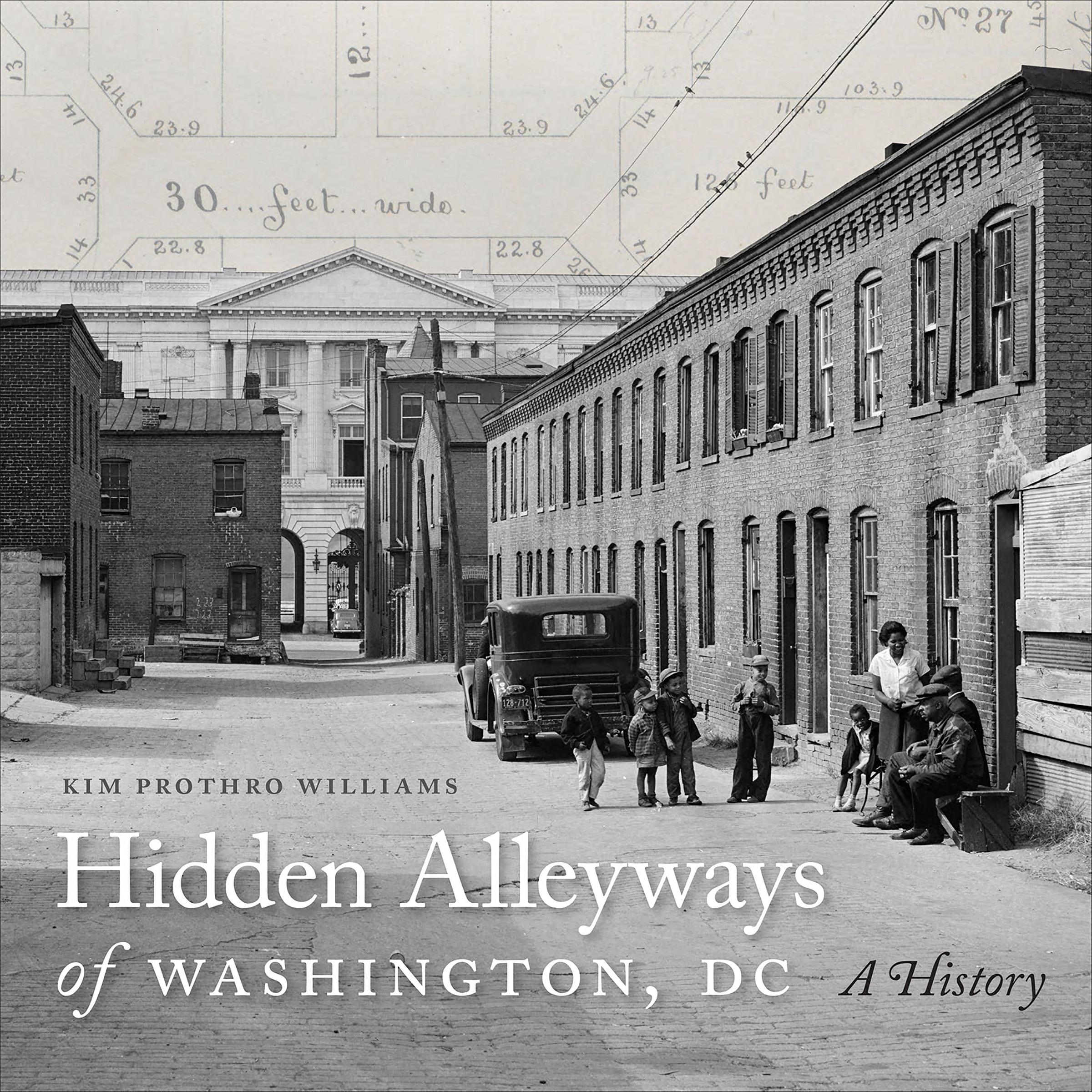
The remarkable architectural and social history of DC’s multifaceted alleyways
Alleyways in Washington, DC, have always been a fundamental part of the city’s life and economy. Deliberately hidden from public view by the capital’s early planners, DC’s alleys were created to provide access to stables, carriage houses, and other utility buildings. But as the city grew and property values rose, the nature of some alleys and their buildings changed, resulting in a parallel world of residential , manufacturing, and artistic spaces. Kim Prothro Williams reveals this world in a fascinating and richly illustrated history.
In the nineteenth and early twentieth centuries, the city’s inhabited alleys were often unsanitary spaces that were home to its poorest residents. These conditions spurred Progressive Era campaigns to demolish alley dwellings, which in turn led to the displacement of minority and disadvantaged communities. Today, many remaining alleyways, with their intimately scaled buildings, have been transformed into vibrant commercial and residential spaces. Yet this new wave of development raises questions about how spaces that were once reserved for the city’s poorest residents now cater to the wealthy.
This book is a must-have for anyone with an interest in Washington, social history, architecture, or historical preservation.
Paga facilmente con carta, Klarna, Apple Pay o Google Pay. Non sei soddisfatto? Hai sempre 14 giorni per il rimborso. Leggi di più nei nostri termini. Per qualsiasi domanda, scrivici a hello@memmo.org.
Memmo rende lo studio più facile, ovunque tu sia nel mondo. Qui trovi i tuoi libri di testo e strumenti di studio intelligenti, tutto in un unico posto: riassunti, quiz, podcast e flashcard. E poi c'è Ted, il tuo compagno di studio che risponde a ogni tua domanda. Oltre 50.000 studenti studiano già qui: è stato creato per aiutarti a imparare più velocemente e a stressarti meno.