
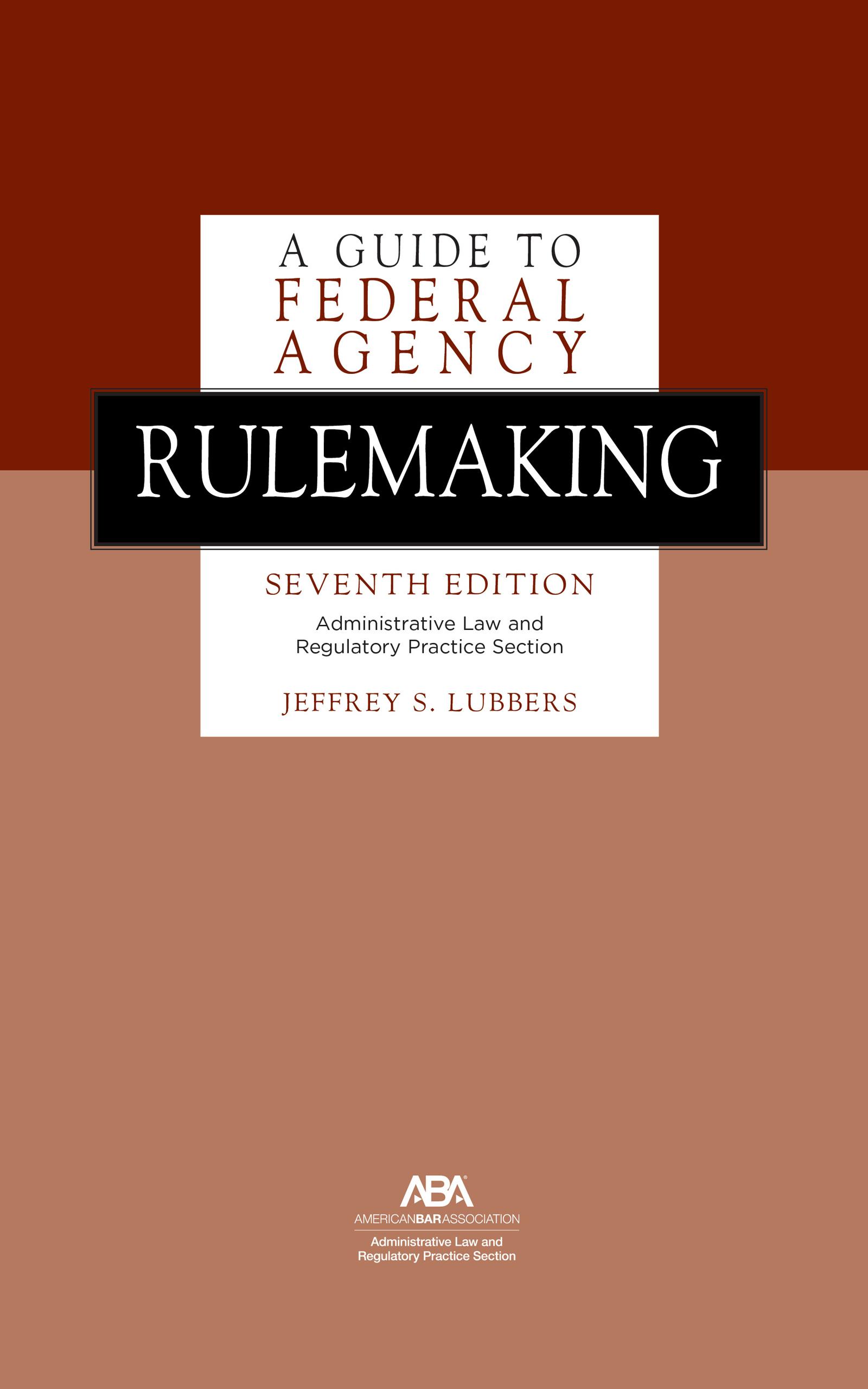
This seventh edition of A Guide to Federal Agency Rulemaking retains the basic organization of the previous six. Like its predecessors, this edition of the Guide has four parts. Part I is an overview of federal agency rulemaking and describes the major institutional "players" and the historical development of rulemaking. Part II describes the statutory framework of rulemaking, including the relevant sections of the APA and other statutes government-wide laws that have an impact on present-day rulemaking. Part III contains a step-by-step description of the informal rulemaking process, from the preliminary considerations to the final rule. Part IV discusses judicial review. Appendices include key rulemaking documents.
This edition was written in a turbulent time for administrative law. The last three presidential transitions have been very sharp and sweeping. Key changes in this volume include updating the White House initiatives from Obama to Trump II in Part I and a new chapter on presidential transitions and rulemaking in Part III.
The three judicial review chapters in Part IV have been extensively revised to consider the many transformative decisions of the Supreme Court concerning separation of powers, access to the courts to challenge agency regulations, and judicial review of agency legal interpretations (eliminating so-called Chevron deference and cutting back on Auer deference) and of agency fact finding and policy choice under the arbitrary-and-capricious test. The Court’s development of the "major questions doctrine," a judicial review canon that requires Congress to provide a clear statement authorizing major actions by agencies, is also critically examined.
This book comes out at a time when deregulation is ascendant, and judicial challenges are proliferating. But the APA defines "rulemaking" to include "formulating, amending or repealing" rules, and the relevant judicial review doctrines are equally agnostic. Therefore, anyone on any side of these issues will benefit from this book.
Paga facilmente con carta, Klarna, Apple Pay o Google Pay. Non sei soddisfatto? Hai sempre 14 giorni per il rimborso. Leggi di più nei nostri termini. Per qualsiasi domanda, scrivici a hello@memmo.org.
Memmo rende lo studio più facile, ovunque tu sia nel mondo. Qui trovi i tuoi libri di testo e strumenti di studio intelligenti, tutto in un unico posto: riassunti, quiz, podcast e flashcard. E poi c'è Ted, il tuo compagno di studio che risponde a ogni tua domanda. Oltre 50.000 studenti studiano già qui: è stato creato per aiutarti a imparare più velocemente e a stressarti meno.