
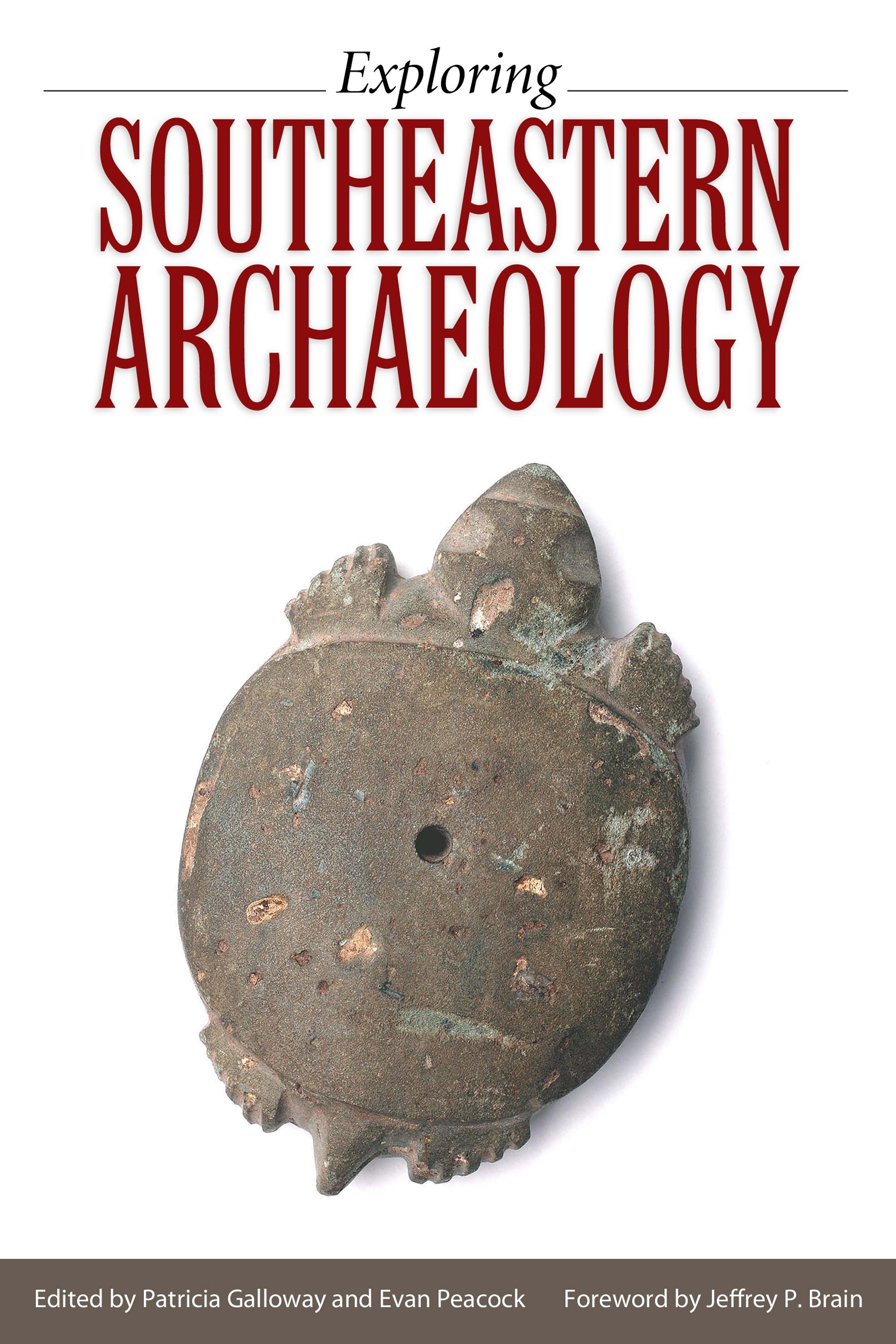
Contributions by Keith A. Baca, Jeffrey P. Brain, Samuel O. Brookes, Ian W. Brown, Philip J. Carr, Jessica Crawford, Patricia Galloway, Alison M. Hadley, Christopher T. Hays, Edward R. Henry, Cliff Jenkins, Jay K. Johnson, Evan Peacock, Janet Rafferty, Maria Schleidt, Mary Evelyn Starr, James B. Stoltman, Andrew M. Triplett, Melissa H. Twaroski, and Richard A. Weinstein
This volume includes original scholarship on a wide array of archaeological research across the South. One essay explores the effects of climate on early cultures in Mississippi. Contributors reveal the production and distribution of stone effigy beads, which were centered in southwest Mississippi some 5,000 years ago, and trace contact between different parts of the prehistoric Southeast as seen in the distribution of clay cooking balls. Researchers explore small, enigmatic sites in the hill country of northern Mississippi now marked by scatters of broken pottery and a large, seemingly isolated "platform" mound in Calhoun County. Pieces describe a mound group in Chickasaw County built by early agriculturalists who subsequently abandoned the area and a similar prehistoric abandonment event in Winston and Choctaw Counties. A large pottery collection from the famous Anna Mounds site in Adams County, excavations at a Chickasaw Indian site in Lee County, camps and works of the Civilian Conservation Corps in the pine hill country of southern Mississippi, and the history of logging in the Mississippi Delta all yield abundant, new understandings of the past.
Overview papers include a retrospective on archaeology in the National Forests of north Mississippi, a look at a number of mound sites in the lower Mississippi Delta, and a study of how communities of learning in field archaeology are built, with prominent archaeologist Samuel O. Brookes's achievements as a focal point. History buffs, artifact enthusiasts, students, and professionals all will find something of interest in this book, which opens doors on the prehistory and history of Mississippi.
This volume includes original scholarship on a wide array of archaeological research across the South. One essay explores the effects of climate on early cultures in Mississippi. Contributors reveal the production and distribution of stone effigy beads, which were centered in southwest Mississippi some 5,000 years ago, and trace contact between different parts of the prehistoric Southeast as seen in the distribution of clay cooking balls. Researchers explore small, enigmatic sites in the hill country of northern Mississippi now marked by scatters of broken pottery and a large, seemingly isolated "platform" mound in Calhoun County. Pieces describe a mound group in Chickasaw County built by early agriculturalists who subsequently abandoned the area and a similar prehistoric abandonment event in Winston and Choctaw Counties. A large pottery collection from the famous Anna Mounds site in Adams County, excavations at a Chickasaw Indian site in Lee County, camps and works of the Civilian Conservation Corps in the pine hill country of southern Mississippi, and the history of logging in the Mississippi Delta all yield abundant, new understandings of the past.
Overview papers include a retrospective on archaeology in the National Forests of north Mississippi, a look at a number of mound sites in the lower Mississippi Delta, and a study of how communities of learning in field archaeology are built, with prominent archaeologist Samuel O. Brookes's achievements as a focal point. History buffs, artifact enthusiasts, students, and professionals all will find something of interest in this book, which opens doors on the prehistory and history of Mississippi.
Paga facilmente con carta, Klarna, Apple Pay o Google Pay. Non sei soddisfatto? Hai sempre 14 giorni per il rimborso. Leggi di più nei nostri termini. Per qualsiasi domanda, scrivici a hello@memmo.org.
Memmo rende lo studio più facile, ovunque tu sia nel mondo. Qui trovi i tuoi libri di testo e strumenti di studio intelligenti, tutto in un unico posto: riassunti, quiz, podcast e flashcard. E poi c'è Ted, il tuo compagno di studio che risponde a ogni tua domanda. Oltre 50.000 studenti studiano già qui: è stato creato per aiutarti a imparare più velocemente e a stressarti meno.
Potrebbe interessarti anche
Acquista il libro0