
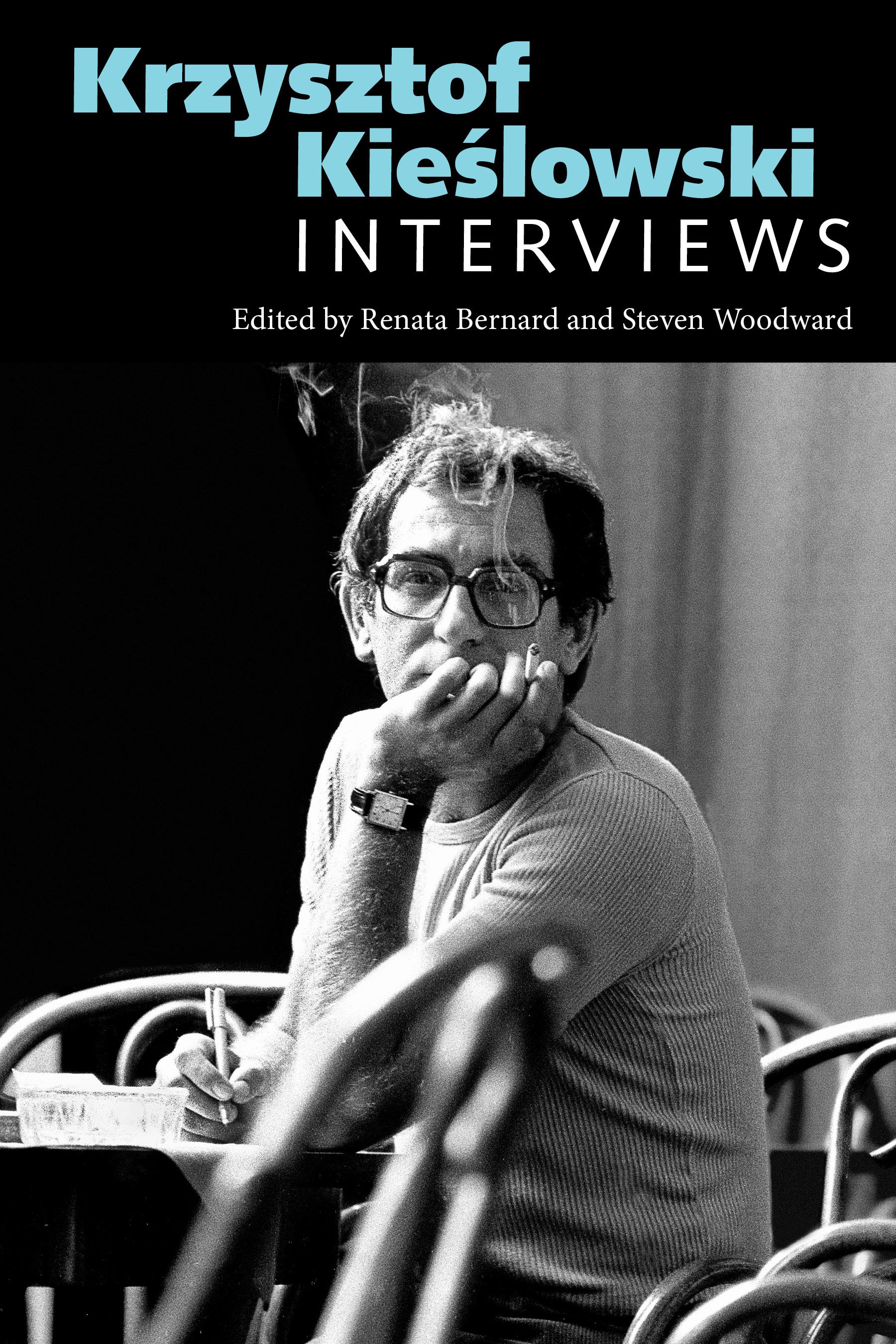
Krzysztof Kieślowski’s untimely death came at the height of his career, after his Three Colors trilogy of films garnered international acclaim (and an Oscar nomination), and he had been proclaimed Europe’s most important filmmaker by many critics. Born in 1941, he was only fifty-four years old when he died.
Kieślowski himself tried to tell the story of his life and career in the 1993 book Kieślowski on Kieślowski. This collection, by contrast, reveals the shifting voice of a filmmaker who was initially optimistic about his social and cultural role, then felt himself buffeted by the turbulent politics and events of the People’s Republic of Poland. As described in the chronology in this book, he found himself subject to the “economic censorship” of post-Communist filmmaking.
How Kieślowski responded at each moment of his life, what he tried to achieve with each of his films, is finely detailed in thirty-five selections. These pieces bring together his thesis from the famous Lodz film school, a manifesto written just before the dark days of martial law in Poland, diary entries from the first time he was working outside Poland, and numerous rare interviews from Polish-, French-, and English-language sources.
Kieślowski himself tried to tell the story of his life and career in the 1993 book Kieślowski on Kieślowski. This collection, by contrast, reveals the shifting voice of a filmmaker who was initially optimistic about his social and cultural role, then felt himself buffeted by the turbulent politics and events of the People’s Republic of Poland. As described in the chronology in this book, he found himself subject to the “economic censorship” of post-Communist filmmaking.
How Kieślowski responded at each moment of his life, what he tried to achieve with each of his films, is finely detailed in thirty-five selections. These pieces bring together his thesis from the famous Lodz film school, a manifesto written just before the dark days of martial law in Poland, diary entries from the first time he was working outside Poland, and numerous rare interviews from Polish-, French-, and English-language sources.
Paga facilmente con carta, Klarna, Apple Pay o Google Pay. Non sei soddisfatto? Hai sempre 14 giorni per il rimborso. Leggi di più nei nostri termini. Per qualsiasi domanda, scrivici a hello@memmo.org.
Memmo rende lo studio più facile, ovunque tu sia nel mondo. Qui trovi i tuoi libri di testo e strumenti di studio intelligenti, tutto in un unico posto: riassunti, quiz, podcast e flashcard. E poi c'è Ted, il tuo compagno di studio che risponde a ogni tua domanda. Oltre 50.000 studenti studiano già qui: è stato creato per aiutarti a imparare più velocemente e a stressarti meno.
Potrebbe interessarti anche
Acquista il libro0