
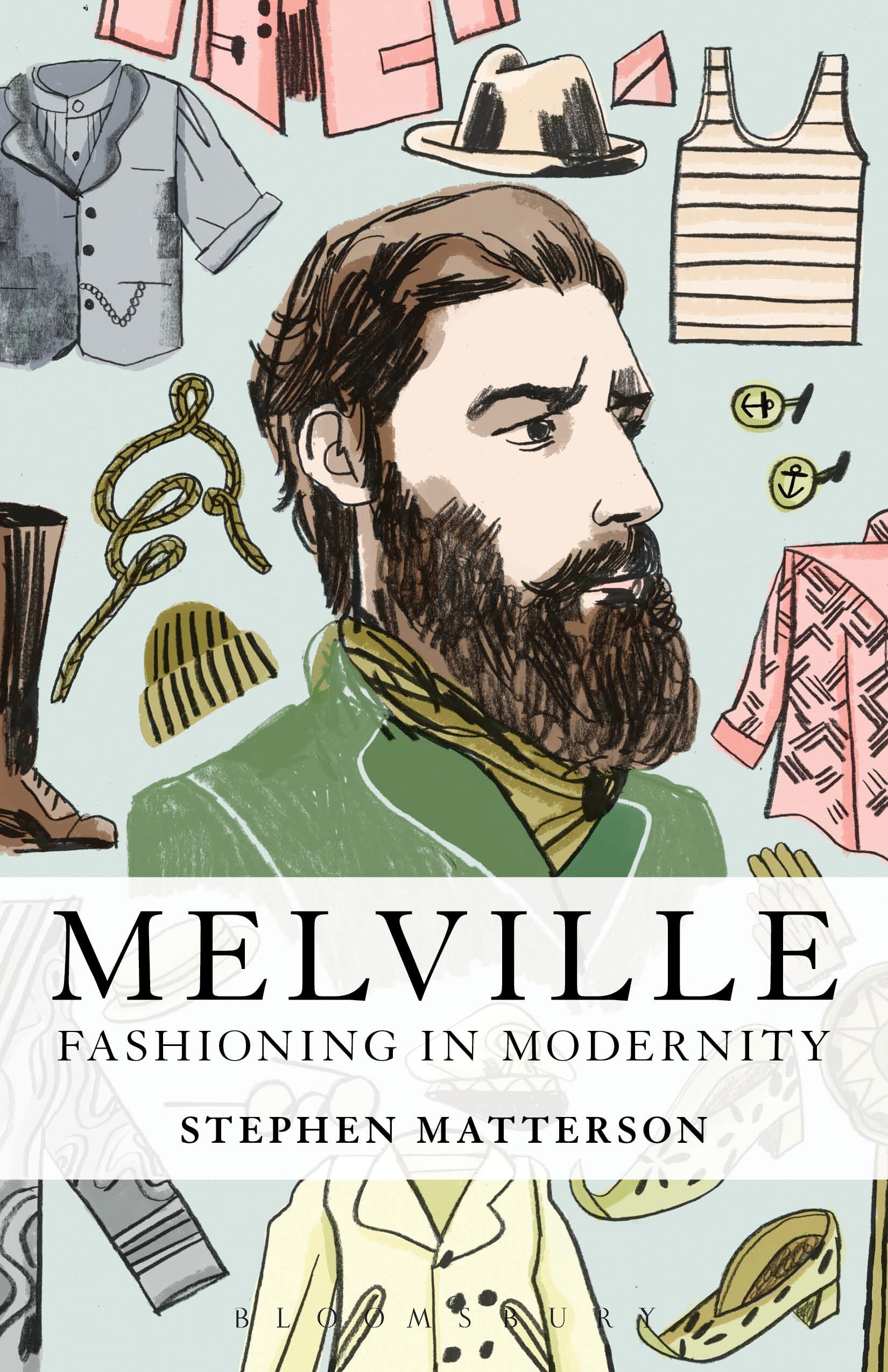
Melville: Fashioning in Modernity considers all of the major fiction with a concentration on lesser-known work, and provides a radically fresh approach to Melville, focusing on: clothing as socially symbolic; dress, power and class; the transgressive nature of dress; inappropriate clothing; the meaning of uniform; the multiplicity of identity that dress may represent; anxiety and modernity. The representation of clothing in the fiction is central to some of Melville's major themes; the relation between private and public identity, social inequality and how this is maintained; the relation between power, justice and authority; the relation between the "civilized" and the "savage."
Frequently clothing represents the malleability of identity (its possibilities as well as its limitations), represents writing itself, as well as becoming indicative of the crisis of modernity. Clothing also becomes a trope for Melville's representations of authorship and of his own scene of writing. Melville: Fashioning in Modernity also encompasses identity in transition, making use of the examination of modernity by theorists such as Anthony Giddens, as well as on theories of figures such as the dandy. In contextualizing Melville's interest in clothing, a variety of other works and writers is considered; works such as Robinson Crusoe and The Scarlet Letter, and novelists such as Fenimore Cooper, Nathaniel Hawthorne, Henry James, Jack London, and George Orwell. The book has at its core a consideration of the scene of writing and the publishing history of each text.
Frequently clothing represents the malleability of identity (its possibilities as well as its limitations), represents writing itself, as well as becoming indicative of the crisis of modernity. Clothing also becomes a trope for Melville's representations of authorship and of his own scene of writing. Melville: Fashioning in Modernity also encompasses identity in transition, making use of the examination of modernity by theorists such as Anthony Giddens, as well as on theories of figures such as the dandy. In contextualizing Melville's interest in clothing, a variety of other works and writers is considered; works such as Robinson Crusoe and The Scarlet Letter, and novelists such as Fenimore Cooper, Nathaniel Hawthorne, Henry James, Jack London, and George Orwell. The book has at its core a consideration of the scene of writing and the publishing history of each text.
Pagine: 224
Categoria: Litteraturvetenskap & Teori
e-ISBN: 9781623566067
Peso di spedizione: 1.2 kg
Spedito in: 1-2 giorni
Paga facilmente con carta, Klarna, Apple Pay o Google Pay. Non sei soddisfatto? Hai sempre 14 giorni per il rimborso. Leggi di più nei nostri termini. Per qualsiasi domanda, scrivici a hello@memmo.org.
Memmo rende lo studio più facile, ovunque tu sia nel mondo. Qui trovi i tuoi libri di testo e strumenti di studio intelligenti, tutto in un unico posto: riassunti, quiz, podcast e flashcard. E poi c'è Ted, il tuo compagno di studio che risponde a ogni tua domanda. Oltre 50.000 studenti studiano già qui: è stato creato per aiutarti a imparare più velocemente e a stressarti meno.