
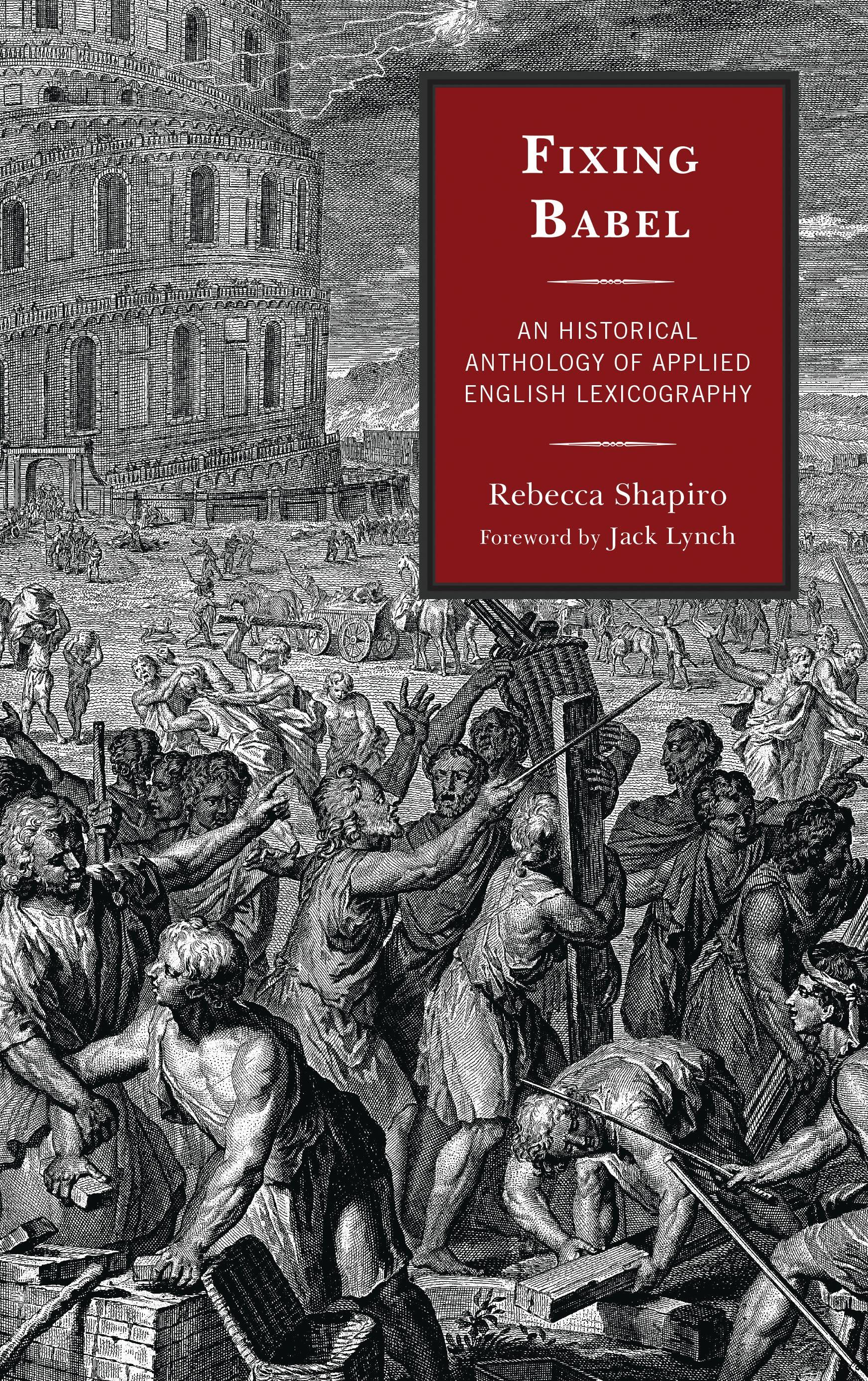
We all think we know what a dictionary is for and how to use one, so most of us skip the first pages—the front matter—and go right to the words we wish to look up. Yet dictionary users have not always known how English “works” and my book reproduces and examines for the first time important texts in which seventeenth- and eighteenth-century dictionary authors explain choices and promote ideas to readers, their “end users.” Unlike French, Spanish, and Italian dictionaries compiled during this time and published by national academies, the goal of English dictionaries was usually not to “purify” the language, though some writers did attempt to regularize it. Instead, English lexicographers aimed to teach practical ways for their users to learn English, improve their language skills, even transcend their social class. The anthology strives to be comprehensive in its coverage of the first phase of this tradition from the early seventeenth century—from Robert Cawdrey’s (1604) A Table Alphabeticall, to Samuel Johnson’s Dictionary of the English Language (1755), and finally, to Noah Webster’s An American Dictionary of the English Language (1828). The book puts English dictionaries in historical, national, linguistic, literary, cultural contexts, presenting lexicographical trends and the change in the English language over two centuries, and examines how writers attempted to control it by appealing to various pedagogical and legal authorities. Moreover, the development of dictionary and attempts to codify English language and grammar coincided with the arc of the British Empire; the promulgation of “proper” English has been a subject of debate and inquiry for centuries and, in part, dictionaries and the teaching of English historically have been used to present and support ideas about what is correct, regardless of how and where English is actually used. The authors who wrote these texts apply ideas about capitalism, nationalism, sex and social status to favor one language theory over another. I show how dictionaries are not neutral documents: they challenge or promote biases. The book presents and analyzes the history of lexicography, demonstrating how and why dictionaries evolved into the reference books we now often take for granted and we can see that there is no easy answer to the question of “who owns English.”
Paga facilmente con carta, Klarna, Apple Pay o Google Pay. Non sei soddisfatto? Hai sempre 14 giorni per il rimborso. Leggi di più nei nostri termini. Per qualsiasi domanda, scrivici a hello@memmo.org.
Memmo rende lo studio più facile, ovunque tu sia nel mondo. Qui trovi i tuoi libri di testo e strumenti di studio intelligenti, tutto in un unico posto: riassunti, quiz, podcast e flashcard. E poi c'è Ted, il tuo compagno di studio che risponde a ogni tua domanda. Oltre 50.000 studenti studiano già qui: è stato creato per aiutarti a imparare più velocemente e a stressarti meno.