
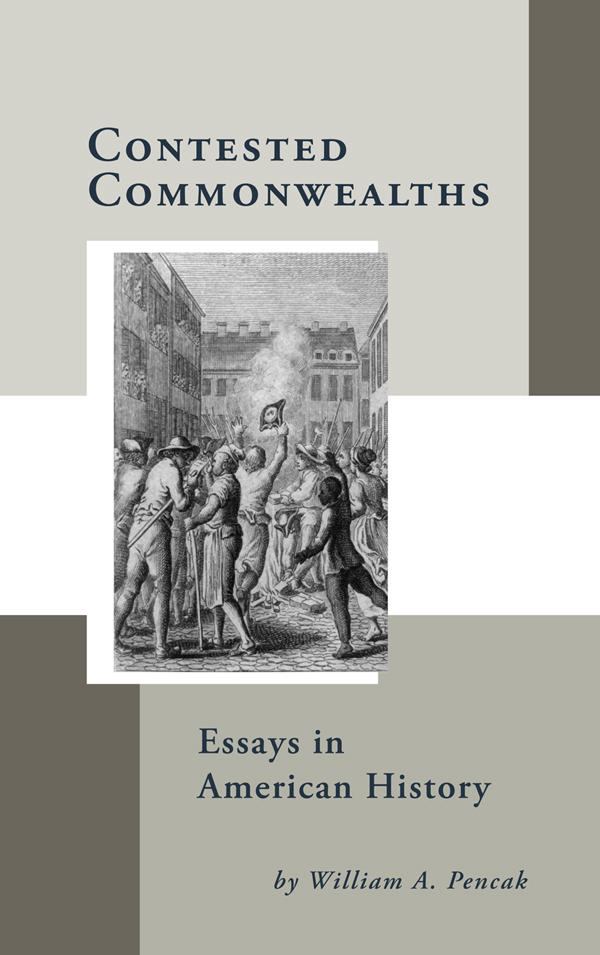
United States historian William Pencak here collects thirteen of his essays, written beginning in 1976. Some deal with colonial and revolutionary crowds and communities in Massachusetts—the impressment riot of 1747, the popular uprisings of the 1760s and 1770s, and Shays' Rebellion. Others discuss the popular ideology of the American Revolution as expressed in songs and almanacs, while several revisit revolutionary era statesmen George Washington, John Adams, Benjamin Franklin, and loyalist Peter Oliver. Interpretive essays argue that revolutionary economic thought turned smuggling from a vice into the "natural law" of free trade; and that focusing on the Civil War and the years 1861 to 1865, leads to a glorified conception of the national past that is better understood as shaped by "An Era of Racial Violence" that extended from 1854 to at least 1877.
Pencak's essays do not conform to standard interpretations of the revolutionary era that stress the importance of republican ideology or socio-economic conflict. Rather, he looks at colonial experiences of the French and Indian War as definitive in shaping dislike of Britain. He stresses that the popular thought expressed in songs and almanacs portray America as an open society, a land of plenty, threatened by British restrictions rather than a land where ancient Roman virtue or traditional British liberties flourished.
Moving to the early republic, Pencak looks at Shays's Rebellion from the point of view of those who suppressed it, and finds that they were genuinely concerned that Massachusetts's newly-formed republic was threatened by westerners. Westerners who presented themselves as an army and sought to restructure a constitution formed only six years before. George Washington was, in effect, the chief executive of the new nation from 1775 to 1797 and borrowed heavily from his wartime experiences to shape his presidency.
Pencak's essays do not conform to standard interpretations of the revolutionary era that stress the importance of republican ideology or socio-economic conflict. Rather, he looks at colonial experiences of the French and Indian War as definitive in shaping dislike of Britain. He stresses that the popular thought expressed in songs and almanacs portray America as an open society, a land of plenty, threatened by British restrictions rather than a land where ancient Roman virtue or traditional British liberties flourished.
Moving to the early republic, Pencak looks at Shays's Rebellion from the point of view of those who suppressed it, and finds that they were genuinely concerned that Massachusetts's newly-formed republic was threatened by westerners. Westerners who presented themselves as an army and sought to restructure a constitution formed only six years before. George Washington was, in effect, the chief executive of the new nation from 1775 to 1797 and borrowed heavily from his wartime experiences to shape his presidency.
Paga facilmente con carta, Klarna, Apple Pay o Google Pay. Non sei soddisfatto? Hai sempre 14 giorni per il rimborso. Leggi di più nei nostri termini. Per qualsiasi domanda, scrivici a hello@memmo.org.
Memmo rende lo studio più facile, ovunque tu sia nel mondo. Qui trovi i tuoi libri di testo e strumenti di studio intelligenti, tutto in un unico posto: riassunti, quiz, podcast e flashcard. E poi c'è Ted, il tuo compagno di studio che risponde a ogni tua domanda. Oltre 50.000 studenti studiano già qui: è stato creato per aiutarti a imparare più velocemente e a stressarti meno.