
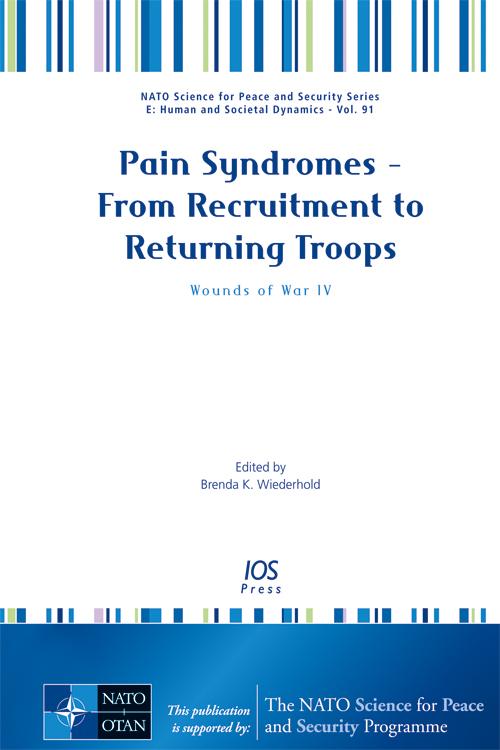
It has been shown that those who have served in both combat missions and peacekeeping operations are at increased risk for pain syndromes. Research suggests that this may result from their “wounds of war.” Some wounds may be “invisible,” such as depression, stress, and chronic pain, while others, such as physical disabilities, are more obvious.
In October 2011, twenty-seven scientists and representatives from NATO and partner countries met in Südkärnten, Austria for a three-day NATO Advanced Research Workshop entitled “Wounds of War: Pain Syndromes – From Recruitment to Returning Troops.”
The aim of this publication, which presents papers from that workshop, is to critically assess the existing knowledge and to identify directions for future actions.
The book addresses four key questions:
1. Vulnerability to Pain syndromes: Are certain types of people at a higher risk for pain syndromes (background, ethnicity, childhood trauma, etc.)?
2. Diagnosis and Assessment Issues of Pain Syndromes: Which methods are used to diagnose and assess pain?
3. Treatment of Pain Syndromes: What are the latest treatment and therapy opportunities for soldiers who experience pain syndromes?
4. Clinical Updates on Pain Syndromes: What can we learn from recent clinical updates on pain syndromes?
Paga facilmente con carta, Klarna, Apple Pay o Google Pay. Non sei soddisfatto? Hai sempre 14 giorni per il rimborso. Leggi di più nei nostri termini. Per qualsiasi domanda, scrivici a hello@memmo.org.
Memmo rende lo studio più facile, ovunque tu sia nel mondo. Qui trovi i tuoi libri di testo e strumenti di studio intelligenti, tutto in un unico posto: riassunti, quiz, podcast e flashcard. E poi c'è Ted, il tuo compagno di studio che risponde a ogni tua domanda. Oltre 50.000 studenti studiano già qui: è stato creato per aiutarti a imparare più velocemente e a stressarti meno.