
"The Human City presents the most cogent, evidence-based and clear-headed exposition of the pro-suburban argument. . . . enriching our understanding of what cities are about and what they can and must become.” —Wall Street Journal
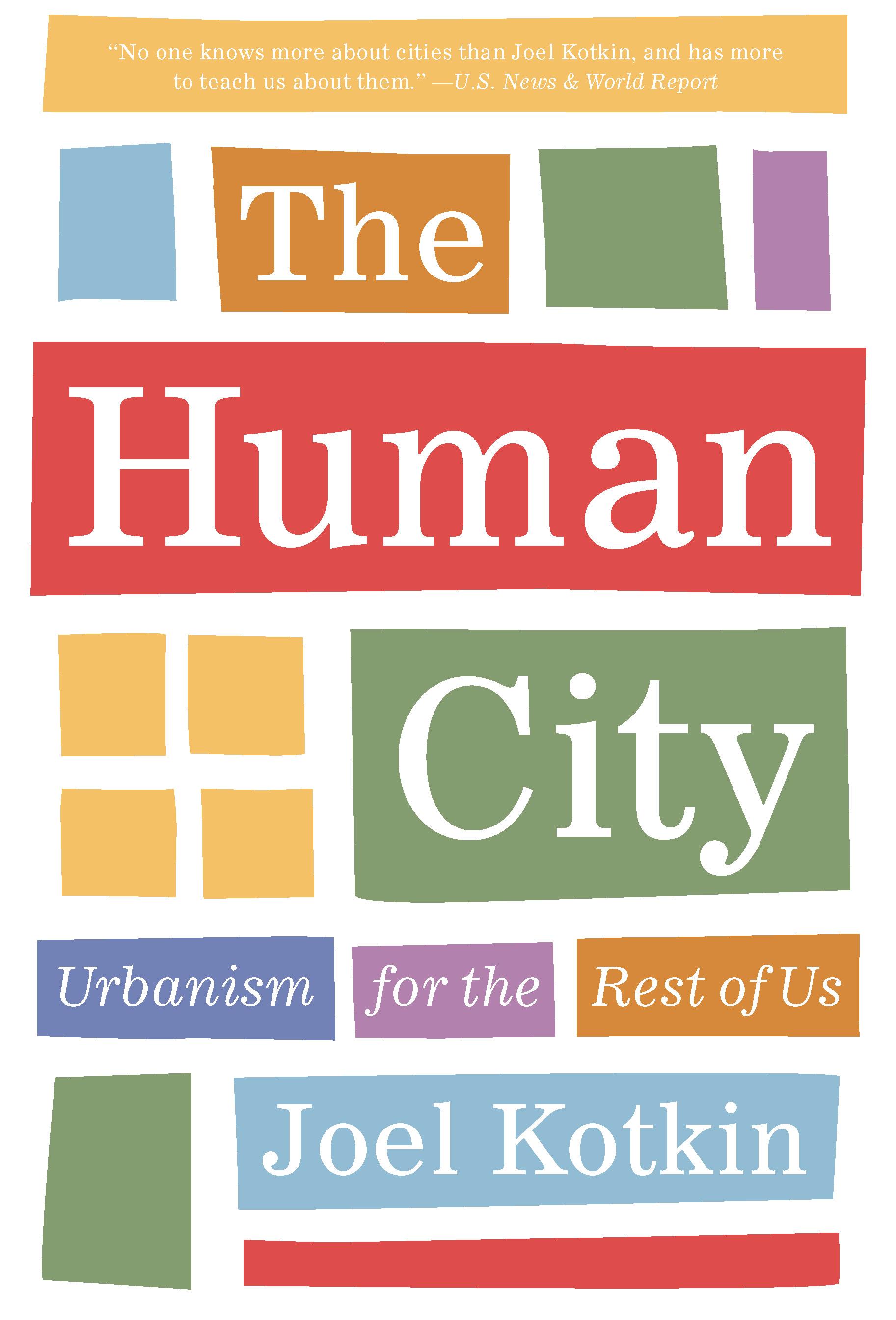
Around the globe, most new urban development has adhered to similar tenets: tall structures, small units, and high density. In The Human City, Joel Kotkin—called “America’s uber-geographer” by David Brooks of the New York Times—questions these nearly ubiquitous practices, suggesting that they do not consider the needs and desires of the vast majority of people. Built environments, Kotkin argues, must reflect the preferences of most people—especially those of families—even if that means lower-density development.
The Human City ponders the purpose of the city and investigates the factors that drive most urban development today. Armed with his own astute research, a deep-seated knowledge of urban history, and a sound grasp of economic, political, and social trends, Kotkin pokes holes in what he calls the “retro-urbanist” ideology and offers a refreshing case for dispersion centered on human values.
This book is not anti-urban, but it does advocate a greater range of options for people to live the way they want at all stages of their lives.
Around the globe, most new urban development has adhered to similar tenets: tall structures, small units, and high density. In The Human City, Joel Kotkin—called “America’s uber-geographer” by David Brooks of the New York Times—questions these nearly ubiquitous practices, suggesting that they do not consider the needs and desires of the vast majority of people. Built environments, Kotkin argues, must reflect the preferences of most people—especially those of families—even if that means lower-density development.
The Human City ponders the purpose of the city and investigates the factors that drive most urban development today. Armed with his own astute research, a deep-seated knowledge of urban history, and a sound grasp of economic, political, and social trends, Kotkin pokes holes in what he calls the “retro-urbanist” ideology and offers a refreshing case for dispersion centered on human values.
This book is not anti-urban, but it does advocate a greater range of options for people to live the way they want at all stages of their lives.
Paga facilmente con carta, Klarna, Apple Pay o Google Pay. Non sei soddisfatto? Hai sempre 14 giorni per il rimborso. Leggi di più nei nostri termini. Per qualsiasi domanda, scrivici a hello@memmo.org.
Memmo rende lo studio più facile, ovunque tu sia nel mondo. Qui trovi i tuoi libri di testo e strumenti di studio intelligenti, tutto in un unico posto: riassunti, quiz, podcast e flashcard. E poi c'è Ted, il tuo compagno di studio che risponde a ogni tua domanda. Oltre 50.000 studenti studiano già qui: è stato creato per aiutarti a imparare più velocemente e a stressarti meno.
Potrebbe interessarti anche
Acquista il libro0