
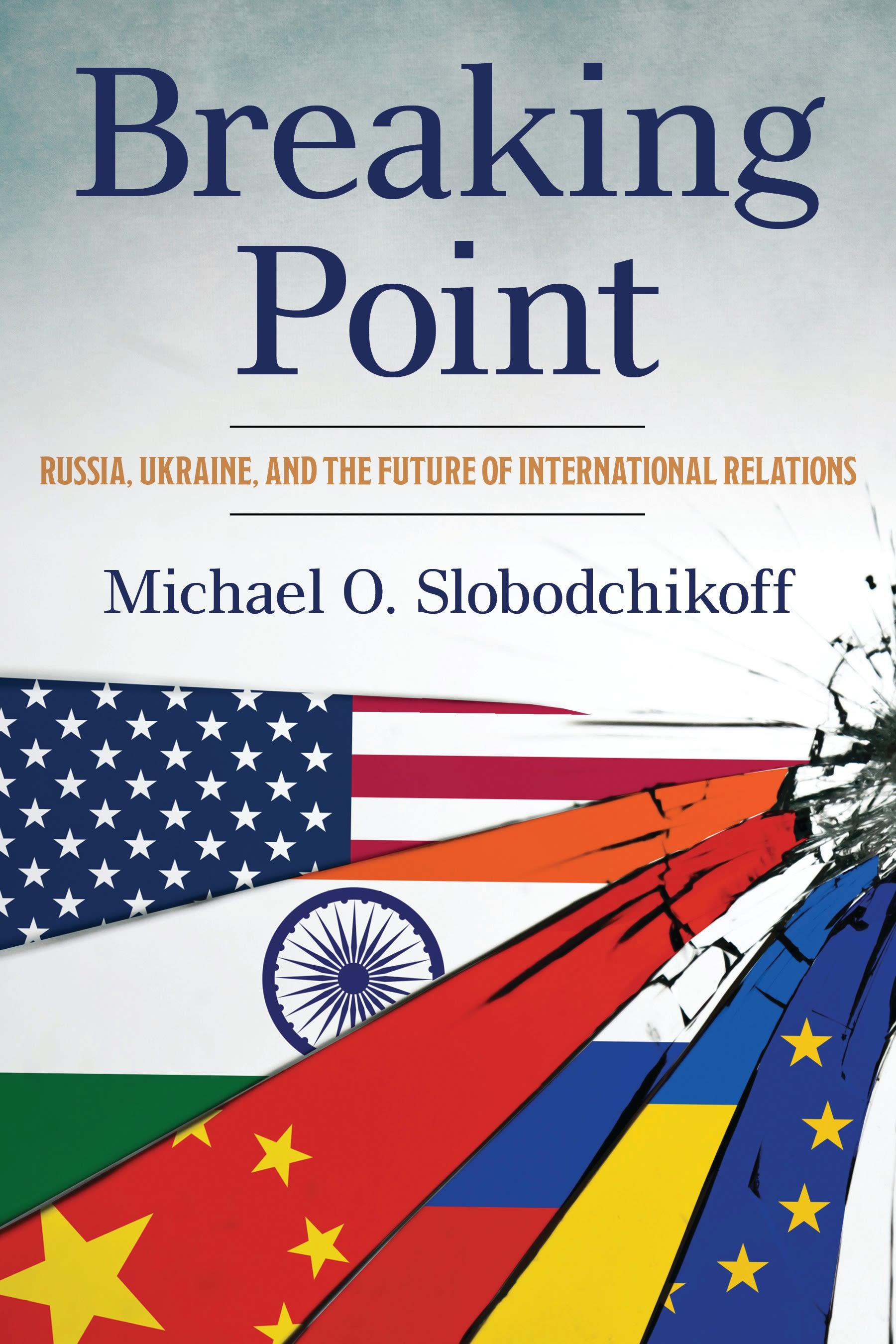
The post-Cold War order established by the United States of America is currently at a crossroads. No longer is the liberal order and United States hegemonic power a given. Moscow and Beijing have both begun their challenges to the United States. While long dissatisfied with US hegemony, in February, 2022, Russian President Vladimir Putin ordered the invasion of Ukraine by the Russian military.
The response by the United States and its allies was swift and unprecedented. Wave after wave of sanctions were levied against Moscow, and NATO member states began to provide military support to Kyiv in trying to maintain its independence from Moscow. The first major war on the European continent since World War II was to have a profound global effect on relations with other countries. First, there was a significant demographic impact as migrants left Ukraine either to the West or to Russia. Further, as men were prevented from leaving Ukraine due to mandatory conscription, the refugees were overwhelmingly made up of either old people, or women with children. Russia also was not spared from a huge demographic crisis. Not only has it lost an enormous amount of young men to the war, but it also instituted forced conscription, leading to many men fleeing the country.
Initially Washington described the invasion of Ukraine as a war between democracy and autocracy, with Kyiv being on the front lines of this new war. However, the real situation was much more complicated than a simple framing of the conflict. While Kyiv enjoyed overwhelming support from the United States and its NATO allies, other democracies globally were a lot warier of supporting Ukraine. Countries like India, Turkey, Hungary, South Africa, Brazil, and other democracies began a strategy of hedging. Publicly, they urged caution in the conflict stating that while Moscow possessed legitimate security concerns, that the conflict had to be resolved peacefully.
The hedging strategy employed by much of the world confused Washington, however, the United States found its attention torn between two continents. The war in Ukraine was its main concern, however, a newly resurgent China threatened to begin its own war against Taiwan. Washington could ill afford a diplomatic blitz to force hedging states to support its policies in Kyiv. Moscow, on the other hand, recognized that it stood to gain from Washington’s focus. It began to bolster its diplomatic efforts to woo those hedging countries into not aligning with the United States. Further, the alliance between Moscow and Beijing deepened during this period. In other words, a period of tremendous uncertainty about the future of the global order was born.
In this book, we examine the aftermath of Moscow’s invasion and its implications on the global order. In this edited volume, we first examine the regional effects of the invasion. We then examine Moscow’s relations with other states globally, and argue that while it is not possible to predict who will win the war in Ukraine, that the war has had a profound impact on both Russia’s relations with the world as well as on the United States’ global relations.
The response by the United States and its allies was swift and unprecedented. Wave after wave of sanctions were levied against Moscow, and NATO member states began to provide military support to Kyiv in trying to maintain its independence from Moscow. The first major war on the European continent since World War II was to have a profound global effect on relations with other countries. First, there was a significant demographic impact as migrants left Ukraine either to the West or to Russia. Further, as men were prevented from leaving Ukraine due to mandatory conscription, the refugees were overwhelmingly made up of either old people, or women with children. Russia also was not spared from a huge demographic crisis. Not only has it lost an enormous amount of young men to the war, but it also instituted forced conscription, leading to many men fleeing the country.
Initially Washington described the invasion of Ukraine as a war between democracy and autocracy, with Kyiv being on the front lines of this new war. However, the real situation was much more complicated than a simple framing of the conflict. While Kyiv enjoyed overwhelming support from the United States and its NATO allies, other democracies globally were a lot warier of supporting Ukraine. Countries like India, Turkey, Hungary, South Africa, Brazil, and other democracies began a strategy of hedging. Publicly, they urged caution in the conflict stating that while Moscow possessed legitimate security concerns, that the conflict had to be resolved peacefully.
The hedging strategy employed by much of the world confused Washington, however, the United States found its attention torn between two continents. The war in Ukraine was its main concern, however, a newly resurgent China threatened to begin its own war against Taiwan. Washington could ill afford a diplomatic blitz to force hedging states to support its policies in Kyiv. Moscow, on the other hand, recognized that it stood to gain from Washington’s focus. It began to bolster its diplomatic efforts to woo those hedging countries into not aligning with the United States. Further, the alliance between Moscow and Beijing deepened during this period. In other words, a period of tremendous uncertainty about the future of the global order was born.
In this book, we examine the aftermath of Moscow’s invasion and its implications on the global order. In this edited volume, we first examine the regional effects of the invasion. We then examine Moscow’s relations with other states globally, and argue that while it is not possible to predict who will win the war in Ukraine, that the war has had a profound impact on both Russia’s relations with the world as well as on the United States’ global relations.
Pagine: 206
Categoria: Statsvetenskap & Politik
e-ISBN: 9781538193792
Peso di spedizione: 1.2 kg
Spedito in: 1-2 giorni
Paga facilmente con carta, Klarna, Apple Pay o Google Pay. Non sei soddisfatto? Hai sempre 14 giorni per il rimborso. Leggi di più nei nostri termini. Per qualsiasi domanda, scrivici a hello@memmo.org.
Memmo rende lo studio più facile, ovunque tu sia nel mondo. Qui trovi i tuoi libri di testo e strumenti di studio intelligenti, tutto in un unico posto: riassunti, quiz, podcast e flashcard. E poi c'è Ted, il tuo compagno di studio che risponde a ogni tua domanda. Oltre 50.000 studenti studiano già qui: è stato creato per aiutarti a imparare più velocemente e a stressarti meno.