
In the closing decades of the twentieth century, academic libraries responded to rapid changes in their environment by acquiring and making accessible a host of new information resources, developing innovative new services and collaborative partnerships, and building new kinds of technology-equipped spaces to support changing user behaviors and emerging patterns of learning. The “Information Commons” or “InfoCommons” blossomed in a relatively short amount of time in libraries across North America, and around the world, particularly in Europe and the British Commonwealth.
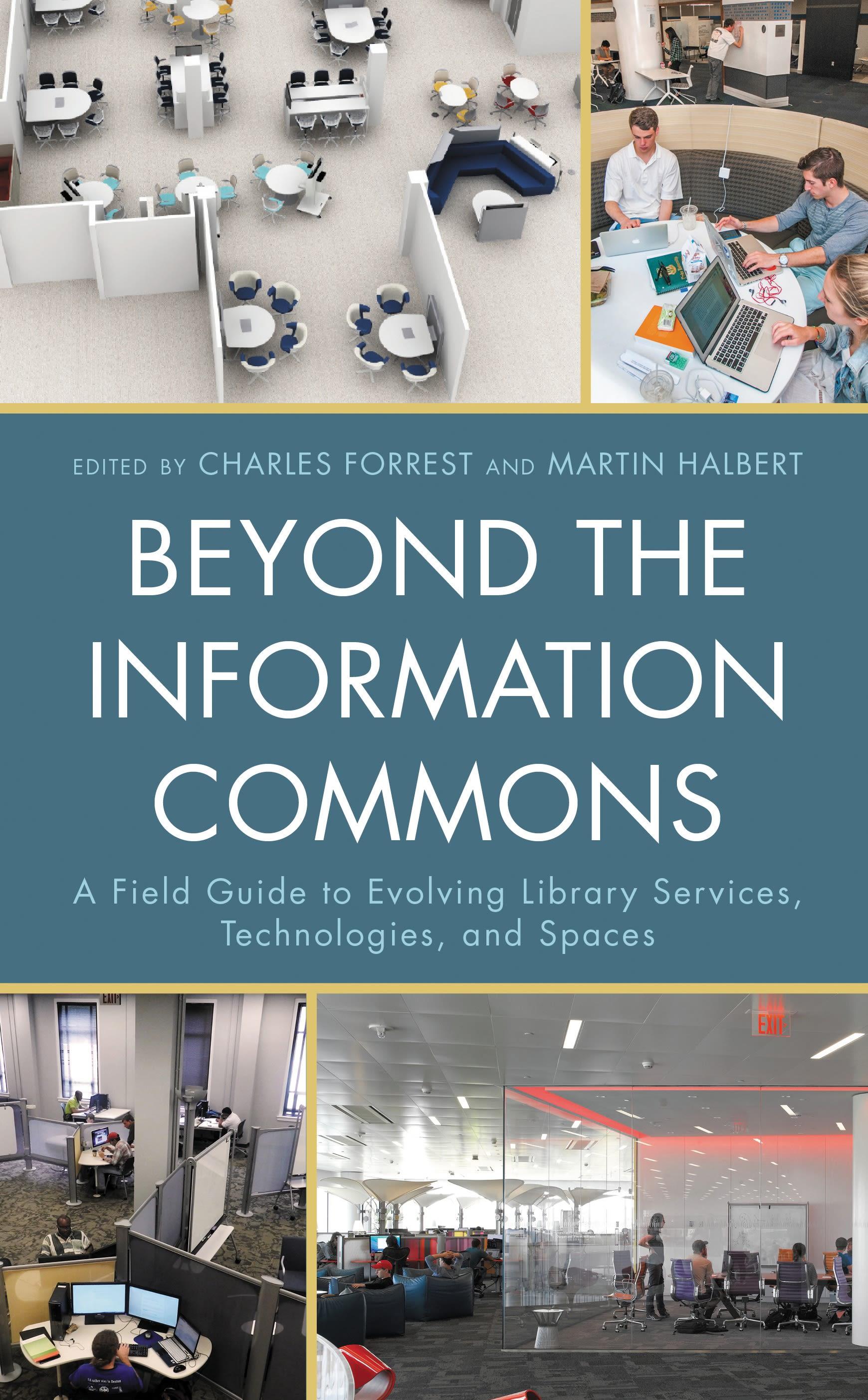
This book is more than a second edition of the 2009 book A Field Guide to the Information Commons which documented the emergence of a range of facilities and service programs that called themselves “Information Commons.” This new book updates this review of current practice in the Information Commons and other new kinds of facilities inspired by the same needs and intents, but goes beyond that by describing the continued evolution. This new book is an attempt to answer the question: “What might be the next emerging concept for a technology-enabled, user-responsive, mission-driven form of the academic library?”
Like its predecessor, Beyond the Information Commons is structured in two parts. First, a brief series of essays explore the Information Commons from historical, organizational, technological, and architectural perspectives. The second part is a field guide composed of more than two dozen representative entries describing various Information Commons using a consistent format that provides both perspective on issues and useful details about actual implementations. Each of these includes photos and other graphics.
This book is more than a second edition of the 2009 book A Field Guide to the Information Commons which documented the emergence of a range of facilities and service programs that called themselves “Information Commons.” This new book updates this review of current practice in the Information Commons and other new kinds of facilities inspired by the same needs and intents, but goes beyond that by describing the continued evolution. This new book is an attempt to answer the question: “What might be the next emerging concept for a technology-enabled, user-responsive, mission-driven form of the academic library?”
Like its predecessor, Beyond the Information Commons is structured in two parts. First, a brief series of essays explore the Information Commons from historical, organizational, technological, and architectural perspectives. The second part is a field guide composed of more than two dozen representative entries describing various Information Commons using a consistent format that provides both perspective on issues and useful details about actual implementations. Each of these includes photos and other graphics.
Paga facilmente con carta, Klarna, Apple Pay o Google Pay. Non sei soddisfatto? Hai sempre 14 giorni per il rimborso. Leggi di più nei nostri termini. Per qualsiasi domanda, scrivici a hello@memmo.org.
Memmo rende lo studio più facile, ovunque tu sia nel mondo. Qui trovi i tuoi libri di testo e strumenti di studio intelligenti, tutto in un unico posto: riassunti, quiz, podcast e flashcard. E poi c'è Ted, il tuo compagno di studio che risponde a ogni tua domanda. Oltre 50.000 studenti studiano già qui: è stato creato per aiutarti a imparare più velocemente e a stressarti meno.