
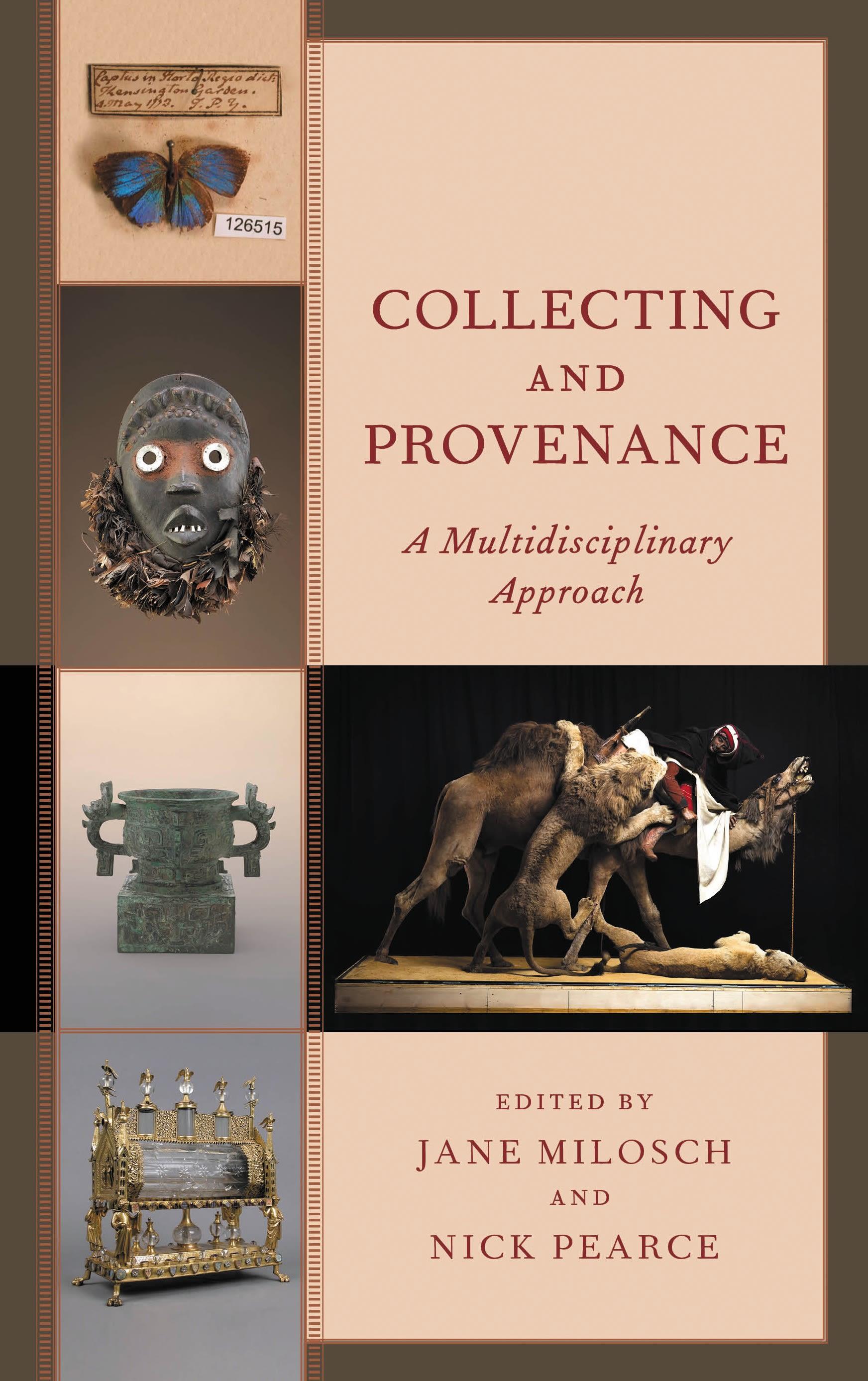
The study of provenance—the history of the creation and ownership of an artefact, work of art, or specimen—provides insights into the history of taste and collecting, illuminating the social, economic, and historic trends in which an object was created and collected. It is as much a history of people as it is of objects, and its study often reveals intricate networks of relationships, patterns of activity and motivations.
This book promotes the study of the history of collecting and collections in all their variety through the lens of provenance, and explores the subject as a cross-disciplinary activity. Perhaps for the first time in a publication, it draws on expertise ranging from art history and anthropology, to natural history and law, looking at periods from antiquity through the 18th century and the Holocaust era to the present, and materials from Europe and the Americas to China and the Pacific. The issues raised are wide-ranging, touching on aspects of authenticity, cultural meaning and material transformation and economic and commercial drivers, as well as collector and object biography.
The book fills a gap in the study of collecting and provenance, taking the subject holistically and from multiple standpoints, better to reflect the widening interest in provenance from a range of disciplinary perspectives. This book will be a service to the field, from established scholars and museum professionals to students of collecting history, cultural heritage, and museum studies.
This book promotes the study of the history of collecting and collections in all their variety through the lens of provenance, and explores the subject as a cross-disciplinary activity. Perhaps for the first time in a publication, it draws on expertise ranging from art history and anthropology, to natural history and law, looking at periods from antiquity through the 18th century and the Holocaust era to the present, and materials from Europe and the Americas to China and the Pacific. The issues raised are wide-ranging, touching on aspects of authenticity, cultural meaning and material transformation and economic and commercial drivers, as well as collector and object biography.
The book fills a gap in the study of collecting and provenance, taking the subject holistically and from multiple standpoints, better to reflect the widening interest in provenance from a range of disciplinary perspectives. This book will be a service to the field, from established scholars and museum professionals to students of collecting history, cultural heritage, and museum studies.
Paga facilmente con carta, Klarna, Apple Pay o Google Pay. Non sei soddisfatto? Hai sempre 14 giorni per il rimborso. Leggi di più nei nostri termini. Per qualsiasi domanda, scrivici a hello@memmo.org.
Memmo rende lo studio più facile, ovunque tu sia nel mondo. Qui trovi i tuoi libri di testo e strumenti di studio intelligenti, tutto in un unico posto: riassunti, quiz, podcast e flashcard. E poi c'è Ted, il tuo compagno di studio che risponde a ogni tua domanda. Oltre 50.000 studenti studiano già qui: è stato creato per aiutarti a imparare più velocemente e a stressarti meno.