
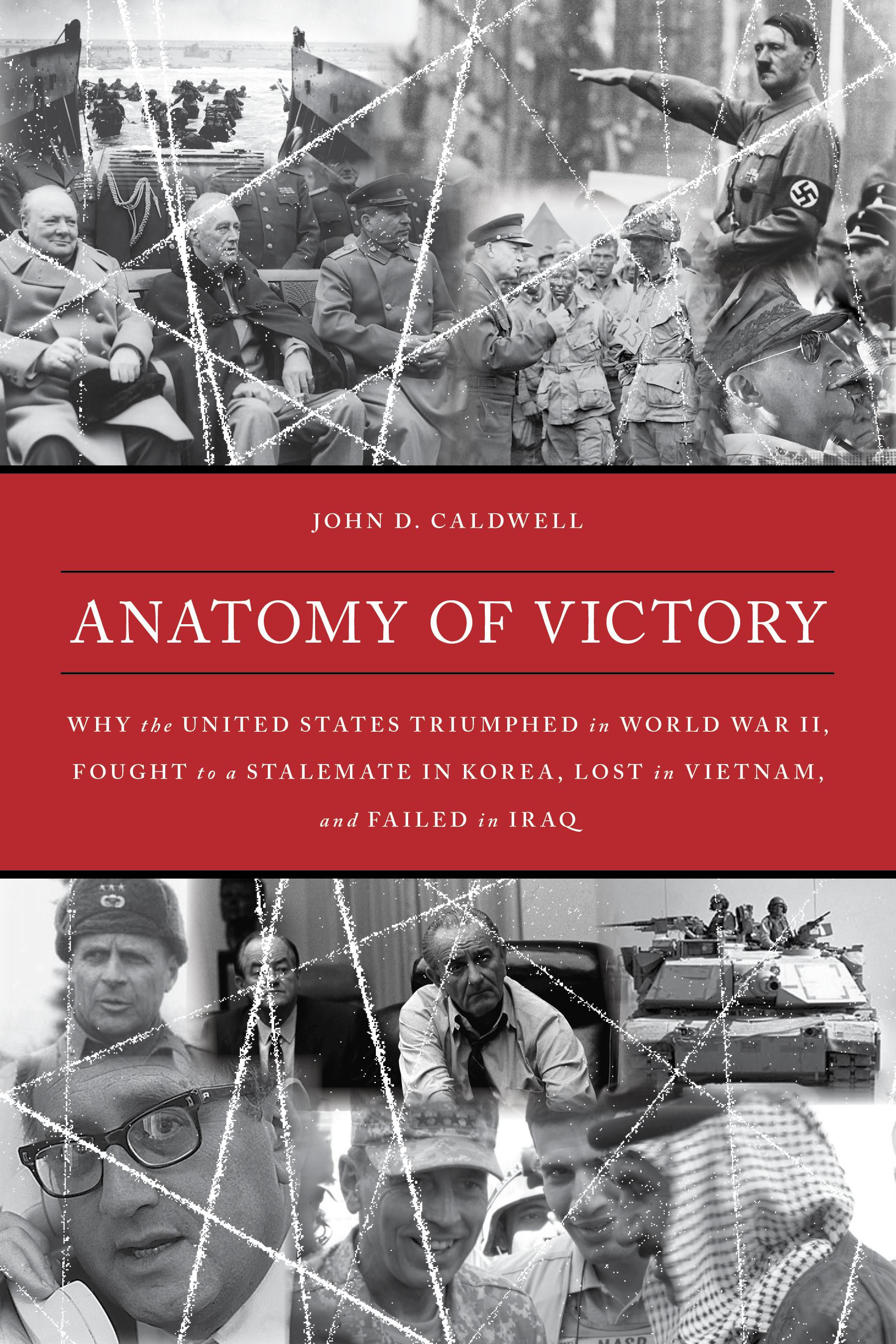
This groundbreaking book provides the first systematic comparison of America’s modern wars and why they were won or lost. John D. Caldwell uses the World War II victory as the historical benchmark for evaluating the success and failure of later conflicts. Unlike WWII, the Korean, Vietnam, and Iraqi Wars were limited, but they required enormous national commitments, produced no lasting victories, and generated bitter political controversies.
Caldwell comprehensively examines these four wars through the lens of a strategic architecture to explain how and why their outcomes were so dramatically different. He defines a strategic architecture as an interlinked set of continually evolving policies, strategies, and operations by which combatant states work toward a desired end. Policy defines the high-level goals a nation seeks to achieve once it initiates a conflict or finds itself drawn into one. Policy makers direct a broad course of action and strive to control the initiative. When they make decisions, they have to respond to unforeseen conditions to guide and determine future decisions. Effective leaders are skilled at organizing constituencies they need to succeed and communicating to them convincingly. Strategy means employing whatever resources are available to achieve policy goals in situations that are dynamic as conflicts change quickly over time. Operations are the actions that occur when politicians, soldiers, and diplomats execute plans.
A strategic architecture, Caldwell argues, is thus not a static blueprint but a dynamic vision of how a state can succeed or fail in a conflict.
Caldwell comprehensively examines these four wars through the lens of a strategic architecture to explain how and why their outcomes were so dramatically different. He defines a strategic architecture as an interlinked set of continually evolving policies, strategies, and operations by which combatant states work toward a desired end. Policy defines the high-level goals a nation seeks to achieve once it initiates a conflict or finds itself drawn into one. Policy makers direct a broad course of action and strive to control the initiative. When they make decisions, they have to respond to unforeseen conditions to guide and determine future decisions. Effective leaders are skilled at organizing constituencies they need to succeed and communicating to them convincingly. Strategy means employing whatever resources are available to achieve policy goals in situations that are dynamic as conflicts change quickly over time. Operations are the actions that occur when politicians, soldiers, and diplomats execute plans.
A strategic architecture, Caldwell argues, is thus not a static blueprint but a dynamic vision of how a state can succeed or fail in a conflict.
Paga facilmente con carta, Klarna, Apple Pay o Google Pay. Non sei soddisfatto? Hai sempre 14 giorni per il rimborso. Leggi di più nei nostri termini. Per qualsiasi domanda, scrivici a hello@memmo.org.
Memmo rende lo studio più facile, ovunque tu sia nel mondo. Qui trovi i tuoi libri di testo e strumenti di studio intelligenti, tutto in un unico posto: riassunti, quiz, podcast e flashcard. E poi c'è Ted, il tuo compagno di studio che risponde a ogni tua domanda. Oltre 50.000 studenti studiano già qui: è stato creato per aiutarti a imparare più velocemente e a stressarti meno.