
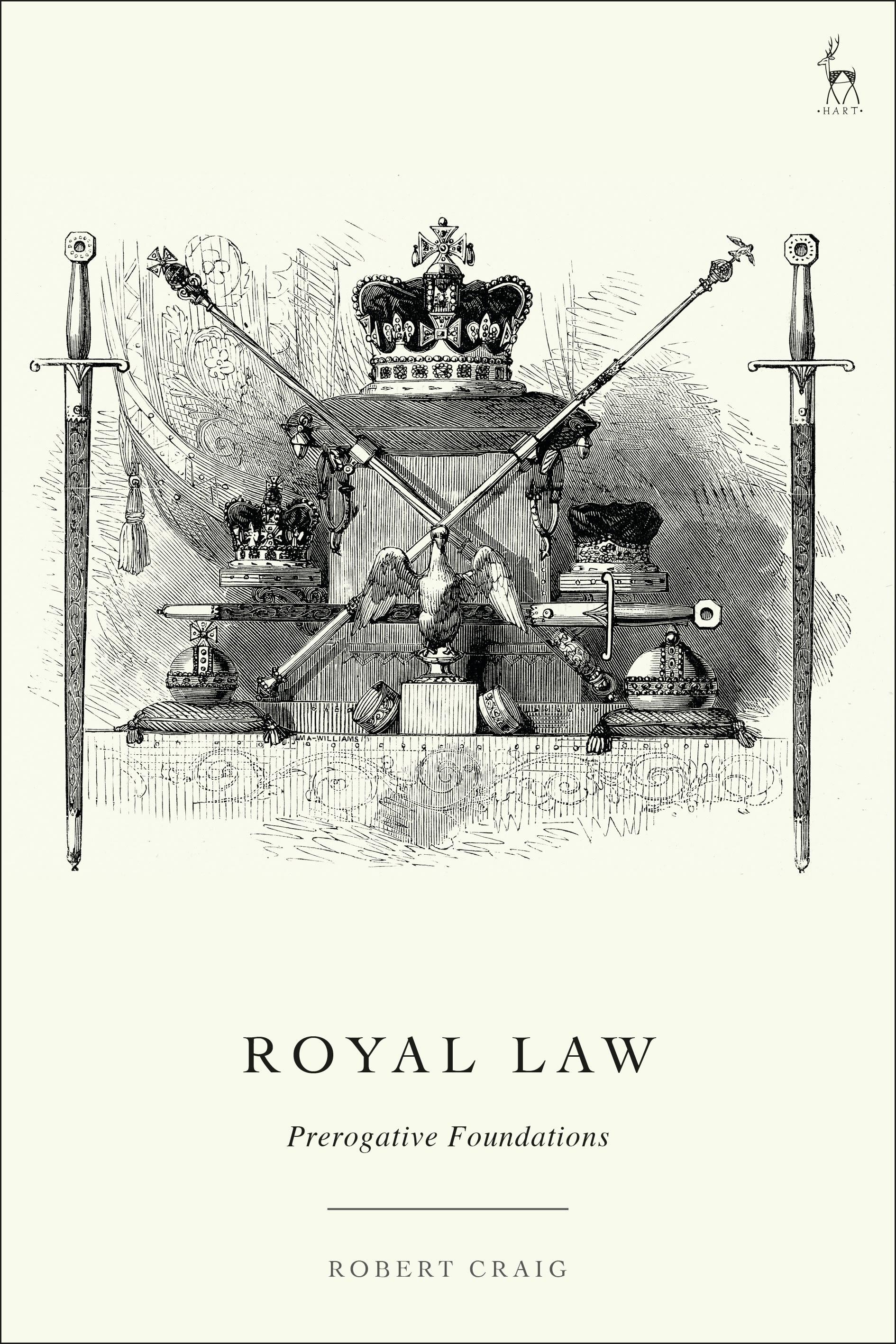
This book argues that prerogative powers encompass all the non-statutory powers of the Crown. Hence the Crown has no 'third source' powers, common law powers or 'Ram doctrine' style freedoms.
Royal Law builds on Dicey's definition of the prerogative, arguing that it comprises all residual non-statutory rights, powers, duties, and immunities historically ascribed to the Crown. However, it contends that Blackstone's alternative definition, that prerogative powers are only those powers exclusive to the Crown, is also correct. The book explains how Dicey and Blackstone can be reconciled.
The prerogative of justice is suggested as the original source of legal authority and legitimacy of common law judicial decisions. Common law is, or was, royal law. Defined as a putative non-statutory, non-prerogative third source of judicial legitimacy, authority or jurisdiction, 'common law' does not exist. There are only two ultimate sources of jurisdictional authority: statute and prerogative.
The book further argues that Wade was mistaken to contend that the Crown has 'common law powers'. It also has no 'third source freedoms', as suggested by Harris, or in the 'Ram Doctrine'. The book therefore reframes the relevant case law as examples of judicial regulation of prerogative powers, crucially including the largely-forgotten prerogative power to administer the realm. Hence the book concludes that legal powers such as a minister's power to enter contracts or make ex gratia payments of public money, are directly or indirectly grounded in prerogative power.
Royal Law builds on Dicey's definition of the prerogative, arguing that it comprises all residual non-statutory rights, powers, duties, and immunities historically ascribed to the Crown. However, it contends that Blackstone's alternative definition, that prerogative powers are only those powers exclusive to the Crown, is also correct. The book explains how Dicey and Blackstone can be reconciled.
The prerogative of justice is suggested as the original source of legal authority and legitimacy of common law judicial decisions. Common law is, or was, royal law. Defined as a putative non-statutory, non-prerogative third source of judicial legitimacy, authority or jurisdiction, 'common law' does not exist. There are only two ultimate sources of jurisdictional authority: statute and prerogative.
The book further argues that Wade was mistaken to contend that the Crown has 'common law powers'. It also has no 'third source freedoms', as suggested by Harris, or in the 'Ram Doctrine'. The book therefore reframes the relevant case law as examples of judicial regulation of prerogative powers, crucially including the largely-forgotten prerogative power to administer the realm. Hence the book concludes that legal powers such as a minister's power to enter contracts or make ex gratia payments of public money, are directly or indirectly grounded in prerogative power.
Pagine: 288
Categoria: Religion & Teologi
e-ISBN: 9781509965960
Peso di spedizione: 1.2 kg
Spedito in: 1-2 giorni
Paga facilmente con carta, Klarna, Apple Pay o Google Pay. Non sei soddisfatto? Hai sempre 14 giorni per il rimborso. Leggi di più nei nostri termini. Per qualsiasi domanda, scrivici a hello@memmo.org.
Memmo rende lo studio più facile, ovunque tu sia nel mondo. Qui trovi i tuoi libri di testo e strumenti di studio intelligenti, tutto in un unico posto: riassunti, quiz, podcast e flashcard. E poi c'è Ted, il tuo compagno di studio che risponde a ogni tua domanda. Oltre 50.000 studenti studiano già qui: è stato creato per aiutarti a imparare più velocemente e a stressarti meno.