
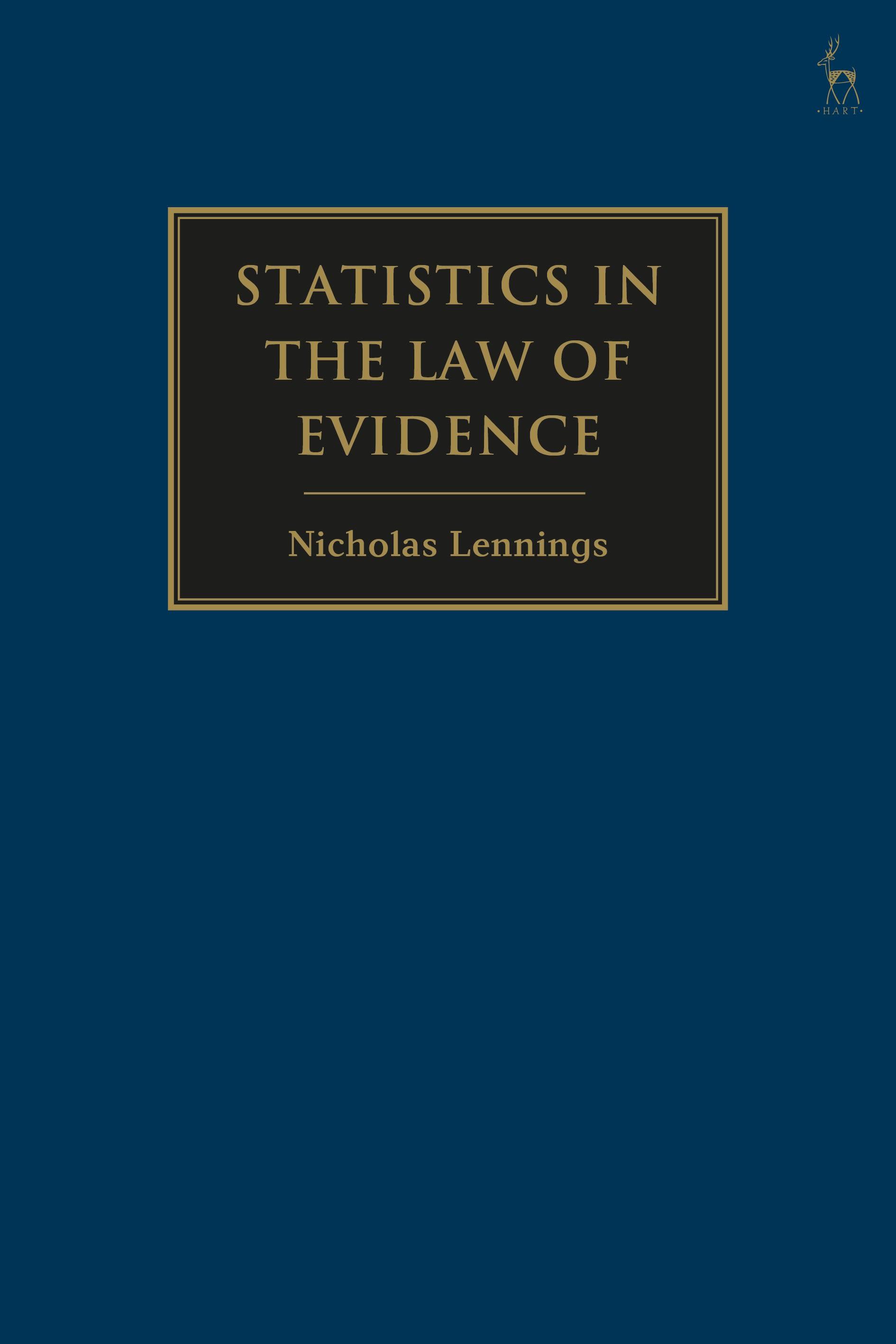
This book evaluates the role played by statistical evidence in litigation. Despite the increasing prevalence of statistical evidence in modern litigation, how such evidence should be admitted and used by courts is often inconsistent and widely criticised. Accepting that statistical evidence can lead to more accurate decisions, the book proposes criteria that could allow courts to decide that statistical evidence is good for fact-finding.
The many and varied scholarly debates regarding statistical evidence have by and large avoided judicial attention. Unlike previous works, this book contextualises those debates in the language and practice of evidence law, focusing principally on Australia, as well as the UK and the USA.
It does so by identifying that the controversy around statistical evidence follows the three-tiered statistical syllogism underlying statistical inference: first, whether statistical evidence is capable of establishing an association between phenomena in a state of nature; second, inferring that phenomena to an individual from the general association; and third, whether statistical evidence can be sufficient for proof of contested facts. Objections are said to arise at each level of this syllogism and, by mapping these objections onto evidence law, the book argues that a pathway for the judicial evaluation of statistical evidence can be constructed.
The many and varied scholarly debates regarding statistical evidence have by and large avoided judicial attention. Unlike previous works, this book contextualises those debates in the language and practice of evidence law, focusing principally on Australia, as well as the UK and the USA.
It does so by identifying that the controversy around statistical evidence follows the three-tiered statistical syllogism underlying statistical inference: first, whether statistical evidence is capable of establishing an association between phenomena in a state of nature; second, inferring that phenomena to an individual from the general association; and third, whether statistical evidence can be sufficient for proof of contested facts. Objections are said to arise at each level of this syllogism and, by mapping these objections onto evidence law, the book argues that a pathway for the judicial evaluation of statistical evidence can be constructed.
Paga facilmente con carta, Klarna, Apple Pay o Google Pay. Non sei soddisfatto? Hai sempre 14 giorni per il rimborso. Leggi di più nei nostri termini. Per qualsiasi domanda, scrivici a hello@memmo.org.
Memmo rende lo studio più facile, ovunque tu sia nel mondo. Qui trovi i tuoi libri di testo e strumenti di studio intelligenti, tutto in un unico posto: riassunti, quiz, podcast e flashcard. E poi c'è Ted, il tuo compagno di studio che risponde a ogni tua domanda. Oltre 50.000 studenti studiano già qui: è stato creato per aiutarti a imparare più velocemente e a stressarti meno.