
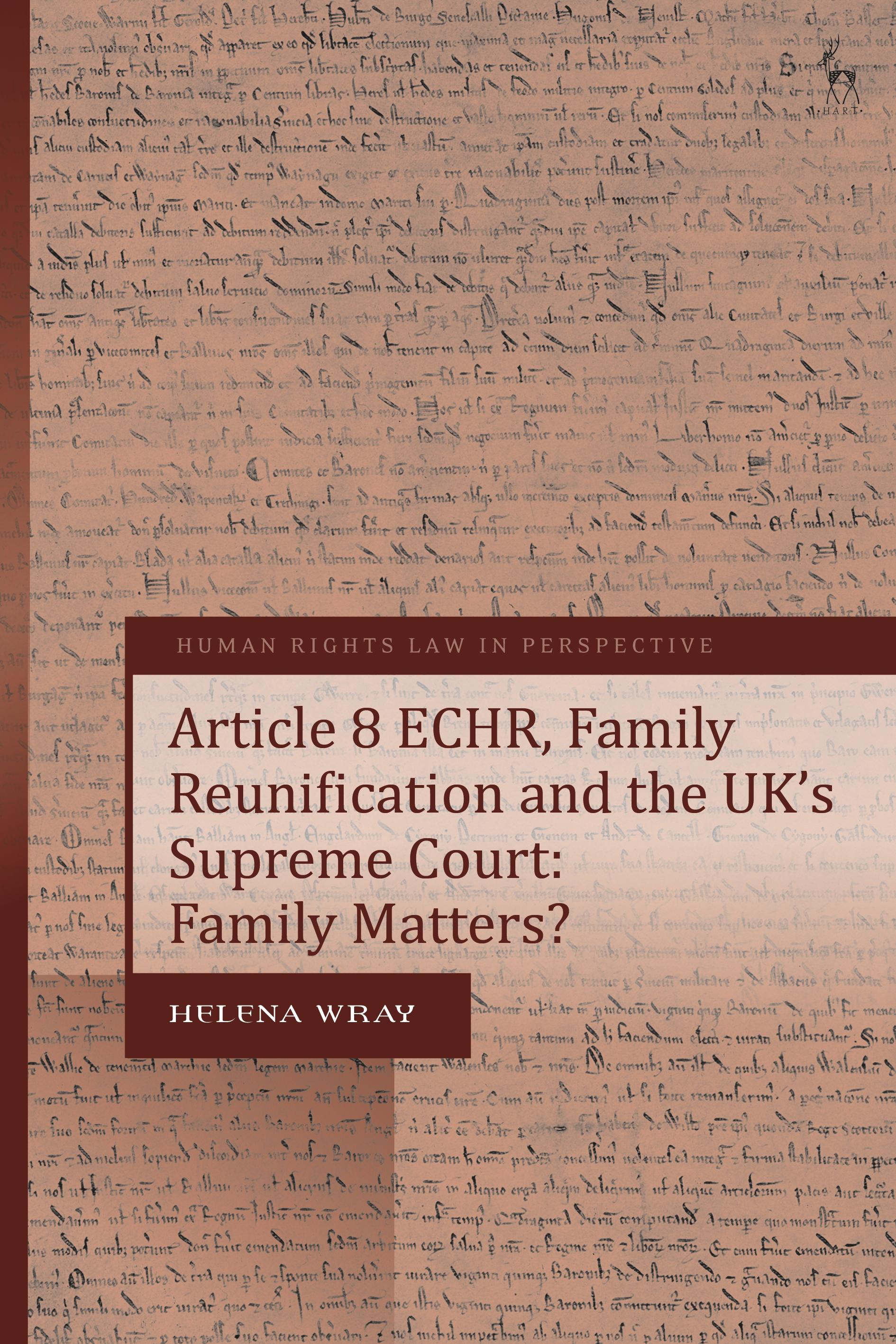
How do courts reconcile protecting family life with immigration control in human rights cases? This book addresses that question through an analysis of 11 UK Supreme Court decisions on immigration and family life, mostly focusing on Article 8 ECHR, the right to respect for family life, and starting with Huang v SSHD in 2007. The analysis is set against a national context that includes the Human Rights Act 1998 and regular controversies over immigration.
The book explains how the European Court of Human Rights jurisprudence has developed in recent years, but, particularly in the absence of children, it often still awards little weight to claims by citizens and residents to be joined by family when immigration status is an issue. This reflects governments' resistance to encroachment on their control over borders. The Supreme Court decisions show that, despite powers conferred by the Human Rights Act, a more nuanced position in domestic law was difficult to articulate and sustain. The book explores the way in which these problems were reflected in the changing language, argumentation, and structure of judgments. These problems revealed judges to be strategic actors drawing on personal and institutional values and responding to the shifting political context.
A more generous reading of Article 8 would be legally coherent but needs wider societal support to be realisable. The book ends with a discussion of how, if such support were present, the jurisprudence could give more weight to the needs of families. It is vital reading for anyone interested in families and immigration, and in the problems and potential of human rights adjudication.
The book explains how the European Court of Human Rights jurisprudence has developed in recent years, but, particularly in the absence of children, it often still awards little weight to claims by citizens and residents to be joined by family when immigration status is an issue. This reflects governments' resistance to encroachment on their control over borders. The Supreme Court decisions show that, despite powers conferred by the Human Rights Act, a more nuanced position in domestic law was difficult to articulate and sustain. The book explores the way in which these problems were reflected in the changing language, argumentation, and structure of judgments. These problems revealed judges to be strategic actors drawing on personal and institutional values and responding to the shifting political context.
A more generous reading of Article 8 would be legally coherent but needs wider societal support to be realisable. The book ends with a discussion of how, if such support were present, the jurisprudence could give more weight to the needs of families. It is vital reading for anyone interested in families and immigration, and in the problems and potential of human rights adjudication.
Paga facilmente con carta, Klarna, Apple Pay o Google Pay. Non sei soddisfatto? Hai sempre 14 giorni per il rimborso. Leggi di più nei nostri termini. Per qualsiasi domanda, scrivici a hello@memmo.org.
Memmo rende lo studio più facile, ovunque tu sia nel mondo. Qui trovi i tuoi libri di testo e strumenti di studio intelligenti, tutto in un unico posto: riassunti, quiz, podcast e flashcard. E poi c'è Ted, il tuo compagno di studio che risponde a ogni tua domanda. Oltre 50.000 studenti studiano già qui: è stato creato per aiutarti a imparare più velocemente e a stressarti meno.