
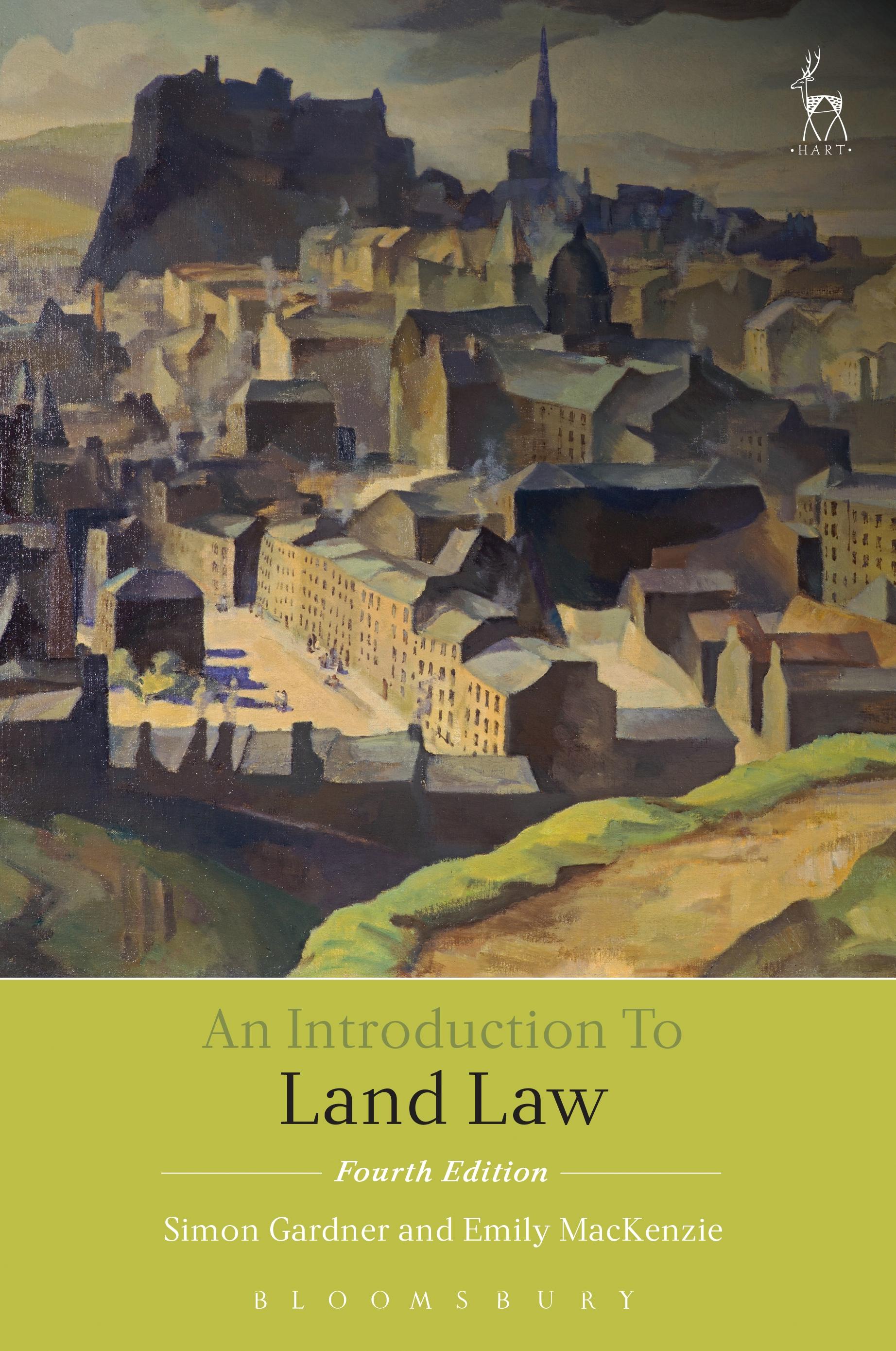
Gardner and MacKenzie's An Introduction to Land Law has been widely acclaimed by students and teachers for the distinctively informative and stimulating way in which it addresses this challenging subject.
Concise and highly readable, it covers the main points of land law found in the syllabuses of law schools in England and Wales. While not intended as a comprehensive textbook, it provides both sufficient detail, and especially the illuminating overview needed, for a real understanding, and many pointers for those seeking more.
Most of all, it stands apart from other land law books in the model it offers of critical engagement with the material. As the authors say in their Preface:
[W]e aim not just to state the law, but to paint its portrait, or tell its story, or something of that kind. So we set out to offer a careful, thoughtful, honest and critical (but not unsympathetic) appraisal, from a number of directions, both doctrinal and contextual. Once again, too, we present the portrait or story partly for its own interest, but most of all so as to encourage readers to try something similar for themselves – to reflect on the subject more, and so understand it better, and at the same time deepen their thinking skills in general.
As well as updating the book's overall coverage, this new edition features reworked discussions of areas where the law has recently undergone substantial change, and also where the authors' thoughts themselves have developed – including ownership, easements, and rectification of the land register.
As one reader of the first edition commented, 'it shone light where none had shone before, and lit a clear path to understanding'.
Concise and highly readable, it covers the main points of land law found in the syllabuses of law schools in England and Wales. While not intended as a comprehensive textbook, it provides both sufficient detail, and especially the illuminating overview needed, for a real understanding, and many pointers for those seeking more.
Most of all, it stands apart from other land law books in the model it offers of critical engagement with the material. As the authors say in their Preface:
[W]e aim not just to state the law, but to paint its portrait, or tell its story, or something of that kind. So we set out to offer a careful, thoughtful, honest and critical (but not unsympathetic) appraisal, from a number of directions, both doctrinal and contextual. Once again, too, we present the portrait or story partly for its own interest, but most of all so as to encourage readers to try something similar for themselves – to reflect on the subject more, and so understand it better, and at the same time deepen their thinking skills in general.
As well as updating the book's overall coverage, this new edition features reworked discussions of areas where the law has recently undergone substantial change, and also where the authors' thoughts themselves have developed – including ownership, easements, and rectification of the land register.
As one reader of the first edition commented, 'it shone light where none had shone before, and lit a clear path to understanding'.
Paga facilmente con carta, Klarna, Apple Pay o Google Pay. Non sei soddisfatto? Hai sempre 14 giorni per il rimborso. Leggi di più nei nostri termini. Per qualsiasi domanda, scrivici a hello@memmo.org.
Memmo rende lo studio più facile, ovunque tu sia nel mondo. Qui trovi i tuoi libri di testo e strumenti di studio intelligenti, tutto in un unico posto: riassunti, quiz, podcast e flashcard. E poi c'è Ted, il tuo compagno di studio che risponde a ogni tua domanda. Oltre 50.000 studenti studiano già qui: è stato creato per aiutarti a imparare più velocemente e a stressarti meno.