
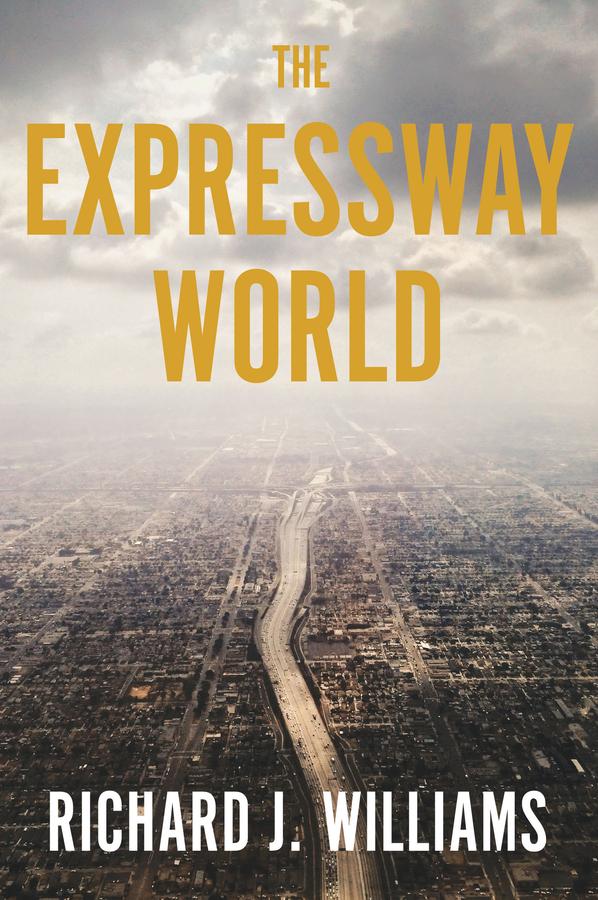
In the demonology of the contemporary city, is there anything more toxic than the expressway? Dividing neighbourhoods, depressing land values, concentrating atmospheric pollutants, the mammoth infrastructure of the expressway is now increasingly crumbling into the ground.
How did we build the expressway world in the first place? And what are we going to do now with it now?
This eye-opening book explores these questions partly through the great expressway abolitions of recent years, such as Boston’s Central Artery (buried and covered by a park) and Seoul’s Cheonggyecheon (replaced with an artificial river). But the book also uncovers the hidden stories of expressways that have become weird attractions in their own right, from London’s Westway to São Paulo’s Minhocão, celebrated in art and literature. Above all, the book proposes, counterintuitively, that we find ways to live with the expressway world and to adapt it to a different future, inspired by the many examples where people have already reinvented this challenging legacy on their own terms.
Engaging with case studies across the world and recent thinking in the environmental humanities and architectural theory, this is a thought-provoking invitation to reconsider the most maligned structures of the recent urban past.
How did we build the expressway world in the first place? And what are we going to do now with it now?
This eye-opening book explores these questions partly through the great expressway abolitions of recent years, such as Boston’s Central Artery (buried and covered by a park) and Seoul’s Cheonggyecheon (replaced with an artificial river). But the book also uncovers the hidden stories of expressways that have become weird attractions in their own right, from London’s Westway to São Paulo’s Minhocão, celebrated in art and literature. Above all, the book proposes, counterintuitively, that we find ways to live with the expressway world and to adapt it to a different future, inspired by the many examples where people have already reinvented this challenging legacy on their own terms.
Engaging with case studies across the world and recent thinking in the environmental humanities and architectural theory, this is a thought-provoking invitation to reconsider the most maligned structures of the recent urban past.
Paga facilmente con carta, Klarna, Apple Pay o Google Pay. Non sei soddisfatto? Hai sempre 14 giorni per il rimborso. Leggi di più nei nostri termini. Per qualsiasi domanda, scrivici a hello@memmo.org.
Memmo rende lo studio più facile, ovunque tu sia nel mondo. Qui trovi i tuoi libri di testo e strumenti di studio intelligenti, tutto in un unico posto: riassunti, quiz, podcast e flashcard. E poi c'è Ted, il tuo compagno di studio che risponde a ogni tua domanda. Oltre 50.000 studenti studiano già qui: è stato creato per aiutarti a imparare più velocemente e a stressarti meno.
Potrebbe interessarti anche
Acquista il libro0