
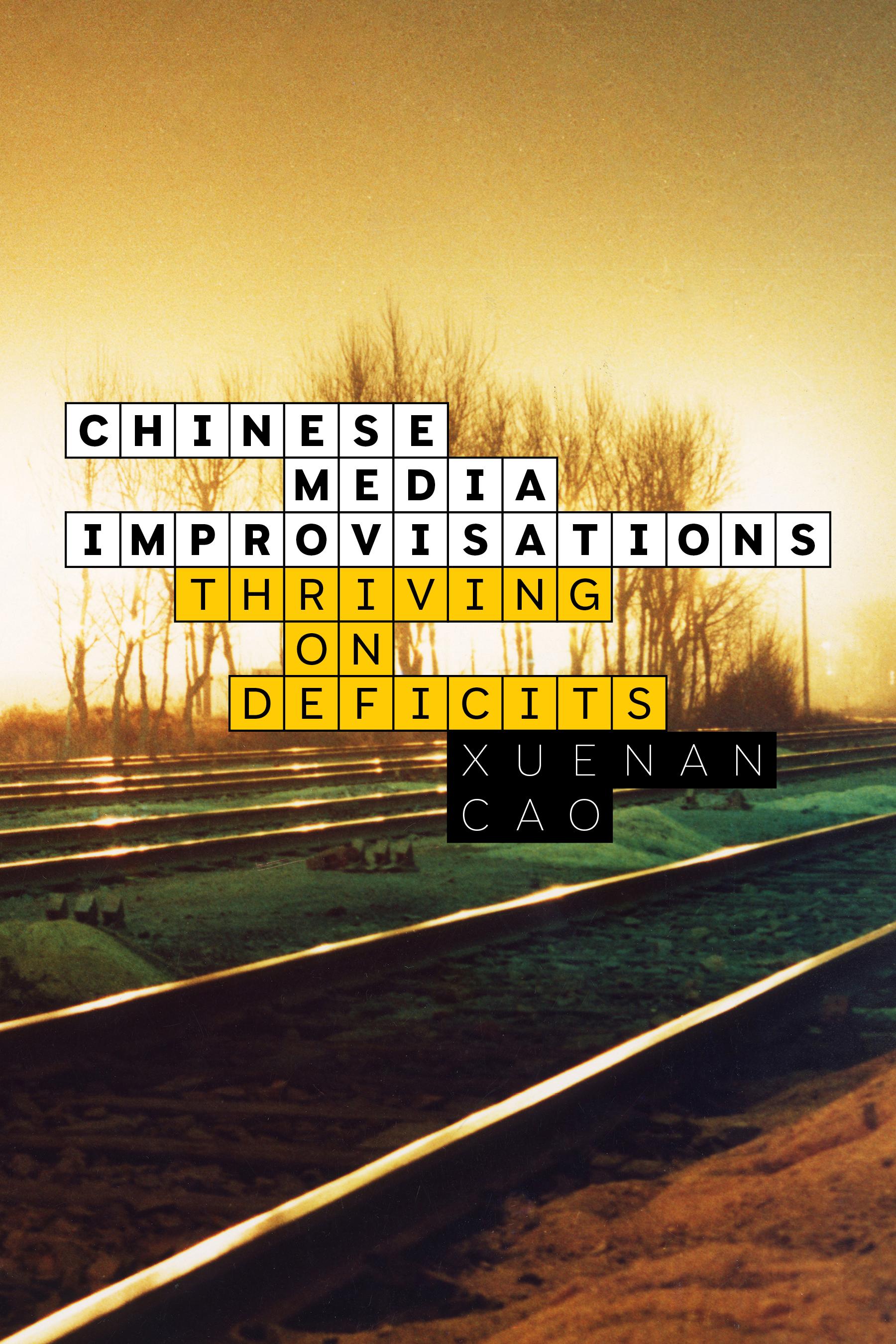
Xuenan Cao offers an unexpected angle on China's technological rise, spotlighting the role of deficit-driven improvisation. As Cao demonstrates, where printing paper, computers, and microchips have been in shortage, media improvisations and AI gadgetry have filled the gap and become the unlikeliest accelerants of tech imaginaries.
Equal parts media-historical and literary analysis, the book connects several moments in Chinese history: Mao's Great Leap Forward that demanded the country produce mountains of books, notwithstanding the shortage of papers and printers; the compressed development that pushed key industries—such as China Railway—to informatize amidst hazards; the information-theoretical explosion in which scientists impersonated computing devices when there were none for them to access; and the ironic present, when municipals have scrambled to update their smart-cities with low-budget AI gadget theatrics, such as facial recognition toilet paper dispensers. These are scenarios in which media practitioners—from print to information technologies and to AI—have had to improvise in response to political pressure and thrive on a deficiency of funding and materials. Drawing on Chinese communist party archival records, China Railway local archives, newspapers, ersatz college reference books, science journals, and AI-related technical documents, each book section combines archival research and literary readings, narrated through personal history with media-theoretical extrapolation. Ultimately, Cao persuades that the critique and deconstruction of the canonicity of Western media theory requires an understanding of media improvisations in China.
Paga facilmente con carta, Klarna, Apple Pay o Google Pay. Non sei soddisfatto? Hai sempre 14 giorni per il rimborso. Leggi di più nei nostri termini. Per qualsiasi domanda, scrivici a hello@memmo.org.
Memmo rende lo studio più facile, ovunque tu sia nel mondo. Qui trovi i tuoi libri di testo e strumenti di studio intelligenti, tutto in un unico posto: riassunti, quiz, podcast e flashcard. E poi c'è Ted, il tuo compagno di studio che risponde a ogni tua domanda. Oltre 50.000 studenti studiano già qui: è stato creato per aiutarti a imparare più velocemente e a stressarti meno.