
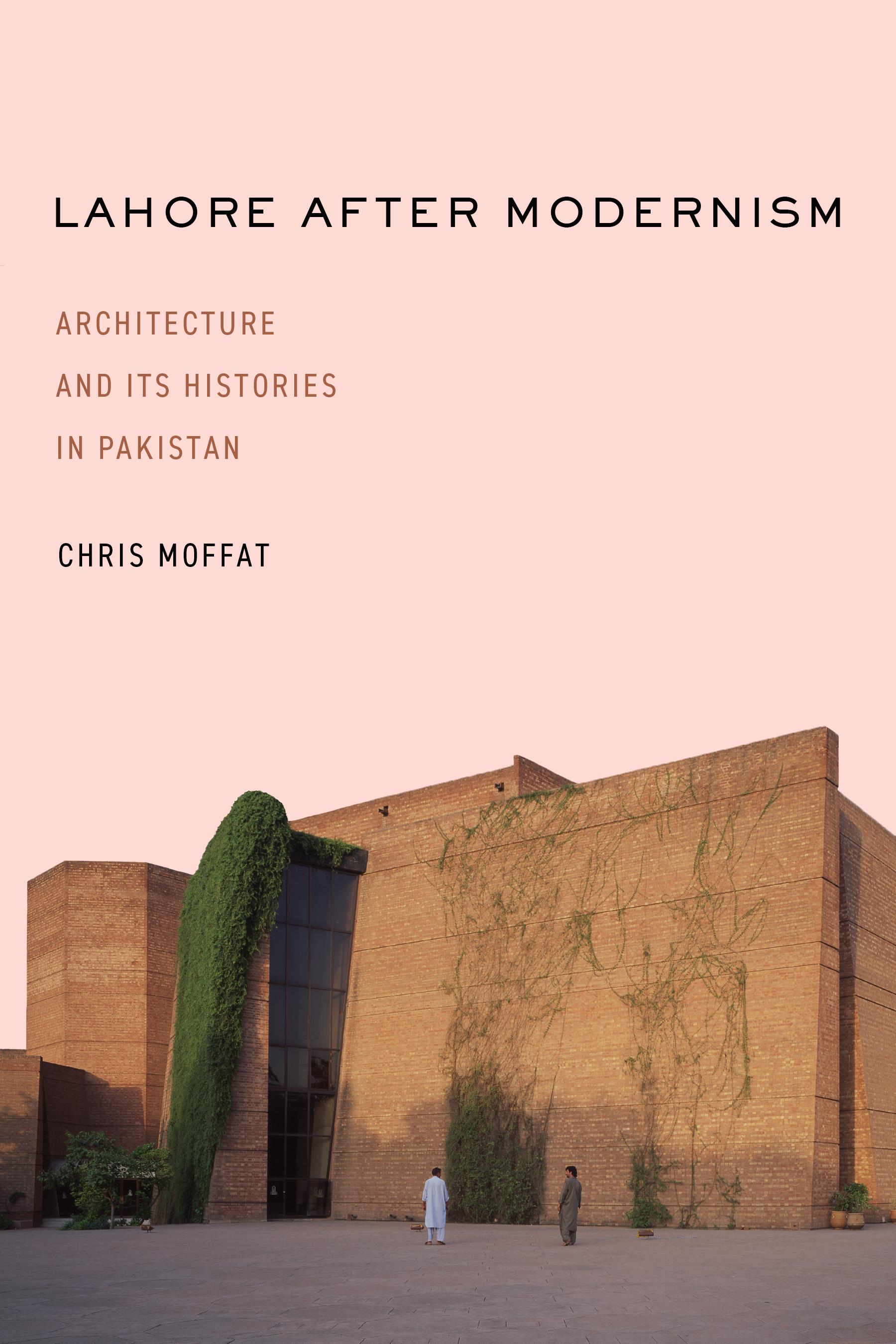
In the decades after independence in 1947, architects in Pakistan were enlisted to build a postcolonial future—a new world after empire. But the debris of the past could not be so easily swept aside. The recalcitrance of local and regional histories was fiercely evident in Lahore, the centuries-old capital of Punjab and a city scarred by the partition of British India. Studying its streets, neighborhoods and historic buildings, Pakistani architects came to challenge the global consensus around "development" and its close association with modernist architecture. Their designs and structures became opportunities for thinking anew about the power of history, the boundaries of the nation, and the constitution of community in a postcolonial polity.
This book is a pioneering study of architecture and the politics of construction, destruction and conservation in urban Pakistan. Chris Moffat introduces Pakistan's first postcolonial generation of architects—figures born around the time of partition, who began practicing in the 1960s and whose early careers navigated popular rebellions, military coups and emergent, pan-Islamic alignments. Moving from housing schemes to monuments, shrines to shopping malls, Moffat forges a new conversation between histories of architecture and the history of ideas in South Asia, and locates Lahore at the center of debates around contemporary urbanization, postcolonial aesthetics, and the ethics of dwelling in the modern world.
Paga facilmente con carta, Klarna, Apple Pay o Google Pay. Non sei soddisfatto? Hai sempre 14 giorni per il rimborso. Leggi di più nei nostri termini. Per qualsiasi domanda, scrivici a hello@memmo.org.
Memmo rende lo studio più facile, ovunque tu sia nel mondo. Qui trovi i tuoi libri di testo e strumenti di studio intelligenti, tutto in un unico posto: riassunti, quiz, podcast e flashcard. E poi c'è Ted, il tuo compagno di studio che risponde a ogni tua domanda. Oltre 50.000 studenti studiano già qui: è stato creato per aiutarti a imparare più velocemente e a stressarti meno.