
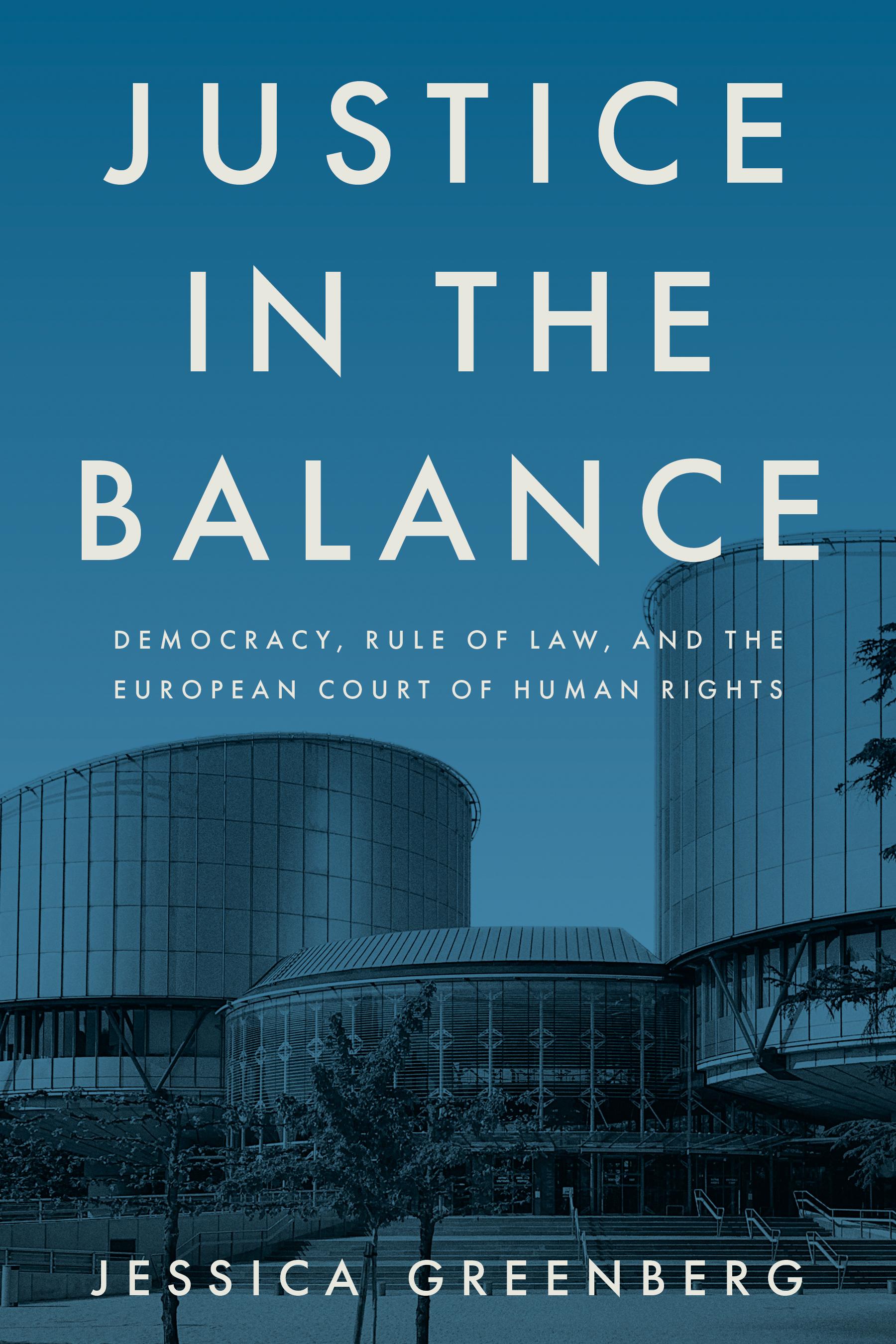
Established as a post–World War II response to conflict and fascism, the European Court of Human Rights is routinely characterized as the most successful human rights institution in the world. Based in Strasbourg, France, its jurisdiction extends to over 700 million people on European soil across the 46 Council of Europe member countries. The Court is the crown jewel of the Council, an international organization dedicated to human rights, democracy, and the rule of law. And yet, for years, European institutions have been haunted by the specter of failure. In the shadow of rising populism, inequality, and war, faith in democracy and the rule of law has been shaken to its core. Drawing on extensive fieldwork conducted over eight years with human rights advocates, lawyers, and judges at the European Court of Human Rights, this book asks: What kind of justice is possible through law?
Drawing on participant observation, in-depth interviews, and archival research, Jessica Greenberg tracks two paradoxical experiences of the European human rights system and the Court: on the one hand, the Court as a bureaucratic "machine;" on the other, the Court as the "conscience of Europe." She argues that human rights frameworks fuel imaginative approaches to social change, and compel legal actors to creatively navigate institutions through advocacy, persuasion, and innovative interpretation of what the law is and what it should be.
Paga facilmente con carta, Klarna, Apple Pay o Google Pay. Non sei soddisfatto? Hai sempre 14 giorni per il rimborso. Leggi di più nei nostri termini. Per qualsiasi domanda, scrivici a hello@memmo.org.
Memmo rende lo studio più facile, ovunque tu sia nel mondo. Qui trovi i tuoi libri di testo e strumenti di studio intelligenti, tutto in un unico posto: riassunti, quiz, podcast e flashcard. E poi c'è Ted, il tuo compagno di studio che risponde a ogni tua domanda. Oltre 50.000 studenti studiano già qui: è stato creato per aiutarti a imparare più velocemente e a stressarti meno.