
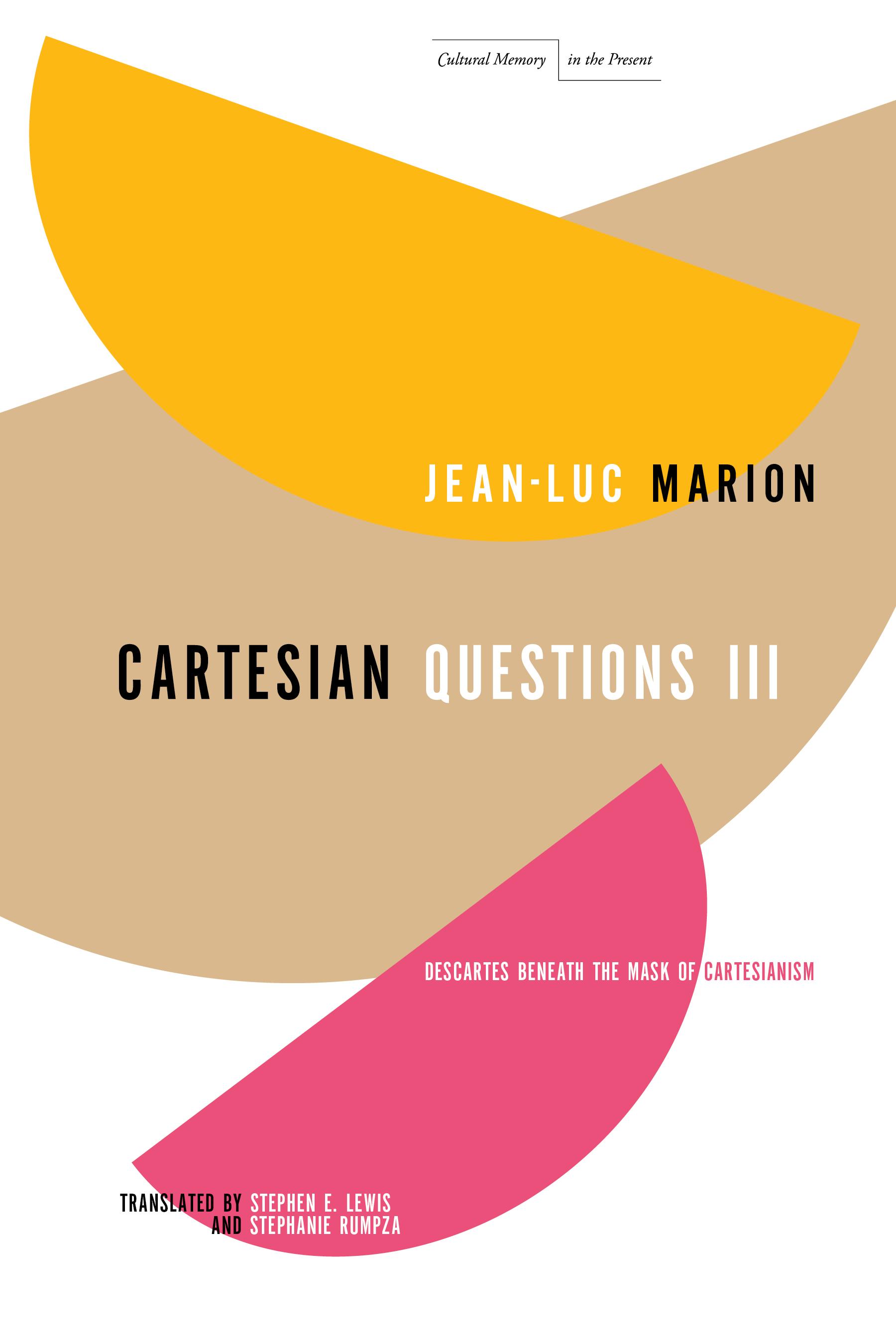
In this masterful work, Jean-Luc Marion shows how some of Descartes' most decisive points remain masked by the various "Cartesianisms" that historiography and convenient simplifications alike have constructed. The book's first half shows how Descartes lines up against Cartesianism, setting forth several closely argued attempts to free up the positive status of skepticism in the Cartesian corpus, the non-substantial (and non-reflexive) character of the ego cogito, the complex elaboration of the idea of the infinite, and the role of esteem as a mode of the cogitatio. Marion then offers a second set of studies examining the work of Montaigne, Hobbes, and Spinoza and seeking to reconstitute some of the ways in which Cartesianism (and non-Cartesianism) become opposed to Descartes. Arising at the pivot point between these two paths of inquiry is a chapter dedicated to Descartes and phenomenology, with particular focus on how Descartes can be understood to have practiced—in his own way and by anticipation—a genuine phenomenological reduction. The final volume in Jean-Luc Marion's erudite trilogy of Cartesian Questions, this authoritative book demonstrates that, rather than belonging strictly to the past, Descartes continues to speak to our future.
Paga facilmente con carta, Klarna, Apple Pay o Google Pay. Non sei soddisfatto? Hai sempre 14 giorni per il rimborso. Leggi di più nei nostri termini. Per qualsiasi domanda, scrivici a hello@memmo.org.
Memmo rende lo studio più facile, ovunque tu sia nel mondo. Qui trovi i tuoi libri di testo e strumenti di studio intelligenti, tutto in un unico posto: riassunti, quiz, podcast e flashcard. E poi c'è Ted, il tuo compagno di studio che risponde a ogni tua domanda. Oltre 50.000 studenti studiano già qui: è stato creato per aiutarti a imparare più velocemente e a stressarti meno.