
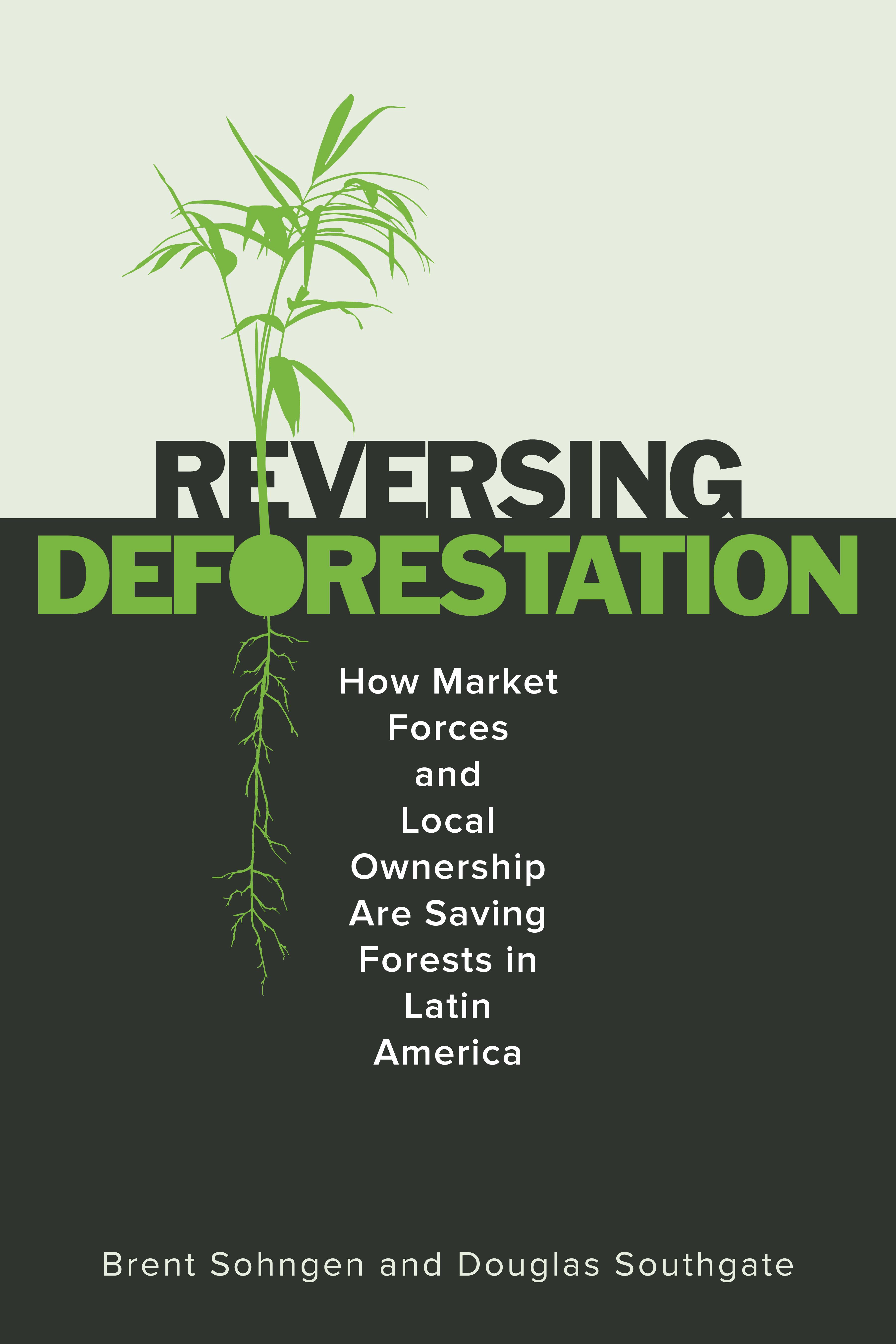
Dire reports of surging deforestation in the Brazilian Amazon appear often in international headlines, with commentators decrying the destruction of tree-covered habitats as an act of environmental vandalism. Although forest losses are alarming, broader trends are bending in the direction of forest recovery. In this book, Brent Sohngen and Douglas Southgate address the long-term recovery of forests in Latin America. The authors synthesize trends in demography, agricultural development, and technological change, and argue that slower population growth and increasing crop and tree yields—in conjunction with protecting local ownership of natural resources—have encouraged forest transition. This book explores how market forces, ownership arrangements, and the enforcement of property rights have influenced this shift from net deforestation to net afforestation.
Forest transitions have happened before, such as the recovery of tree-covered habitats in Europe and the United States. Signs of a similar transformation in land use are now present in Latin America. Ending deforestation requires a strengthening of forest dwellers' property rights while ensuring that biodiversity conservation is no longer treated as a value-less externality. The resulting forest landscape, actively managed for ecosystem services, will be more resilient, as is needed to overcome climate change.
Paga facilmente con carta, Klarna, Apple Pay o Google Pay. Non sei soddisfatto? Hai sempre 14 giorni per il rimborso. Leggi di più nei nostri termini. Per qualsiasi domanda, scrivici a hello@memmo.org.
Memmo rende lo studio più facile, ovunque tu sia nel mondo. Qui trovi i tuoi libri di testo e strumenti di studio intelligenti, tutto in un unico posto: riassunti, quiz, podcast e flashcard. E poi c'è Ted, il tuo compagno di studio che risponde a ogni tua domanda. Oltre 50.000 studenti studiano già qui: è stato creato per aiutarti a imparare più velocemente e a stressarti meno.