
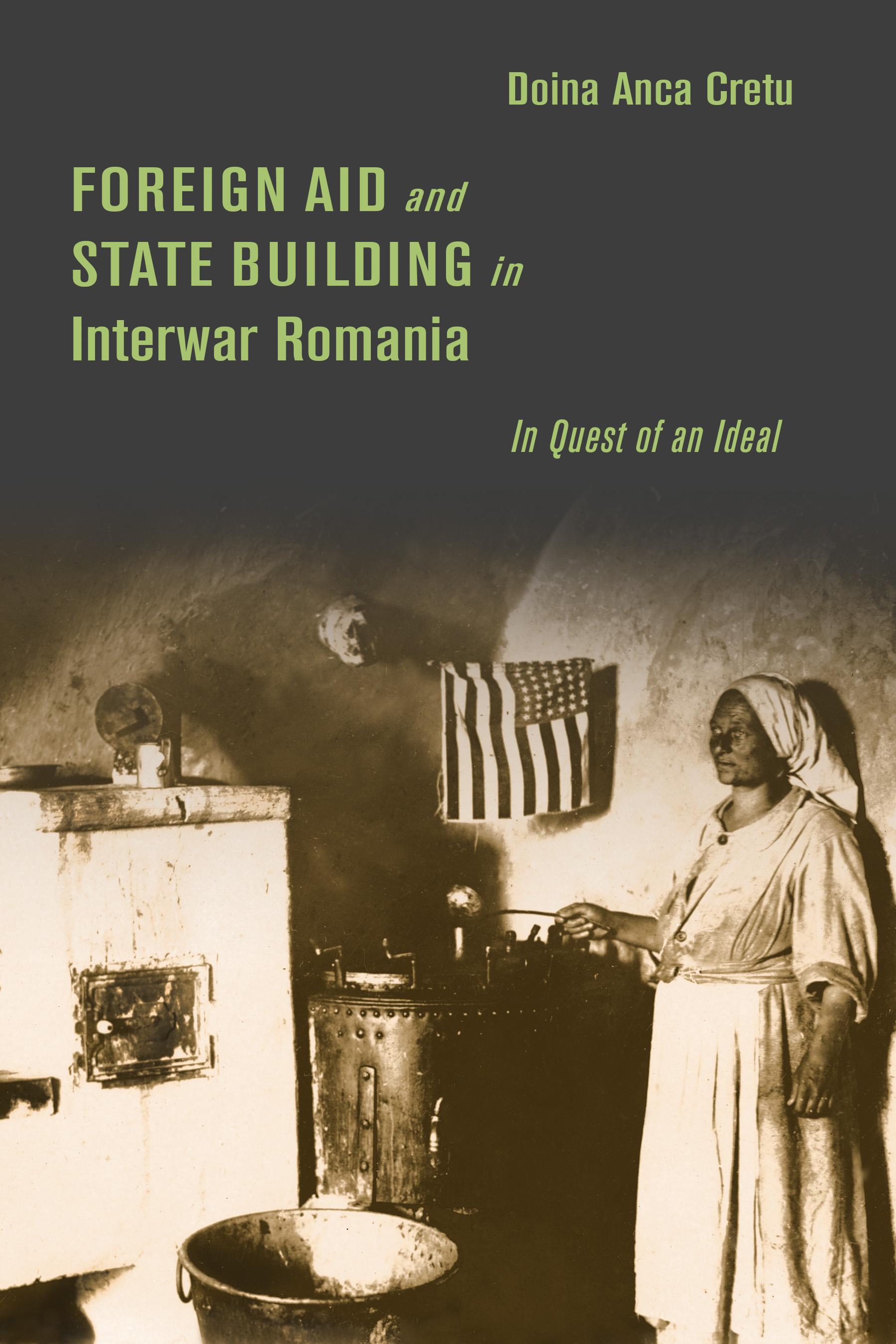
The decades following World War I were a period of political, social, and economic transformation for Central and Eastern Europe. This book considers the role of foreign aid in Romania between 1918 and 1940, offering a new history of the interrelation between state building and nongovernmental humanitarianism and philanthropy in the interwar period. Doina Anca Cretu argues that Romania was a laboratory for transnational intervention, as various state builders actively pursued, accessed, and often instrumentalized American assistance in order to accelerate reconstructive and modernizing projects after World War I.
At its core, this is a study of how local views, ambitions, and practical agendas framed trajectories of humanitarian and philanthropic endeavors in postimperial Central and Eastern Europe. Conversely, it is a reflection on the ways that architects and practitioners of foreign aid sought to transfer notions of democracy, civilization, and modernity within shifting local and national contexts in the aftermath of the war and after the collapse of European empires. At the intersection of the history of interwar Europe and international philanthropy and humanitarianism, this book's innovative and explicitly transnational approach provides a new framework for understanding the contours of European nationalism in the twentieth century.
Paga facilmente con carta, Klarna, Apple Pay o Google Pay. Non sei soddisfatto? Hai sempre 14 giorni per il rimborso. Leggi di più nei nostri termini. Per qualsiasi domanda, scrivici a hello@memmo.org.
Memmo rende lo studio più facile, ovunque tu sia nel mondo. Qui trovi i tuoi libri di testo e strumenti di studio intelligenti, tutto in un unico posto: riassunti, quiz, podcast e flashcard. E poi c'è Ted, il tuo compagno di studio che risponde a ogni tua domanda. Oltre 50.000 studenti studiano già qui: è stato creato per aiutarti a imparare più velocemente e a stressarti meno.