
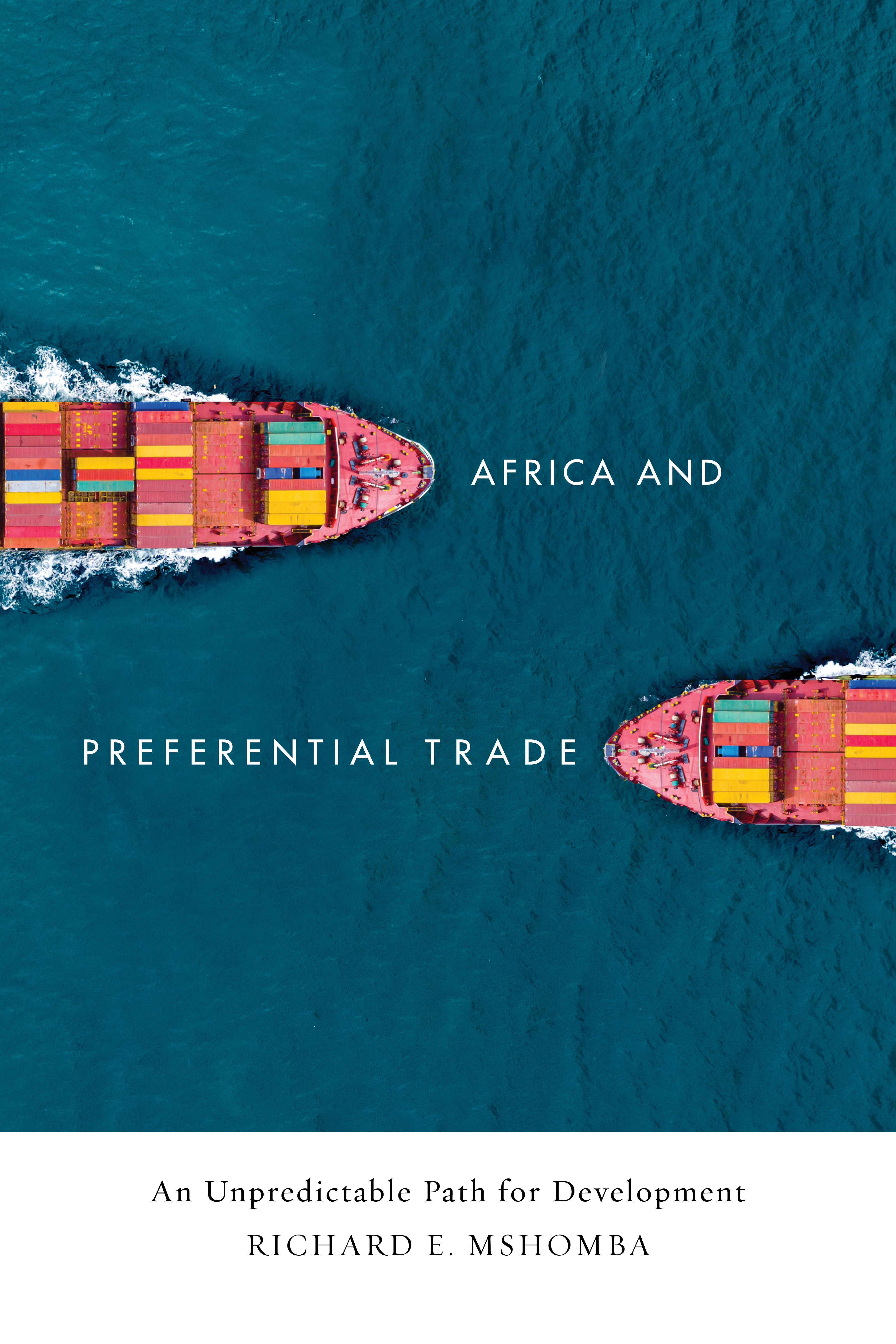
Nonreciprocal preferential trade arrangements are a defining feature of the relationship between developed and developing countries dating back to the colonial era. In the late 1950s, these arrangements started to take a multilateral form when members of the European Economic Community established special trade arrangements with their colonies. Since then, several trade arrangements have featured African countries among the preference-receiving countries. Yet it is not always clear how preferential these arrangements are and whether they in fact help African countries or instead lead them to perpetual dependence on specific markets and products.
Richard E. Mshomba carefully examines the history of these programs and their salient features. He analyzes negotiations between the EU and African countries to form Economic Partnership Agreements. Nonreciprocal preferential trade arrangements are often unpredictable, since the duration and magnitude of preferences are at the discretion of the preference-giving countries. However, when used in conjunction with other development programs and with laws and regulations that encourage long-term investment and protect employees, they can increase economic opportunities and foster human development. This book recognizes the potential impact of nonreciprocal preferential trade arrangements and provides recommendations to increase their viability.
Paga facilmente con carta, Klarna, Apple Pay o Google Pay. Non sei soddisfatto? Hai sempre 14 giorni per il rimborso. Leggi di più nei nostri termini. Per qualsiasi domanda, scrivici a hello@memmo.org.
Memmo rende lo studio più facile, ovunque tu sia nel mondo. Qui trovi i tuoi libri di testo e strumenti di studio intelligenti, tutto in un unico posto: riassunti, quiz, podcast e flashcard. E poi c'è Ted, il tuo compagno di studio che risponde a ogni tua domanda. Oltre 50.000 studenti studiano già qui: è stato creato per aiutarti a imparare più velocemente e a stressarti meno.