
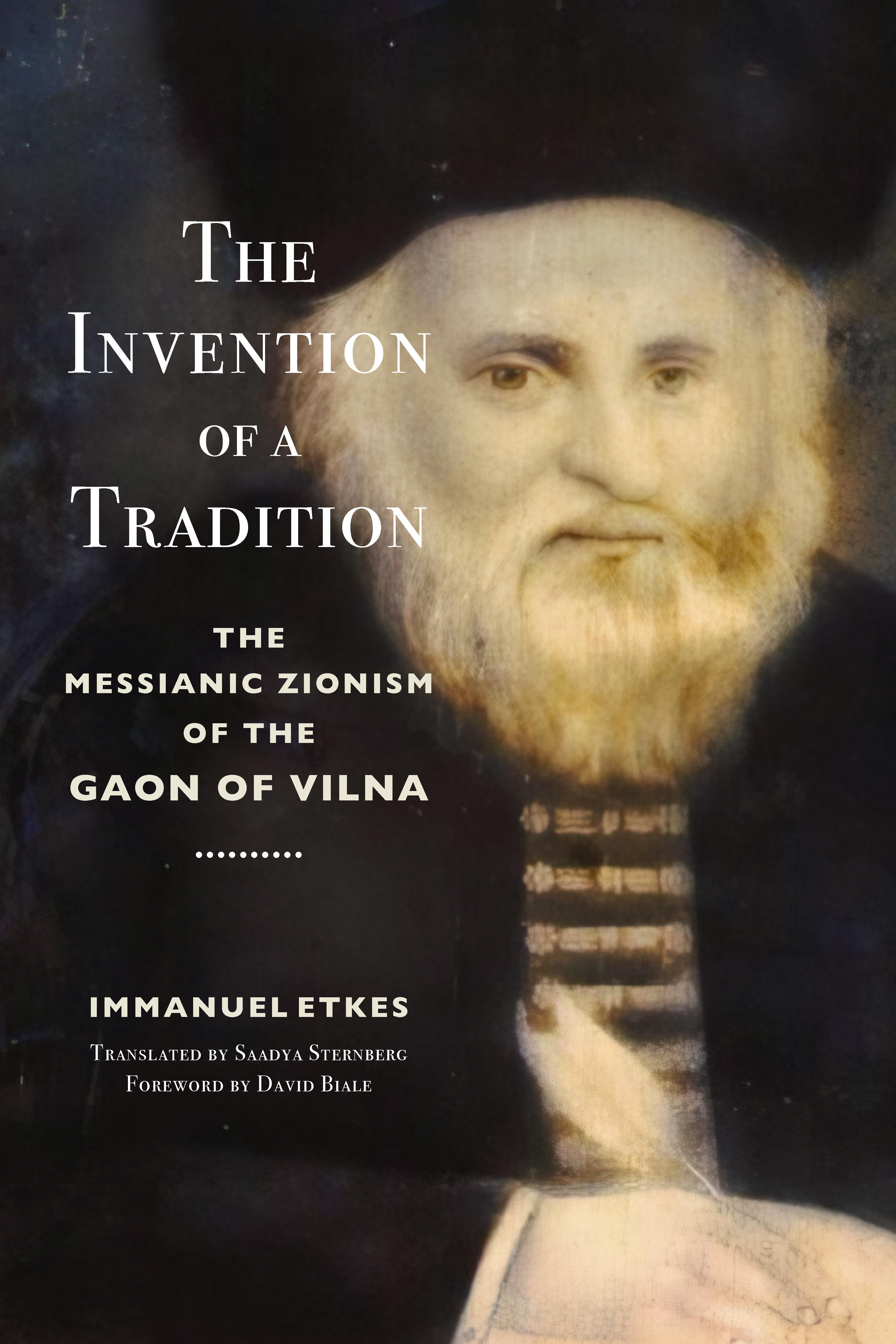
The Gaon of Vilna was the foremost intellectual leader of non-Hasidic Jewry in eighteenth-century Europe; his legacy is claimed by religious Jews, both Zionist and not. In the mid-twentieth century, Shlomo Zalman Rivlin wrote several books advancing the myth that the Gaon was an early progenitor of Zionism. Following the 1967 War in Israel, messianic sentiments spread in some circles of the national-religious public in Israel, who embraced this myth and made it a central component of the historical narrative they advanced. For those who identified with the religious Zionist enterprise, the myth of the Gaon and his disciples as the first Zionists was seen as proof of the righteousness of their path.
In this book, Israeli scholar Immanuel Etkes explores how what he calls the "Rivlinian myth" took hold, and demonstrates that it has no basis in historical reality. Etkes argues that proponents of the Rivlinian myth seek to blur the distinction between Zionism as a modern national movement and traditional messianic phenomenon—a distinction that underlies many of the central conflicts of contemporary Israeli politics. As historian David Biale suggests in his brief foreword to this English translation, "what is at stake here is not only historical truth but also the very identity of Zionism as a nationalist movement."
Paga facilmente con carta, Klarna, Apple Pay o Google Pay. Non sei soddisfatto? Hai sempre 14 giorni per il rimborso. Leggi di più nei nostri termini. Per qualsiasi domanda, scrivici a hello@memmo.org.
Memmo rende lo studio più facile, ovunque tu sia nel mondo. Qui trovi i tuoi libri di testo e strumenti di studio intelligenti, tutto in un unico posto: riassunti, quiz, podcast e flashcard. E poi c'è Ted, il tuo compagno di studio che risponde a ogni tua domanda. Oltre 50.000 studenti studiano già qui: è stato creato per aiutarti a imparare più velocemente e a stressarti meno.