
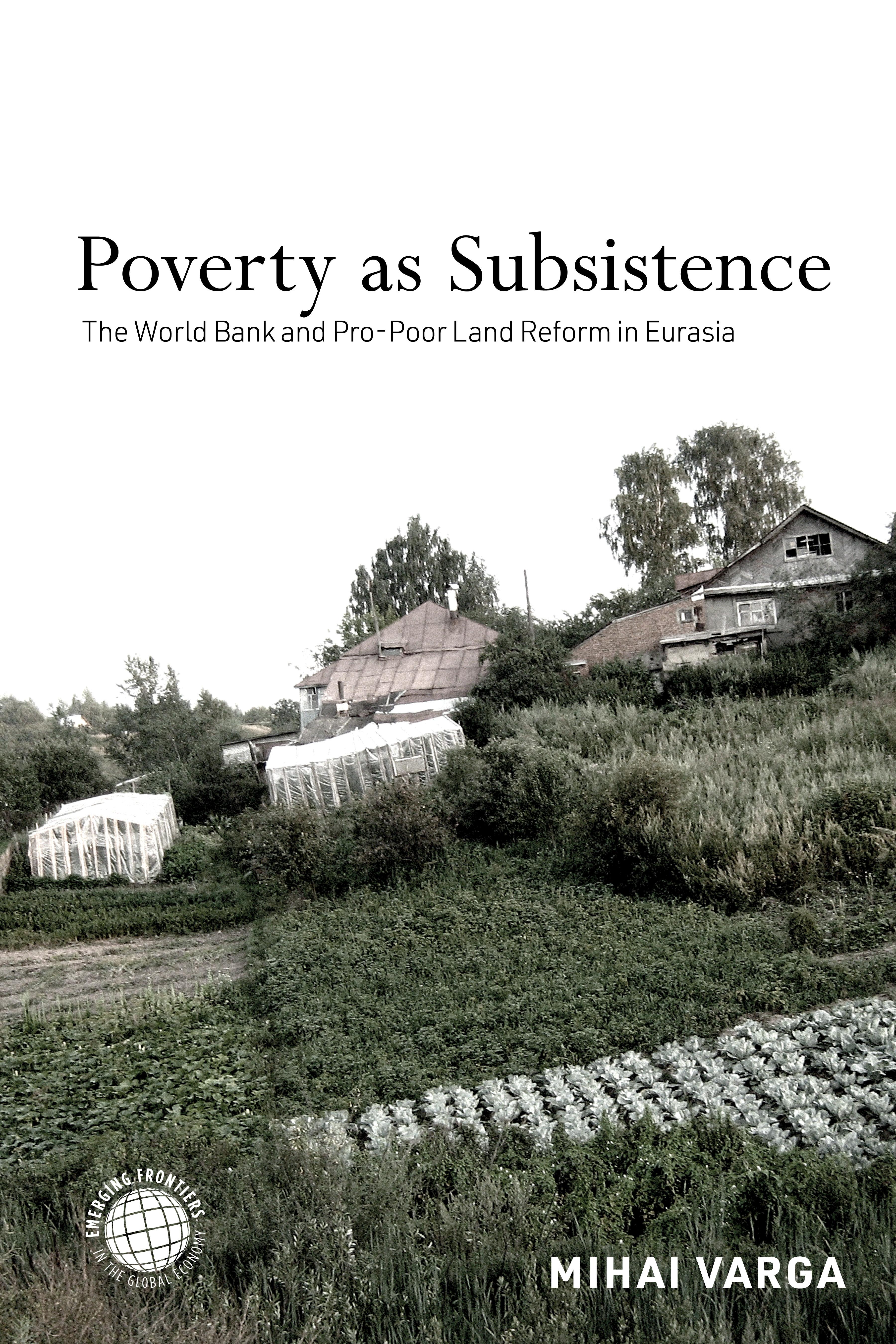
Poverty as Subsistence explores the "propertizing" land reform policy that the World Bank advocated throughout the transitioning countries of Eurasia, expecting poverty reduction to result from distributing property titles over agricultural land to local (rural) populations. China's early 1980s land reform offered support for this expectation, but while the spread of propertizing reform to post-communist Eurasia created numerous "subsistence" smallholders, it failed to stimulate entrepreneurship or market-based production among the rural poor. Varga argues that the World Bank advocated a simplified version of China's land reform that ignored a key element of successful reforms: the smallholders' immediate environment, the structure of actors and institutions determining whether smallholders survive and grow in their communities. With concrete insights from analysis of the land reform program throughout post-communist Eurasia and multisited fieldwork in Romania and Ukraine, this book details how and why land reform led to subsistence and the mechanisms underpinning informal commercialization.
Paga facilmente con carta, Klarna, Apple Pay o Google Pay. Non sei soddisfatto? Hai sempre 14 giorni per il rimborso. Leggi di più nei nostri termini. Per qualsiasi domanda, scrivici a hello@memmo.org.
Memmo rende lo studio più facile, ovunque tu sia nel mondo. Qui trovi i tuoi libri di testo e strumenti di studio intelligenti, tutto in un unico posto: riassunti, quiz, podcast e flashcard. E poi c'è Ted, il tuo compagno di studio che risponde a ogni tua domanda. Oltre 50.000 studenti studiano già qui: è stato creato per aiutarti a imparare più velocemente e a stressarti meno.