
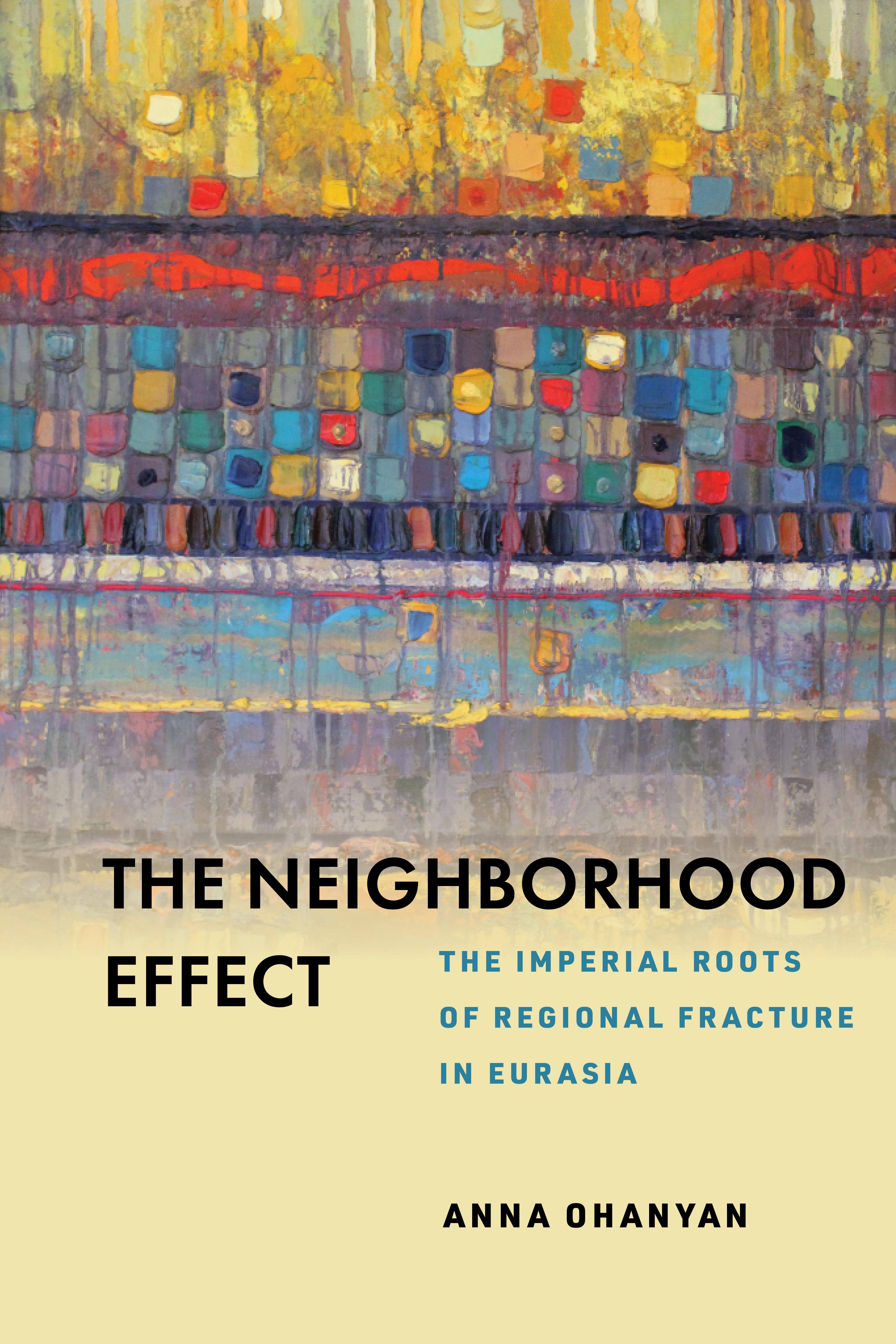
Why are certain regions of the world mired in conflict? And how did some regions in Eurasia emerge from the Cold War as peaceful and resilient? Why do conflicts ignite in Bosnia, Donbas, and Damascus—once on the peripheries of mighty empires—yet other postimperial peripheries like the Baltics or Central Europe enjoy quiet stability?
Anna Ohanyan argues for the salience of the neighborhood effect: the complex regional connectivity among ethnic-religious communities that can form resilient regions. In an account of Eurasian regional formation that stretches back long before the nation-state, Ohanyan refutes the notion that stable regions are the luxury of prosperous, stable, democratic states. She examines case studies from regions once on the fringes of the Habsburg, Ottoman, and Russian Empires to find the often-overlooked patterns of bonding and bridging, or clustering and isolation of political power and social resources, that are associated with regional resilience or fracture in those regions today.
With comparative examples from Latin America and Africa, The Neighborhood Effect offers a new explanation for the conflicts we are likely to see emerge as the unipolar US-led order dissolves, making the fractures in regional neighborhoods painfully evident. And it points the way to the future of peacebuilding: making space for the smaller links and connections that comprise a stable neighborhood.
Paga facilmente con carta, Klarna, Apple Pay o Google Pay. Non sei soddisfatto? Hai sempre 14 giorni per il rimborso. Leggi di più nei nostri termini. Per qualsiasi domanda, scrivici a hello@memmo.org.
Memmo rende lo studio più facile, ovunque tu sia nel mondo. Qui trovi i tuoi libri di testo e strumenti di studio intelligenti, tutto in un unico posto: riassunti, quiz, podcast e flashcard. E poi c'è Ted, il tuo compagno di studio che risponde a ogni tua domanda. Oltre 50.000 studenti studiano già qui: è stato creato per aiutarti a imparare più velocemente e a stressarti meno.