
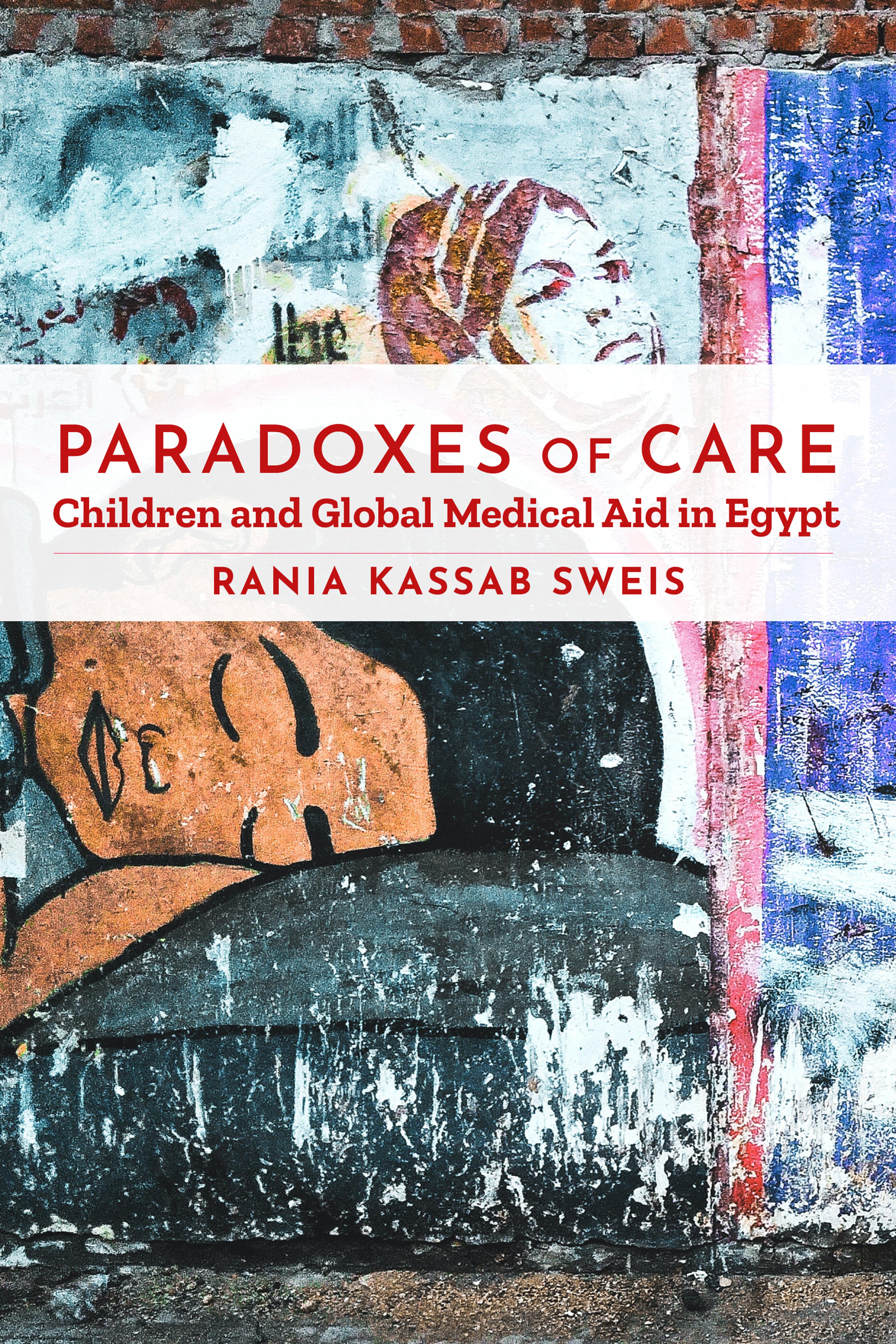
Each year, billions of dollars are spent on global humanitarian health initiatives. These efforts are intended to care for suffering bodies, especially those of distressed children living in poverty. But as global medical aid can often overlook the local economic and political systems that cause bodily suffering, it can also unintentionally prolong the very conditions that hurt children and undermine local aid givers. Investigating medical humanitarian encounters in Egypt, Paradoxes of Care illustrates how child aid recipients and local aid experts grapple with global aid's shortcomings and its paradoxical outcomes.
Rania Kassab Sweis examines how some of the world's largest aid organizations care for vulnerable children in Egypt, focusing on medical efforts with street children and out-of-school village girls. Her in-depth ethnographic study reveals how global medical aid fails to "save" these children according to its stated aims, and often maintains—or produces new—social disparities in children's lives. Foregrounding vulnerable children's responses to medical aid, Sweis moves past the unquestioned benevolence of global health to demonstrate how children must manage their own bodies and lives in the absence of adult care. With this book, she challenges readers to engage with the question of what medical caregivers and donors alike gain from such global humanitarian transactions.
Paga facilmente con carta, Klarna, Apple Pay o Google Pay. Non sei soddisfatto? Hai sempre 14 giorni per il rimborso. Leggi di più nei nostri termini. Per qualsiasi domanda, scrivici a hello@memmo.org.
Memmo rende lo studio più facile, ovunque tu sia nel mondo. Qui trovi i tuoi libri di testo e strumenti di studio intelligenti, tutto in un unico posto: riassunti, quiz, podcast e flashcard. E poi c'è Ted, il tuo compagno di studio che risponde a ogni tua domanda. Oltre 50.000 studenti studiano già qui: è stato creato per aiutarti a imparare più velocemente e a stressarti meno.